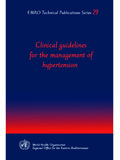
Transcription of Good clinical diagnostic practice
1 ISBN 92-9021-341-8 WHO Regional Publications, Eastern Mediterranean SeriesGood clinicaldiagnostic practiceA guide for clinicians in developing countries totheand to makingproper use of clinical diagnostic servicesclinical diagnosis of diseaseWorld Health OrganizationRegional Office for the Eastern MediterraneanISBN 978-92-9021-393-2ysicians in developing countries usually take a syndromic approach tognosing a patient. Today, we observe increasing microbial resistance togs, particularly in developing countries. This worsening situation puts avy obligation on medical professionals to improve their diagnostic services provide more accurate information on aent based on physical and biochemical investigations. However, inny countries there is little communication between the physicians andlaboratory and diagnostic imaging services. Occasionally, medical staffthat diagnostic imaging and even more so laboratory services reportults that are inappropriate or even erroneous.
2 Consequently, thevice provided by the laboratory is wasted, placing an unacceptableden on the diagnostic services, which is of no benefit to the has been written to improve the clinical and diagnostic skillsphysicians. The manual assumes that clinicians have been trained inory-taking, physical examination and use of laboratory investigationsalso have access to basic clinical diagnostic equipment and toential laboratory tests. WHO Regional Publications, Eastern Mediterranean Series 27 Good clinical diagnostic practice A guide for clinicians in developing countries to the clinical diagnosis of disease and to making proper use of clinical diagnostic services Jane Carter African medical and Research Foundation (AMREF), Nairobi, Kenya Irmela M ller-St ver Kamuli , Uganda, and University Hospital, D sseldorf, Germany Harald stensen World Health Organization Claus Chr. Heuck World Health Organization World Health Organization Regional Office for the Eastern Mediterranean Cairo 2005 WHO Library Cataloguing in Publication Data Carter, Jane.
3 Good clinical diagnostic practice : a guide for clinicians in developing countries to the clinical diagnosis of disease and to making proper use of clinical diagnostic services / by Jane [et al.] . p. (WHO Regional Publications, Eastern Mediterranean Series; 27) ISBN : 978-92-9021-393-2 1. clinical Laboratory Techniques 2. clinical laboratory procedures I. M ller-St ver, Irmela. II. stensen, Harald III. Heuck, Claus Chr. IV. Title Regional Office for the Eastern Mediterranean VI. Series (NLM Classification: QY 25) World Health Organization 2005 All rights reserved. The designations employed and the presentation of the material in this publication do not imply the expression of any opinion whatsoever on the part of the World Health Organization concerning the legal status of any country, territory, city or area or of its authorities, or concerning the delimitation of its frontiers or boundaries.
4 Dotted lines on maps represent approximate border lines for which there may not yet be full agreement. The mention of specific companies or of certain manufacturers products does not imply that they are endorsed or recommended by the World Health Organization in preference to others of a similar nature that are not mentioned. Errors and omissions excepted, the names of proprietary products are distinguished by initial capital letters. The World Health Organization does not warrant that the information contained in this publication is complete and correct and shall not be liable for any damages incurred as a result of its use. Publications of the World Health Organization can be obtained from Distribution and Sales, World Health Organization, Regional Office for the Eastern Mediterranean, PO Box 7608, Nasr City, Cairo 11371, Egypt (tel: +202 670 2535, fax: +202 670 2492; email: Requests for permission to reproduce WHO EMRO publications, in part or in whole, or to translate them whether for sale or for noncommercial distribution should be addressed to the Regional Adviser, Health and Biomedical Information, at the above address (fax: +202 276 5400; email Cover design by John Shimwell Printed in Cairo, Egypt, by Fikra Advertising Agency Contents Foreword.))
5 5 Preface .. 7 9 Glossary .. 11 Chapter 1. Introduction .. 15 clinical assessment .. 15 diagnostic investigation .. 16 Chapter 2. diagnostic imaging .. 18 Ultrasound examinations (ultrasonography) .. 18 Conventional X-ray 20 Computed 20 Magnetic resonance imaging .. 21 Radiation protection of patients .. 21 Chapater 3. Laboratory services and laboratory investigations .. 23 Biological aspects .. 24 Choice of laboratory indicators and test systems .. 33 Technical pre-analytical and post-analytical aspects .. 35 Chapter 4. Approaches to clinical 48 medical history-taking .. 48 General examination .. 54 Chapter 5. Examination of clinical symptoms and signs .. 62 Fever .. 65 Anaemia (pallor).. 86 Diarrhoea .. 98 Cough and shortness of breath .. 107 Skin diseases .. 115 Jaundice.
6 122 Oedema .. 129 Urinary tract infection (UTI).. 134 Sexually transmitted 137 Altered consciousness, coma and 151 Accidents and injuries .. 160 Acute and non-acute 164 174 Chapter 6. Epidemics .. 191 The role of the laboratory in the investigation of 194 Chapter 7. Noncommunicable diseases .. 197 Cardiovascular disease .. 197 Diabetes mellitus .. 199 202 Diseases of the 205 Malignancies (cancer) .. 208 Annexes .. 211 1. Instruments for physical 211 2. Record form for medical history and physical 212 3. Ultrasonography contact gel preparation .. 215 References and further 217 Foreword The range of diseases that affect and afflict humans continues to hinder development in many parts of the world from communicable diseases to noncommunicable diseases, genetic diseases to lifestyle-related and behavioural diseases, those induced by hardship and by poverty to those induced by affluence, and those that result from natural and man-made disasters.
7 clinical diagnostic services provide physicians with a wide range of tools to help in their decision-making regarding appropriate treatment of all types of disease for their patients. At the same time, health technology is becoming more and more sophisticated throughout the world, including many parts of the developing world. However, diagnostic investigation of disease, whether by laboratory services or imaging services, becomes more expensive every year. Meanwhile, equipment companies often market their products in developing countries in a manner which encourages primary health care physicians to diagnose relatively simple ailments with unnecessarily sophisticated tests. The primary health care system is overburdened in many developing countries, and in the absence of a family doctor system, patients have to resort to specialized physicians. The expense is overwhelming, both to individuals and to Ministries of Health, and in many cases is completely unnecessary.
8 The traditional model of diagnosis by a primary health care physician to a regional hospital or other medical centres, with a small number of references to specialized centres, has been reversed. This publication addresses these problems. It provides guidelines on the most common and necessary diagnostic tools in clinical practice , 6 Foreword especially for countries with minimal resources, and guides physicians on how to select the most appropriate services and laboratory investigations, at least cost. Great emphasis has been placed on improving diagnostic performance, on restoring good referral systems, and above all on promoting communication between clinicians and technicians in order to achieve good clinical diagnostic practice . I have no doubt this will be an invaluable tool for physicians in developing countries. Hussein A. Gezairy MD FRCS Regional Director for the Eastern Mediterranean Preface In many countries, there is a lack of communication between the clinical services and the laboratory and diagnostic imaging services.
9 As a result, clinicians do not take appropriate advantage of, and consequently the patients do not benefit from, the information that could be provided by the diagnostic services if they were properly used. The reasons may be various. Clinicians play a pivotal role in patient education and in cooperation with all diagnostic services. However, clinicians may regard quality management of diagnostic services as a matter that is separate from their own area of responsibility. Therefore they are not aware of the need for, and may fail to add, sufficient information on a patient, which makes it difficult for a diagnostic service to provide clinically relevant results. Clinicians may feel that they do not have the time for such activities, and they may not see that clinical outcomes are in fact tied to the diagnostic processes being followed. Clinicians are rarely used to team-work and may feel uncomfortable working as a member of a team of health workers with different professional training or fewer credentials.
10 The diagnostic service may not recognize the clinical importance of its observations in the management of a patient; and vice versa, the clinician may not be sufficiently aware of the relevance of a diagnostic observation to the clinical situation of a patient. Studies in developed countries have revealed between 20% and 60% of orders for laboratory investigations are clinically unjustified. For example, more than 95% of orders for serum sodium measurements ordered in one 8 Preface hospital setting were not medically relevant. In another example, clinicians were unable to draw conclusions from the results of serum protein electrophoresis in more than 95% of reports provided by the laboratory [1]. Consequently, the service provided by the laboratory is wasted, placing an unacceptable burden on the laboratory that is of no benefit to the health service.