Transcription of Guidelines and Management Type 2 Diabetes
1 Type 2 DiabetesGuidelines and ManagementDiabetes Day Centre, Beaumont HospitalDiabetes Day Centre, Beaumont HospitalDisclaimerThis publication is intended as a guide for General Practitioners managing type 2 with all Guidelines use clinical judgement. Any other use will require the permission of the copyright owner of the material, Beaumont Hospital. Any commercial use of this material is strictly prohibited. All comments and requests should be directed to The Diabetes Day Centre, Beaumont rights reserved 2013 Beaumont HospitalThese Guidelines were devised by the Diabetes Day Centre in Beaumont Hospital inconsultation with a number of primary care practices in the North Dublin Guidelines have a number of objectives:Improve delivery and quality care of patients with type 2 Diabetes attending both their GPand the specialist Diabetes team in Beaumont HospitalDevelop integration of care between primary care and the Diabetes service in BeaumontHospital for patients with type 2 diabetesAs an educational resource for both primary care and Beaumont HospitalIt is hoped that these Guidelines are the start of a process to improve communication andconsultation between the hospital and primary care and that further initiatives will followwhich will continue to develop integrated care for patients with type 2 diabetesDuring 2010 a new type of measurement was introduced for measuring the average bloodglucose level.
2 This means HbA1cis now recorded in mmol/mol (millimols per mol) instead ofpercentage. Both readings are shown (%)HbA1c(mmol/mol)NodiabetesIn target rangeAbove target range4253467647589861020 Yours SincerelyDr Diarmuid SmithProfessor Chris ThompsonDr Amar AghaHelen Twamley Consultant EndocrinologistConsultant EndocrinologistConsultant EndocrinologistCNS Diabetes Integrated Care1 Clinical Nurse Specialist - Diabetes Integrated CareAmanda Ledwith |email |Tel 086 8139734 Helen Twamley |email |Tel 0860478100 These nurses can assist your practise in setting up Diabetes clinics,support existing clinics or provide training and educational updates on Diabetes Management Diabetes Day Centre, Beaumont HospitalGuidelines for Practice Nurses Diagnosis Guidelines 2 FPG mmol/L or OGTT 2hr glucose value mmol/L or *Random glucose mmol/L with osmotic symptomsor HbA1c / 48 mmols on two occassionsData to be collected at diagnosisBody weight/ BMI LFTsBlood pressureTFTsWaist circumferenceHbA1cUrine for microalbumin (ACR)Fasting lipid profile eGFRFBCF erritin & transferrin saturationU&EECG HbA1c / 64 mmol/mol; Consider lifestylemodification for 3 months, especially if intake ofrefined carbohydrates are high.
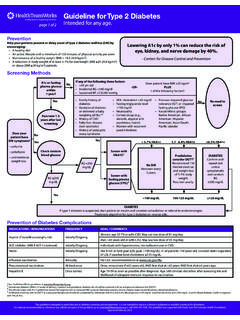
3 HbA1c / 65 mmol/mol; Commence oralhypoglycaemic agents. Optimise Blood Pressure to < 140/80 mm/Hg Teach blood glucose monitoring as per nationalguidelines and inform about maintaining targetsof - mmol/L pre meals. Give information on healthy eating and available from Diabetes Centre. Provide patient with Diabetes Passport. Carry out foot assessment and classify foot riskaccording to National model of footcare Refer for retinal screeningPatients are triaged according to their HBA1cresultand are invited to attend a structured educationprogramme for Type 2 Diabetes called DESMONDHere they receive education about T2DM and diet,exercise, blood glucose testing, targets and If your patient has a fasting plasma/bloodglucose > mmol/L or positive ketones or afoot ulcer then they will be seen as anemergency. Please fax referral to the Diabetes Day Centre2. Annual Review in OPD (once engaged)
4 Patients will be placed on a waiting list for aconsultant review in OPD Diabetes Management should take place in general practice 4/6 monthlyTriage for Desmond If HbA1c< / 64 mmol/mol -Routine DESMOND appointment If - / 64 - 85 mmol/mol -DESMOND in 3/12 If HbA1c > 10% / 86 mmol/mol -DESMOND in 2-3 of DiabetesReferral to Beaumont Diabetes ServiceDiagnosis of Type 2 Diabetes2*Osmotic symptoms includepolyuria,nocturia and polydypsia Assess knowledge of self Management skills / self monitoring skills Optimise cardiovascular risk factors Carry out foot assessment as per national model of foot care Provide patient with a Diabetes Passport if they do not already have same, and record information in Passport If a change is made to medication, patients should be reviewed in GP practice with repeat bloods after 4 to 6 months Refer to National Retinopathy Screening ProgrammeManagement in GP Service 4-6 monthlyEvery visitWeight BMI Waist Circumference Blood PressureBloods at Annual ReviewHbA1cLipids (Fast if not on insulin) U/E LFTs Urine ACR TFTs and B12 if on metforminBloods at review visitHbA1cLipids LFTs U/E.
5 Repeat any previous abnormal testData to be collected at 4-6 monthly intervals in GP service Patients on Diabetes medications are encouraged to test their blood glucose. Frequency depends on thetreatment they are on - liase with DDC or Clinical Nurse Specialist ( Diabetes Integrated Care) for should wash their hands before testingGlucometers should be replaced every 2 - 3 years. Patients should register the meter with blood glucose levels are > mmol/L consistently for 2/52, patients are advised to contact DDC or GP for areview of health professionals use Glucometers in surgery on multiple patients, quality control testing should be carriedout on a regular basis. Contact relevant company for information on Glucose TestingPatients can be referred to CODE or XPERT education programmes instead of DESMOND - see HSE website forreferral patient is not suitable for group education please state this in hospital referral letter then patients can bereviewed individually in Diabetes Passports are available from Beaumont Diabetes Centre and Clinical Nurse Specialist (DiabetesIntegrated Care).
6 Please advise patients to bring their passport to each Diabetes hospital appointment and GP/ Practice with Pre Diabetes screen annually for Diabetes and advise re diet and lifestyle modification. PatientInformation Leaflets are available from Diabetes presenting with Type 2 Diabetes MellitusADULT PRESENTING WITH TYPE 2 Diabetes MELLITUSD iabetes Day Centre, Beaumont HospitalAdd SU Eg Gliclazide MR 30 mg OD;titrate to max. 120 mg ODEducate re. hypoglycaemiaTarget HbA1c 7% (53 mmol/mol)Targets and treatment shouldbe individualisedTarget HbA1cachieved?Dietary advice; weight loss; increased physical activityRefer to Diabetes Day Centre, Beaumont Hospital (DDC)GP Review in 3 to 4 monthsHBA1 CTARGET NOT ACHIEVEDMETFORMIN 500 mg twice daily (titrate to max. dose 1000 mg BDuntil HbA1ctarget achieved)Option 1SU and titrate+ MetforminSymptomaticEg. Weight-loss, polydypsia, polyuriaAsymptomaticOption 2 DPP-4 + MetforminOption 3 GLP 1 + MetforminNoOption 4 SGLT2 + MetforminAdd SU andtitrate or DPP-4or GLP 1 Add DPP-4or SGLT2 BMI 18-25 kg/m2 Remains weight loss, ketonesHBA1 CTARGET NOT ACHIEVEDC ontact Diabetes Day Centre 4 BMI 25-30 kg/m2 HBA1 CTARGET NOT ACHIEVEDAdd SU and titrateor SGLT2 or GLP1 (stop DPP-4)Add SU and titrateor DPP-4 (Stop GLP1)or SGLT2 continue GLP 1 Hypoglycaemic AgentsContinue 4 mthsHBA1 CTARGET NOT ACHIEVEDO ption 1 GLP1 + Metformin Esp.
7 If BMI >35 kg/m2 Option 2 DPP4 + MetforminOption 3 SGLT2 + MetforminAdd SGLT2or SU and titrateAdd GLP1 (stop DPP-4)or SGLT2 or SU and titrate Add GLP1 or DPP-4 or SUand titrateMETFORMIN 500 mg BD (titrate to max. dose 1000 mg BDuntil HbA1ctarget achieved)Ketonuria, ketonaemia or blood glucose>18mmol/L)Seek urgent specialist advice from DDCO ption 4SU and titrate + MetforminAdd GLP-1 or DPP-4 or SGLT2 Contact Diabetes Day CentreYesHBA1 CTARGET NOT ACHIEVED5 BMI >30 kg/m2 HBA1 CTARGET NOT ACHIEVEDD iabetes Day Centre, Beaumont HospitalMetforminFirst line for T2DM especially if overweight (BMI 25kg/m2) Side effects include GI upset, Vitamin B12deficiency Contraindicated in renal impairment creatinine > 150 umol/L or eGFR < 30 ml/minUse with caution in those with creatinine > 130 - 150 umol/L or eGFR < 45 ml/min - seek specialist B12levels annuallyInsulin Secretagogues (Sulphonylureas (SU), Prandial glucose regulators)Sulphonylurea is the insulin secretagogue of choice.
8 To optimise compliance use Gliclazide MR 30 mg up to 120 mg or Glimepiride 1 mg up to 6 mg once dailySide effects include hypoglycaemia and weight gain. Education on hypoglycaemia treatment and prevention is essentialUse with caution in renal impairmentGLP 1 Agonist (GLP-1)Use in overweight or obese individuals. May promote weight lossGiven as a S/C injection - Medications in this class include: LiraglutideOD S/C injection, start at mg and titrateevery 2 weeks to mg per day as tolerated. Exenatide5 mcg BD S/C injection increasing to 10 mcg BD S/C. Exenatide LAR2 mg once weekly. DulaglutideMonotherapy weekly add on therapy weekly Side effects include: nausea, bloating, diarrhoea, pancreatitis (rare). Avoid in patients with history of pancreatitisand medullary thyroid cancer. In combination with sulphonylurea, may need to reduce thedose of sulphonylurea to prevent hypoglycaemia.
9 No long-term safety dataDipeptidyl Peptidase-4 Inhibitors (DPP-4)Medications in this class include:Sitagliptin 100 mg OD or 50 mg BDVildagliptin 50 mg BDSaxagliptin 5 mg ODLinagliptin 5 mg OD (can be used in renal failure)Side effects include: nausea, dizziness, headache, sinusitis. Higher risk of heart failure observed in high risk patients on SaxagliptinFixed dose combinations with Metformin availableNo long term safety dataThiazolidinediones (TZD/Pioglitazone)TZDs can be given if Metformin poorly tolerated or in combination with Metformin, Sulphonylurea or DPP-4 inhibitor. Start Pioglitazone 15 mg up to 45 mg once dailySide effects include weight gain, fluid retention and anaemia. AVOID IN HEART FAILURE, history of heart failure or active liver disease. Measure LFT at baseline then at reviewMay increase risk of bladder cancerAvoid in elderly females with high fracture risk.
10 TZD reduce bone mineral density in post menopausal womenSodium Glucose like Transporters-2 (SGLT2)Dapagliflozin 10 mgs OD. Do not use if eGFR <60 ml/minEmpaglifloxin 10 mgs OD can be increased to 25 mgs OD. Do not use if eGFR <45 ml/min Canagliflozin 100 mgs can be increased to 300 mgs OD. Reduce dose if eGFR <60 ml/min and stop if eGFRis <45 in patients with amputation effects include urinary tract infections, genital infections, postural hypotension. Increased urinary output which cancause volume depletion. Increased risk of ketosis. Use with caution in elderly (> 75 yrs) and patients on loop long term safety Therapy forType 2 Diabetes Mellitus6 Reduce by half in renal impairment }Treatment of Hypertension inType 2 Diabetes MellitusTarget BP 140/80 mm HgIf not meeting target, add in next agent inalogrithmConsider specialist referral(three or more agents)Lifestyle modificationsHypertensionBP >140/90 mm Hg on 2 seperate visits,or on 24hr ABPMACE Inhibitor orAngiotensinReception BlockerThiazide DiureticCalcium ChannelBlockerBetaBlockerAlphaBlockerAld osterone AntagonistCentrally Acting AgentsSpecialist advice recommendedThiazide DiureticBetaBlockerAlphaBlockerCalcium ChannelBlockerCalcium ChannelBlockerBeta Blocker(for ischaemic heartdisease)ThiazideDiureticAlphaBlocke r7 Targets should be individualised, a lower target (BP 125/75 mm Hg)