Transcription of HEPARINISED SALINE INJECTION 50 IU/5ML - …
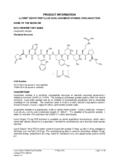
1 HEPARINISED SALINE Product Information HEPARINISED SALINE INJECTION 50 IU/5ML heparin sodium PRODUCT INFORMATION NAME OF THE drug The active ingredient in HEPARINISED SALINE INJECTION is heparin sodium (porcine mucous). The CAS number for heparin sodium is 9041-08-1. DESCRIPTION Heparin sodium is a preparation containing the sodium salt of a sulfated glucosaminoglycan present in mammalian tissues. On complete hydrolysis it liberates D-glucosamine, D-glucuronic acid, L-iduronic acid, acetic acid and sulfuric acid. It is prepared from the intestinal mucosa of pigs. Heparin sodium is a white or almost white powder, moderately hygroscopic, freely soluble in water. HEPARINISED SALINE INJECTION is a sterile solution of heparin sodium 10 IU/mL (50 IU/5 mL) with sodium chloride and water for INJECTION adjusted to the correct pH with sodium hydroxide.
2 HEPARINISED SALINE INJECTION contains no bacteriostatic agent and is intended for single use in a single patient only. Any solution remaining from an opened container should be discarded. PHARMACOLOGY Heparin is a naturally occurring mucopolysaccharide which inhibits the clotting of blood in vitro and in vivo. It enhances the rate at which antithrombin III neutralises thrombin and activated coagulation factors, factors IX, XI, XII and plasmin. Heparin itself has no effect on existing thrombi. Pharmacokinetics Heparin is not absorbed from the gastrointestinal tract. It is extensively bound to plasma proteins, does not cross the placenta and it is not distributed into breast milk. The half-life of heparin depends on the dose and route of administration as well as the method of calculation and is subject to wide inter- and intra-individual variation; a range of 1 to 6 hours with an average of hours has been cited.
3 It may be slightly prolonged in renal impairment, decreased in patients with pulmonary embolism, and either increased or decreased in patients with liver disorders. Heparin is taken up by the reticuloendothelial system. It is excreted in the urine, mainly as metabolites, although, after administration of large doses, up to 50% may be excreted unchanged. 1(7) HEPARINISED SALINE Product Information INDICATIONS Maintenance of the patency of intravenous INJECTION devices. CONTRAINDICATIONS Known hypersensitivity to heparin Use for anticoagulant therapy Severe thrombocytopenia HEPARINISED SALINE INJECTION should not be administered to patients in an uncontrollable active bleeding state (see Precautions) except when this condition is the result of disseminated intravascular coagulation. PRECAUTIONS For patients with known coagulation problems, specialist advice should be sought before use.
4 HEPARINISED SALINE INJECTION is not intended for intramuscular use. Haemorrhage Haemorrhage can occur at virtually any site in patients receiving heparin. An unexplained fall in haematocrit, a fall in blood pressure, or any other unexplained symptom warrants consideration of a haemorrhagic event. HEPARINISED SALINE INJECTION should be used with caution in conditions in which there is an increased risk of haemorrhage, such as the following. Gastrointestinal Gastric or duodenal ulcers, continuous tube drainage of the stomach or small intestine. Cardiovascular Subacute bacterial endocarditis, severe hypertension. Surgical During and immediately after (a) spinal tap or spinal anaesthesia or (b) major surgery, especially that involving the brain, eye or spinal cord. Haematological Actual or potential haemorrhagic states, such as haemophilia, thrombocytopenia and some vascular purpuras.
5 Other Menstruation, liver disease with impaired haemostasis. 2(7) HEPARINISED SALINE Product Information Thrombocytopenia Thrombocytopenia occurs in patients receiving heparin with a reported incidence of 0 to 30% and thrombocytopenia of any degree should be monitored closely. If the count falls below 100,000/mm3 or if recurrent thrombosis develops (see White clot syndrome), HEPARINISED SALINE INJECTION should be discontinued. If continued heparin therapy is essential, utilise heparin from a different organ source and reinstitute therapy with caution. Delayed Onset of HIT and HITT Heparin-induced Thrombocytopenia (HIT) and Heparin-induced Thrombocytopenia and Thrombosis (HITT) can occur up to several weeks after the discontinuation of heparin therapy. Patients presenting with thrombocytopenia or thrombosis after discontinuation of heparin should be evaluated for HIT and HITT.
6 * White clot syndrome It has been reported that patients taking heparin may develop new thrombus formation in association with thrombocytopenia. This development is the result of the irreversible aggregation of platelets induced by heparin, the so-called white clot syndrome. The process may lead to severe thromboembolic complications such as skin necrosis, gangrene of the extremities that may lead to amputation, myocardial infarction, pulmonary embolism, stroke and possibly death. Therefore, HEPARINISED SALINE INJECTION administration should be promptly discontinued if a patient develops new thrombosis in association with thrombocytopenia. Hypersensitivity As heparin is derived from animal tissues it should be used with caution in patients with a history of allergy as hypersensitivity reactions may occur. Incompatibilities Precautions must be exercised when drugs which are incompatible with heparin are administered through an indwelling intravenous catheter containing HEPARINISED SALINE INJECTION (see Interactions with Other Drugs, Dosage and Administration).
7 Use in Neonates/Infants HEPARINISED SALINE INJECTION is not recommended for use in neonates. In infants, the cumulative amounts of heparin received from frequent administration of HEPARINISED SALINE INJECTION during a 24 hour period should be considered. Use in Elderly Patients Elderly patients, particularly women, appear to have a higher risk of haemorrhage and should be carefully monitored. Carcinogenesis, Mutagenesis, Impairment of fertility No long-term studies in animals have been performed to evaluate the carcinogenic potential of heparin. Also, no reproduction studies in animals have been performed concerning mutagenesis or impairment of fertility. 3(7) HEPARINISED SALINE Product Information Use in pregnancy (Category C) Animal reproduction studies have not been conducted with heparin sodium. It is also not known whether heparin sodium can cause fetal harm when administered to a pregnant woman or can affect reproduction capacity.
8 HEPARINISED SALINE INJECTION should be given to a pregnant woman only if clearly needed. Use in lactation Heparin is not excreted in the breast milk. Laboratory tests Periodic platelet counts, haematocrits and tests for occult blood in the stool are recommended during the entire course of HEPARINISED SALINE INJECTION use. Interactions with other drugs Platelet inhibitors Drugs such as aspirin (acetylsalicylic acid), dextran, phenylbutazone, ibuprofen, indomethacin, dipyridamole, hydroxychloroquine, abciximab, eptifibatide, tirofiban and others that interfere with platelet aggregation reactions (the main haemostatic defense of HEPARINISED patients) may induce bleeding and should be used with caution in patients receiving HEPARINISED SALINE INJECTION . Other interactions Digitalis, tetracyclines, nicotine or antihistamines may partially counteract the anticoagulant action of HEPARINISED SALINE INJECTION .
9 ADVERSE REACTIONS Haematological Haemorrhage is the major risk associated with heparin therapy although the low dose of HEPARINISED SALINE INJECTION would not normally evoke this. An overly prolonged clotting time or minor bleeding during therapy can usually be controlled by withdrawing the drug . Hypersensitivity Heparin may cause allergic reactions and possibly anaphylactic reactions. Generalised hypersensitivity reactions have been reported, with chills, fever and urticaria as the most common manifestations; asthma, rhinitis, lacrimation, headache, nausea and vomiting, and anaphylactoid reactions (including shock) have occurred more rarely. Itching and burning, especially on the plantar site of the feet, may occur. Thrombocytopenia Thrombocytopenia induced by heparin may be of two types. The first is an acute, but usually mild, fall in platelet count occurring within one to four days of initiation of therapy and which may resolve without cessation of treatment.
10 A direct effect of heparin on platelet aggregation appears to be responsible. The second type is a 4(7) HEPARINISED SALINE Product Information delayed onset thrombocytopenia, which has an immunological basis, and is more serious. It usually occurs after seven to eleven days of heparin and drug withdrawal is indicated. Thrombocytopenia of any degree should be monitored closely (see Precautions). Thrombocytopenia has been reported following small doses of heparin for catheter flushes. White clot syndrome White clot syndrome is a rare but serious complication to heparin therapy (see Precautions). Local irritation Skin necrosis at the INJECTION site has been reported and is thought to be a local manifestation of heparin induced platelet aggregation and thrombosis. This should be taken as a warning sign in patients who develop it and heparin therapy should be immediately discontinued.