Transcription of HOW A BILL BECOMES LAW: STEP BY STEP
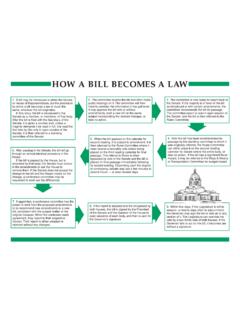
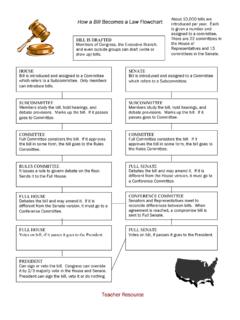
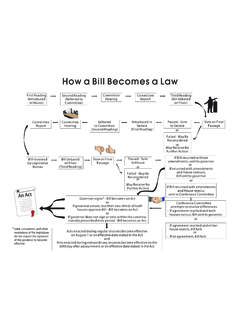
1 HOW A bill BECOMES LAW: step BY STEP1. The bill is filed for introduction. House bills are filed with the House Chief Clerk, Senate bills withthe Senate Secretary. Only members of the Legislature can file bills. They can be co-sponsored byany number of members, but the first-named sponsor on a House bill must be a Representative andon a Senate bill a Senator. The first-named sponsor is the principal sponsor and controls the The bill is introduced (also called "First Reading").3. The bill is referred to standing committee(s). They are called "standing" committees because theyremain in place from Legislature to Legislature unless they are removed by changing the bills go to House committee(s), Senate bills to Senate committee(s).
2 In the House the speakerdecides which bills go to which committees; in the Senate the president decides. Bills can be referredto committee either on First Reading or Second Reading. If they are referred on First Reading, theSecond Reading is a formality, does not advance the bill and is done later, on the fly. These"readings" -- there are three, the Third Reading being the actual vote to pass the bill -- are required bythe state The committee(s) meet, take testimony on the bill , and vote whether to recommend that the bill "dopass" as is or that it be changed ("do pass as amended").
3 5. The committee recommendations are read to the House (or the Senate). These are called"committee reports".6. If no amendments have been recommended, the leadership can put the bill on the "consentcalendar by which the members by common consent agree not to debate the bill on the floor. If nomember objects within a stated period to a bill being on the consent calendar (even one objection willtake it off), the bill will bypass floor debate and advance directly to the vote (called "Third Reading")that will send it to the second For a bill not on the consent calendar, the whole House (or whole Senate) meets to discuss the billand the recommendations that have been made by the standing committees.
4 This is the famous"COW" -- for "Committee of the Whole" (whole House or whole Senate). During COW, individualmembers can offer amendments directly; these are called floor amendments and are approved (ordisapproved) by voice vote as they are After all amendments have been voted on, the bill 's principal sponsor makes a motion that theCOW recommends that the bill be If the COW vote is in favor of recommending the bill , the bill is reprinted with the COW-approvedamendments, if any incorporated into the original text.
5 This new version is called the House (orSenate) engrossed bill . The COW votes only by unrecorded voice votes. A voice vote can beverified by a standing head-count called a "division." If the division goes against the bill there is a roll-call vote. If the roll call goes against the bill , the bill reverts to its pre-COW status -- available fordebate -- but except in rare cases it is in fact dead and is not brought up If approved by COW, the bill is voted on (this is the "Third Reading" required by the constitution).
6 If it passes, it goes to the second house ( if it is a House bill it now goes to the Senate).11. In the second house, steps 1 through 10 are repeated, this time with the bill going to the secondhouse's committees, consent or COW calendar and Third Reading. If it passes the second house itcomes back to the first house (its "house of origin").12. If the second house did not amend it, the bill now goes to the If the second house did amend it, the house of origin votes on whether to accept the second-house version of the If the house of origin accepts the second house's changes, it votes on the bill again (it's called"Final Reading"), and if the bill passes, it goes to the governor.
7 This second vote is required becausethe house of origin never has voted on this version of the If the house of origin rejects the second house's changes, its presiding officer (speaker in theHouse, president in the Senate) appoints a few members, usually including the principal sponsor, to acommittee to meet with a few members from the second house appointed by that house's presidingofficer and resolve the differences. This is called a conference The conference committee usually recommends approval of one of three versions of the bill : 1)As it passed its house of origin, 2) As it passed the second house, or -- and this is common -- 3) Withnew amendments that create a version of the bill that neither house has voted The conference report (the version of the bill recommended by the conference committee) issubmitted to both houses.
8 A voice vote in each house and then a final vote in at least one housemust approve it: if the conference committee recommended the House version, then the Senate mustvote a final time (because it never voted on the House version); if it recommends the Senate versionthen the House must vote a final time; and if it recommends a brand-new version, both houses mustvote a final After approval of the conference report and all required final votes, the bill is sent to the governorby its house of The governor must act on the bill by a prescribed deadline.
9 If the governor does not sign the billinto law or veto it, the bill is filed into law automatically.