Transcription of Information and Communication Technology
1 Information and Communication Technologyfor the School SystemCurricula for ICT in EducationVersion # byCentral Institute of Educational TechnologyNational Council of Educational Research and Training, New DelhiAugust, 2013 ForewordIt is well accepted that Information and Communication Technologies (ICT) havean immense potential to impact education of children, of teachers, of teachereducators and others, and provide newer and more effective ways of mitigatingsome of the challenges being faced by the educational system of our technologies distinguish themselves by their rapid evolution, continu-ously changing the modes of engagement with them.
2 A decade long infusion ofcomputers, and more recently ICT, have demonstrated varying impacts on learn-ing. Besides, ICT are also among the most expensive of investments, causing muchconfusion regarding practices that have the best returns on investments. Underthese circumstances, the recent National Policy on ICT in School Education is abeacon which directs future implementations. Guided by the Policy, and anchor-ing firmly on the National Curriculum Framework, this document unveils genericcurricula for the school school context is riddled with disparities emerging primarily from socio-economic sources, but manifested as denial of access.
3 At any given instant oftime, therefore, one encounters schools at different levels of preparedness for ICTinfusion, teachers with varying levels of awareness of and ability to use ICT in edu-cation and students with varied levels of exposure. Fitting a curricular prescriptioninto such diversity calls for an openness in present document shares the resolve of the National Curriculum Frame-work to respect the right of every learner to negotiate learning spaces on their ownand develop their unique world views. Accordingly it underscores the need for op-portunities of exploration, exercising of imagination and creativity and connectingto and being a part of the larger community of learners, thereby influencing andimpacting human NCERT appreciates the work done by the ICT Curriculum Group in ar-ticulating a response to the emergent need.
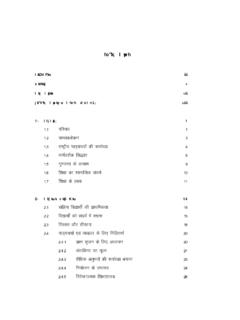
4 Several persons have contributed tothe development of the curricula; we are grateful to each of them. We hope thatthe curricula laid out here will not only be found relevant but also help orienttechnology use towards more meaningful applications in education. As an organi-sation committed to systemic reform and continuous improvement in the quality ofits interventions, NCERT welcomes comments and suggestions which will informfurther revision and Delhi, August, 2013 National Council of EducationalResearch and TrainingContents1 Overview72 Guiding Principles93 Part 1: ICT Curriculum for Competencies defined in the NationalPolicy on ICT in School Education.
5 The Learning Strands .. with the World .. with Each Other.. with ICT .. with ICT .. in Education .. Out and Bridging Divides.. Syllabus .. Learning .. 01 .. 01 Digital Story Telling .. 02 Data Analysis .. 03 Internet as a Learning Resource .. 04 ICT for teaching-learning - 1 .. 05 ICT for teaching-learning - 2 .. 06 ICT for Evaluation .. 02 .. 07 ICT for Documentation andCommunication .. Refresher 08 Games .. Refresher 09 Building Communities andCollectivising.
6 Refresher 10 to 13 Subject Specific ICT Tools .. Refresher 14 ICT for Educational Administrationand Management .. Induction 03 .. 244 Part 2: ICT Curriculum for The Learning Strands .. Syllabus .. Learning .. 01 .. 02 .. 03 .. 295 ICT Curriculum Group311. OverviewThe National Policy on ICT in school education has set the goal of preparingyouth to participate creatively in the establishment, sustenance and growth of aknowledge society leading to all round socio-economic development of the nationand to be geared for global National Curriculum Framework which guides the teaching-learning effortin schools cautions that Technology used as a mere medium to disseminate infor-mation tends to bypass the teacher.
7 It expresses a firm belief that teachers andchildren must be treated not merely as consumers but also as active producers. Itis the two-way interactivity rather than one-way reception that would make thetechnology present curricula for ICT in education is a step towards realizing the goalsof both the National Policy and the National Curriculum Framework. It hasfactored in the rapid evolution of technologies and the ground realities of Indianschool systems. For the teacher, it is an initiation into exploring educationalpossibilities of Technology , learning to make the right choices of hardware, softwareand ICT interactions, and more importantly, growing to become a critical user ofICT.
8 For the student, it is an initiation into creativity, problem solving, and anintroduction to the world of Information and technologies which could also shapecareer distinguish themselves from other technologies by their rapid evolution,defeating attempts to define a curriculum which can serve the schools for a up with the changes require constant upgradation and at times, unavoid-able replacements, which makes it an expensive proposition. Given the dynamicnature of the field, the curricula, emphasising the core educational purposes, aregeneric by design and focus on a broad exposure to technologies aimed at enhanc-ing the creativity and imagination of the that teachers as a group represent varying levels of exposure toICT.
9 The curriculum for teachers attempts to fast track them into becoming pro-ficient users of ICT by defining milestones and an evaluation system that allowsfor teachers to assess their readiness and decide their pace through the on the size of the school, the infrastructure available and other related78 CHAPTER 1. OVERVIEW issues like availability of electricity, students may have varying access to the ICTfacilities and resources. The student s curriculum, therefore, is designed as a threeyear course spanning 90 weeks with three sessions per week.
10 Schools may opt tobegin the curricular programme as early as sixth grade (beginning of the upperprimary stage), in any case completing the programme before the student leavesschool. The ICT curriculum is a common programme for all students in such it is distinct from any optional subject at the plus two stage and distinctfrom any vocational education programme under the curricula are built around a set of guiding principles, enabling any schoolsystem to provide the right exposure to emerging technologies to build capabilitiesin teachers and students, not only to use Technology comfortably.