Transcription of INTERVIEW TEMPLATE - National Park Service
1 INTERVIEW TEMPLATE The four segments of an INTERVIEW are: - Opening (makes the applicant comfortable; speak about the organization and the job). The first three minutes will determine the tone of the INTERVIEW . - Body (asks background, situational, and job interest questions; discuss employment conditions; clarify resume information) - Closing (give applicant an opportunity to ask questions about the organization, job benefits, and advancement opportunities; tell the applicant when a decision will be made, and establish how soon the applicant could report for work, if selected) - Evaluation Period (the individual conducting the INTERVIEW prepares a summary of the INTERVIEW along with his or her observations).
2 ASK JOB APPLICANTS ONLY FOR INFORMATION THAT IS DIRECTLY RELATED TO THE ABILITY TO PERFORM THE JOB. Pre- INTERVIEW Preparation 1. Document the job requirements that will be covered in the INTERVIEW . 2. List the knowledge, skills, abilities or competencies which are required to perform the critical tasks of the position. 3. Think about what you are looking for that will support the essential elements of the job. 4. Design questions which verify the candidates have the knowledge, skills, abilities, or competencies required to perform the critical tasks of the job.
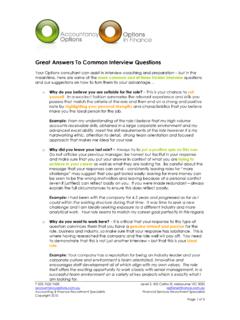
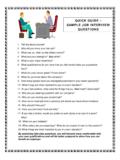
3 Ask questions which begin with How would you handle the following Use typical examples of situations which may arise in the performance of the critical tasks, : Competency: ABILITY TO RESPOND TO DEADLINE PRESSURE. question : Describe a time you made an extraordinary effort to meet a deadline. What did you do and what were the results? Competency: CUSTOMER Service . question : Give me an example when you were working with a client who was unhappy with the Service they were receiving from you.
4 What did you do and what were the results? Competency: INITIATIVE. question : What was the most difficult task you have had to learn? How did you learn it and what was the result? Competency: RESULTS ORIENTED. question : Describe a time you were involved in developing a new program or Service . What specific steps did you take to contribute to a successful implementation? Competency: STRESS TOLERANCE. question : Tell me about a situation which involved a highly sensitive project, budget constraints, unrealistic deadlines, or rejection of your work.
5 How did you handle the situation? 5. List the questions to assure all candidates are asked essentially the same questions. 6. For each requirement or job category to be covered, design a rating strategy for evaluating responses. 7. Script your INTERVIEW by preparing an outline for the opening, body, and closing. 8. Be prepared to explain any special employment conditions, organizational procedures, or job requirements. 9. Review the application before the INTERVIEW . Note key points on which information is needed.
6 Identify positives and negatives. 10. Determine how much time each INTERVIEW will require and set up a schedule. Arrange a suitable setting, free from interruptions. Come out from behind your desk to conduct the INTERVIEW . Leave enough time between interviews to prepare a written record. Information Gathering To ensure a good fit with your office, ask job applicants about their values as well as their accomplishments. Applications and resumes suggest skills, but what candidates believe in and how they make decisions will equally affect their performance.
7 Enrich the hiring process with the following steps: 1. Establish rapport. Your opening remarks should refer to some facet of the applicant s background. 2. Introduce NPS and your park , region or your organization s values. Encourage the candidate to ask questions to get a sense of the organization s culture. If possible, provide written information on your organization. 3. Completely cover the applicant s training, education, work experience and achievements in a chronological and systematic manner. 4.
8 Avoid questions that can be answered with a yes or no answer. 5. Ask questions which will assist the applicant in expressing ideas and feelings in a frank and honest manner. 6. Begin with broad introductory questions which build confidence and set the stage for more specific questions to follow. As the INTERVIEW progresses, ask open-ended questions. Example: ask what the candidate did or did not like about a previous job, management style, or office; who helped the candidate succeed and how; what caused the most problems on the last job (or any job) and how the candidate found a solution; what activities does the candidate avoid or feel ill suited to perform.
9 Observe how the candidate chooses key details from many experiences. 7. Ask questions which follow up on key thoughts (ideas, opinions, or experiences) expressed by the candidate which appear to have an important bearing upon the matter under discussion. 8. Use comments or actions which indicate understanding and will encourage the candidate to continue speaking. Be a good listener. 9. If a candidate indicates he or she does not want you to contact a former or current supervisor, ask them to explain their reluctance and work through it with them if possible.
10 If the candidate is afraid the supervisor will say something bad about them, ask them to describe what they think the supervisor will say and why they think this. If the candidate thinks you may get negative information from a current or previous supervisor, assure the candidate his or her explanation of the situation will also help you weigh what you hear. Encourage the candidate to give you the names and phone numbers of others in the organization who might be able to give countering or balancing information.