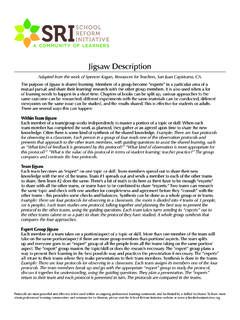
Transcription of Jigsaw Discussion Protocol: One Text
1 Jigsaw Discussion protocol : Chunking One Text Purpose: This protocol allows small groups to engage in an effective, time efficient Discussion of a longer text. Having every student read every page or section may not be necessary. Students can divide up the text, become an expert in one section and hear oral summaries of the others and still gain an understanding of the material. Materials: Copies of a textbook chapter or longer article for each student. Procedure: 1. Divide the text into manageable sections. 2. Arrange the students into groups so there are the same number of people in each group as sections to read. Assign the sections to each member. 3. Students read their section independently looking for key points, new information, or answers to questions brainstormed earlier.
2 4. Each member in turn shares their important points or summaries of their section of the text. 5. Have students independently write/reflect on their own understanding after the Discussion . Debrief: Have groups or individuals share insights and discoveries. Did the group process help members gain an understanding of the whole text? What worked well for the group? Are there Discussion skills the group could improve? Are their any lingering questions or misconceptions about the topic? Variation: Divide the text selection into manageable chunks. Create the same number of small groups as there are chunks. In this variation it doesn t matter how many students are in each small group. The group becomes expert in their assigned section; reading and discussing main points.
3 Then the group writes a summary (or blog post) for the rest of the class. Whole group listens to or reads the various summaries to gain information and/or make connections between the sections.