Transcription of Knowledge sharing: A review and directions for …
1 Knowledge sharing: A review and directions for future researchSheng Wanga, , Raymond A. Noeb,1aDepartment of Management, University of Nevada, Las Vegas, 4505 Maryland Parkway, Las Vegas, NV 89154, United StatesbDepartment of Management & Human Resources, Fisher College of Business, The Ohio State University, United Statesarticle infoabstractThe success of Knowledge management initiatives depends on Knowledge sharing. This paperreviews qualitative and quantitative studies of individual-level Knowledge sharing. Based on theliterature review we developed a framework for understanding Knowledge sharing research. Theframework identifiesfive areas of emphasis of Knowledge sharing research: organizationalcontext, interpersonal and team characteristics, cultural characteristics, individual characteristics,and motivational factors.
2 For each emphasis area the paper discusses the theoretical frameworksused and summarizes the empirical research results. The paper concludes with a discussion ofemerging issues, new research directions , and practical implications of Knowledge sharingresearch. 2009 Elsevier Inc. All rights : Knowledge sharingKnowledge exchangeKnowledge managementKnowledge is a critical organizational resource that provides a sustainable competitive advantage in a competitive anddynamic economy ( ,Davenport & Prusak, 1998; Foss & Pedersen, 2002; Grant, 1996; Spender & Grant, 1996). To gain acompetitive advantage it is necessary but insufficient for organizations to rely on staffing and training systems that focus onselecting employees who have specific Knowledge , skills, abilities, or competencies or helping employees acquire them ( ,Brown & Duguid, 1991).
3 Organizations must also consider how to transfer expertise and Knowledge from experts who have it tonovices who need to know (Hinds, Patterson, & Pfeffer, 2001). That is, organizations need to emphasize and more effectivelyexploit Knowledge -based resources that already exist within the organization (Damodaran & Olphert, 2000; Davenport & Prusak,1998; Spender & Grant, 1996).As one Knowledge -centered activity, Knowledge sharing is the fundamental means through which employees can contribute toknowledge application, innovation, and ultimately the competitive advantage of the organization (Jackson, Chuang, Harden, Jiang,& Joseph, 2006). Knowledge sharing between employees and within and across teams allows organizations to exploit andcapitalize on Knowledge -based resources (Cabrera & Cabrera, 2005; Damodaran & Olphert, 2000; Davenport & Prusak, 1998).
4 Research has shown that Knowledge sharing and combination is positively related to reductions in production costs, fastercompletion of new product development projects, team performance,firm innovation capabilities, andfirm performanceincluding sales growth and revenue from new products and services ( ,Arthur & Huntley, 2005; Collins & Smith, 2006;Cummings, 2004; Hansen, 2002; Lin, 2007d; Mesmer-Magnus & DeChurch, 2009).Because of the potential benefits that can be realized from Knowledge sharing, many organizations have investedconsiderable time and money into Knowledge management (KM) initiatives including the development of knowledgemanagement systems (KMS) which use state-of-the-art technology to facilitate the collection, storage, and distribution ofknowledge. However, despite these investments it has been estimated that at least $ billion are lost per year by Fortune 500 Human Resource Management review 20 (2010) 115 131 Corresponding author.
5 Tel.: +1 702 895 5394; fax: +1 702 895 Noe).1 Tel.: +1 614 292 $ see front matter 2009 Elsevier Inc. All rights lists available atScienceDirectHuman Resource Management Reviewjournal homepage: as a result of failing to share Knowledge (Babcock, 2004). An important reason for the failure of KMS to facilitateknowledge sharing is the lack of consideration of how the organizational and interpersonal context as well as individualcharacteristics influence Knowledge sharing (Carter & Scarbrough, 2001; Voelpel, Dous, & Davenport, 2005).This paper contributes to our understanding of Knowledge sharing in several ways. First, we review and integrate the literaturefrom several different disciplines investigating how organizational, team, and individual characteristics influence individual-levelknowledge sharing.
6 Studies of individual-level Knowledge sharing have been conducted in information systems ( ,Wasko &Faraj, 2005), organizational behavior ( ,Bordia, Irmer, & Abusah, 2006), strategic management ( ,Reagans & McEvily, 2003),and psychology ( ,Lin, 2007a) but no systematic review has been conducted to date. Prior reviews have focused ontechnological issues involved in Knowledge sharing or Knowledge transfer across units, organizations, or within interorganizationnetworks (seeAlavi & Leidner, 2001; Argote, 1999; Argote, McEvily, & Reagans, 2003for reviews). This review focuses onunderstanding the factors that influence Knowledge sharing between employees. This is important because team andorganizational level Knowledge is influenced by the extent to which Knowledge sharing occurs between employees ( ,Cabrera& Cabrera, 2005; Gupta & Govindarajan, 2000; Nonaka, 1994; Polanyi, 1966; Tsoukas & Vladimirous, 2001).
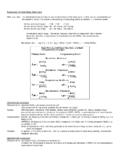
7 Second, this review provides an organizing framework for previous Knowledge sharing research and identifies emergingtheoretical and methodological issues and future research needs. The framework shown inFig. 1was based on the review of theliterature and provides a structure for the 1showsfive emphasis areas of Knowledge sharing research, the topicswithin each area of emphasis that have been investigated, and the relationships between each area of emphasis and knowledgesharing. As shown inFig. 1, the topics studied within each area of emphasis have been shown to directly or indirectly influenceknowledge sharing through motivational factors. The right hand ofFig. 1shows the common dependent variables examined inthe literature ( Knowledge sharing intention, intention to encourage Knowledge sharing, and Knowledge sharing behaviors).
8 Also, inFig. 1, the topics shown in the shaded boxes with solid lines have been examined in the existing literature. The topicsshown in the boxes with dotted lines need future research attention. The topics shown in the overlapping areas represent thosethat have been examined in prior studies but still warrant further research attention. Third, this review contributes to humanresource management practice by discussing the implications of Knowledge sharing research for the implementation, support,and effectiveness of Knowledge sharing initiatives in paper begins by discussing how we identified the studies included in the review and defines important concepts found inknowledge sharing research ( , Knowledge , Knowledge sharing). Next, for each area of emphasis the paper identifies itstheoretical foundations and reviews research results.
9 The last two sections of the paper discuss emerging issues and futureFig. framework of Knowledge sharing Wang, Noe / Human Resource Management review 20 (2010) 115 131research questions that need to be addressed to advance our understanding of individual-level Knowledge sharing and thepractical implications of Knowledge sharing Identification of studiesWe conducted a narrative review of the literature rather than a meta-analysis because of the wide variety of disciplinescontributing to individual-level Knowledge sharing research, the small number of empirical studies investigating any one ofthe factors in each emphasis area, the lack of use of common measures of Knowledge sharing, and our interest inunderstanding the different theories that have been used as thebasis for Knowledge sharing research.
10 The articles included inthis review were primarily identified using ABI-Inform and Business Source Premier. Articles published in academicallyrefereed journals in management, organizational behavior, human resource development, applied psychology, andinformation systems were included in the review . Work published in books, conferences, or working papers was sections of articles found were also searched. Knowledge sharing, Knowledge exchange, and their variations wereused as search found seventy-six qualitative and quantitative studies that were published sinceArgote (1999)through early review also includes three studies published prior to 1999 (Constant, Kiesler, & Sproull, 1994; Constant, Sproull, & Kiesler,1996; Lam, 1996) because they have been cited quite often in the literature but were not included in previous reviews.