Transcription of Labour Act Chapter 198 - ilo.org
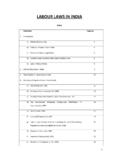
1 Constitution of Nigeria Court of AppealHigh CourtsHome Page Law Reporting Laws of the Federation of NigeriaLegal EducationQ&ASupreme CourtJobs at Nigeria-law Labour Act Chapter 198 Laws of the Federation of Nigeria 1990 Arrangement of Sections Part I General Provisions as to protection of wages, contracts of employment and terms and conditions of employment Protection of wages Contracts of employment Terms and conditions of employment General PART II Recruiting Recruiters and recruiting generally Recruiting for employment in Nigeria 1. Manner of payment. 2. Agreement as to place and manner of spending wages illegal. 3. Wages not to be paid on certain premises.
2 4. Advances. 5. Deductions (including deductions for over-payment of wages). 6. Authority of employer to open shop. 7. Written particulars of terms of employment. 8. Medical examination. 9. Contracts: general. 10. Transfer to other employment. 11. Termination of contracts by notice. 12. Common employment not a defence. 13. Hours of work and overtime. 14. Provision of transport. 15. Periodicity of payment of wages. 16. Sick leave. 17. Duty of employer to provide work. 18. Annual holidays with pay. 19. Calculation of leave pay and sickness benefits. 20. Redundancy. 21. Offences. 22. Exemptions. 23. Prohibition of recruiting except under permit or licence. 24. Employer's permit. 25. Recruiter's licence.
3 26. Restrictions on recruiting. 27. Recruiting: miscellaneous provisions. 28. Health. 29. Transport. 30. Expenses and maintenance. 31. Repatriation. 32. Capitation fee. 33. Procedural requirements. 34. Right to be accompanied by family. 35. Deferment of wages. Page 1 of 40 Labour Act17/08/2011 Recruiting for employment outside Nigeria Enforcement provisions Application Part III Special Classes Of Worker And Miscellaneous Special Provisions Apprentices Employment of women Young persons Domestic service Labour health areas Registration, employment exchanges, etc. Forced Labour 36. Power of prohibition. 37. International agreements.
4 38. Duration of contract and return passages. 39. Procedure prior to leaving Nigeria. 40. Special terms and conditions of contract. 41. Surrender of permits. 42. Embarkation check. 43. Exemption from customs on repatriation. 44. Right to be accompanied by family at employer's expense. 45. Inducing recruiting by fraud, etc. 46. Neglect or ill-treatment. 47. Other offences. 48. Application. 49. Contracts of apprenticeship. 50. Attestation. 51. Retention of apprentice after expiry of contract. 52. Regulations. 53. Offences. General. 54. Maternity protection 55. Night work. 56. Underground work. 57. Regulations. 58. Offences. 59. General. 60. Night work. 61. Shipping. Register of young persons in industrial undertakings.
5 63. Regulations. 64. Offences. 65. Regulations. 66. Labour health areas. 67. Regulations. 68. Registration of employers. 69. Labour schemes. 70. Employment exchanges. 71. Fee-charging employment agencies. 72. Offences. 73. Prohibition of forced Labour . 74. Labour required in emergencies and for communal obligations Page 2 of 40 Labour Act17/08/2011 Part IV Supplemental Records and returns Administration Settlement of disputes Miscellaneous Schedule Transitional and saving Provisions Labour Act Chapter 198 Laws of the Federation of Nigeria 1990 An Act to repeal and replace the Labour Code Act and consolidate the law relating to Labour 1st August 1971 Part I General provisions as to protection of wages, contracts of employment and terms and conditions of employment Protection of wages 1.
6 (1) Subject to this section- (a) the wages of a worker shall in all contracts be made payable in legal tender and not otherwise; and (b) if in any contract the whole or any part of the wages of a worker is made payable in any other manner the contract shall be illegal, null and void. (2) An employer may provide food, a dwelling place or any other allowance or privilege as a part of a worker's remuneration if the food, dwelling place, allowance or privilege is prescribed by law, by a collective agreement or by an arbitration award because it is customary or desirable in view of the nature of the industry or occupation in which the worker is engaged; but in no case shall an 75. Records. 76. Returns.
7 77. Authorized Labour offices. 78. Powers of authorized Labour officers. 79. Delegation of functions. 80. Jurisdiction. 81. Labour complaints. 82. Powers of the court. 83. Procedure. 84. Compensation, and provision of food. 85. Costs. 86. Application to public authorities. 87. Contracts made abroad. 88. Regulations. 89. Savings and exemptions. 90. Repeal, and transitional and saving provisions. 91. Interpretation. 92. Short title. Page 3 of 40 Labour Act17/08/2011 give to any worker any intoxicating liquor or noxious drug by way of remuneration. (3) Except where otherwise expressly permitted by this Act, wages payable in money shall be paid only in legal tender or, with the prior consent in writing of the worker concerned, by cheque or postal order and payment or purported payment in any other form shall be illegal, null and void.
8 2. No employer shall impose in any contract for the employment of any worker any terms as to the place at which, or the manner in which, or the person with whom any wages paid to the worker are to be expended; and every contract between an employer and a worker containing any such terms shall be illegal, null and void. 3. Wages shall not be paid to a worker in premises used for the sale of intoxicating liquor or for the retail sale of goods, except in the case of a worker employed on the premises. 4. (1) No employer may make to a worker an advance of wages in excess of one month's wages. (2) Where an advance in respect of wages has been paid to a worker the minimum period for the recovery of the advance by the employer shall be three months.
9 (3) No advance in respect of wages shall be paid to a worker who is liable to repay any part of such an advance paid to him previously, except in cases of necessity as so approved by the employer. (4) No employer shall make any deduction by way of discount, interest or any similar charge on account of any advance of wages paid to a worker in anticipation of the regular period of payment of the wages. (5) The State Authority may by order declare that this section shall not apply to any particular kind of advance paid to any particular class of worker or to all workers. 5. (1) Except where it is expressly permitted by this Act or any other law, no employer shall make any deduction or make any agreement or contract with a worker for any deduction from the wages to be paid by the employer to the worker, or for any payment to the employer by the worker, for or in respect of any fines: Provided that, with the prior consent in writing of an authorized Labour officer, a reasonable deduction may be made in respect of injury or loss caused to the employer by the willful misconduct or neglect of the worker.
10 (2) An employer may with the consent of a worker make deductions from the wages of the worker and pay to the appropriate person any contributions to provident or pension funds or other schemes agreed to by the worker and approved by the State Authority. (3) Upon the registration and recognition of any of the trade union specified in Part A of Schedule 3 to the Trade Unions Act, the employer shall- (a) make deductions from the wages of all workers eligible to be members of the union for the purpose of paying contributions to the trade union so recognised; and (b) pay any sum so deducted to the union, but a worker may contract out of the system, in writing, and where he has done so, no deductions shall be made from his wages in respect of contributions mentioned in paragraph (a) of this section.