Example: marketing
Learning Logistic Regressors by Gradient Descent
Conditional likelihood for Logistic Regression is concave. Find optimum with gradient ascent ! Gradient ascent is simplest of optimization approaches " e.g., Conjugate gradient ascent can be much better Gradient: Step size ... Learning Problems as Expectations !
Tags:
Information
Domain:
Source:
Link to this page:
Documents from same domain

Working in Teams - courses.cs.washington.edu
courses.cs.washington.eduTeam pros and cons •Benefits –Attack bigger problems in a short period of time –Utilize the collective experience of everyone •Risks –Communication and coordination issues

The History of Artificial Intelligence
courses.cs.washington.eduThe term artificial intelligence was first coined by John McCarthy in 1956 when he held the first academic conference on the subject. But the journey to understand if machines can truly think began much before that.
Introduction to Database Systems CSE 414
courses.cs.washington.eduIntroduction to Database Systems CSE 414 Lecture 8: Datalog CSE 414 -Spring 2018 1. Announcements •HW3 posted (1 week) –Same dataset, more challenging queries –We have sent out all Azure codes if you filled out the form earlier –Make sure you use the cheapest tier
Introduction to Database Systems CSE 444
courses.cs.washington.edu8 Write-Ahead Log • Enables the use of STEAL and NO-FORCE • Log: append-only file containing log records • For every update, commit, or abort operation – Write physical, logical, or physiological log record (more later)
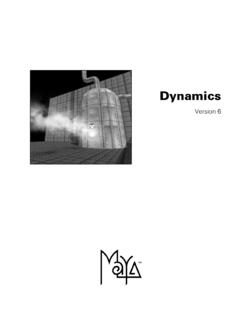
Dynamics - University of Washington
courses.cs.washington.eduDynamics is a branch of physics that describes how objects move. Dynamic animation uses rules of physics to simulate natural forces. You specify the actions you want the object to take, then let the software figure out how to animate the object.
CSE 544 Principles of Database Management Systems
courses.cs.washington.eduCSE 544 - Winter 2009 Goals of the Class • Study principles of data management – Data models, data independence, normalization – Data integrity, availability, consistency, etc.
Part I: 22 Multiple choice questions (2 points each)
courses.cs.washington.eduCSE 143 2000WI Final Exam Version B Page 2 of 16 The most important reason for including a destructor in a class is: A. To print a message for debugging purposes B. To store information about an object before it goes out of scope

Java Graphics & GUIs (and Swing/AWT libraries)
courses.cs.washington.eduWhy study GUIs? • Learn about event-driven programming techniques • Practice learning and using a large, complex API • A chance to see how it is designed and learn from it: …

Building Projects in JDK 1.7 (Java 7) using Eclipse
courses.cs.washington.eduBuilding Projects in JDK 1.7 (Java 7) using Eclipse In Eclipse, you can see which version of JDK you have by navigating to Window -> Preferences (On MAC, Preferences is located under Eclipse, not Window) Under preferences, you will see which versions of the JDK you

3-requirements - University of Washington
courses.cs.washington.eduRequirements Outline (p13‐14) ... – use cases as ellipses with their names (verbs) – line associations, connecting an actor to a use case in which that actor participates – use cases can be connected to other cases th t th / lthat they use / rely on Check out book
Related documents

Conditional Expectation - Department of Mathematics ...
web.ma.utexas.eduJan 24, 2015 · Lecture 10: Conditional Expectation 3 of 17 Look at the illustrations above and convince yourself that E[E[Xjs(Y)]js(Z)] = E[Xjs(Z)]. A general result along the same lines - called the tower property of con-ditional expectation - will be stated and proved below. Our first task is to prove that conditional expectations always exist.

STAT331 Logrank Test Introduction - Stanford University
web.stanford.eduprior expectations of the likely differences, properties of various tests for a variety of settings, and practical consequences of a false negative result. 2. ... Conditional on the 4 marginal totals, a single element (say d1j) defines the table. Furthermore, with this condition-

1 Discrete-time Kalman filter
www.robots.ox.ac.ukEstimation II Ian Reid Hilary Term, 2001 1 Discrete-time Kalman filter We ended the first part of this course deriving the Discrete-Time Kalman Filter as a recursive Bayes’