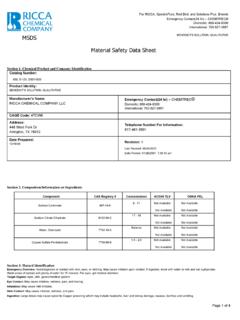
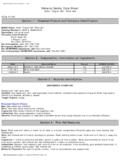
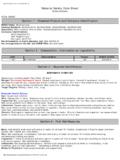
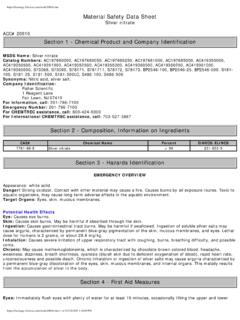
Transcription of Material Safety Data Sheet 95% Ethanol, 190 Proof
1 Safety data Sheet 95% ethanol , 190 Proof ACC# 90969 Section 1 - Chemical Product and Company IdentificationMSDS Name: 95% ethanol , 190 Proof Catalog Numbers: AC615110010, AC615110040 Synonyms: Ethyl alcohol; Ethyl alcohol anhydrous; Ethyl hydrate; Ethyl hydroxide; Fermentation alcohol; Grain alcohol; Methylcarbinol; Molasses alcohol; Spirits of wine Company Identification: Acros Organics One Reagent Lane Fair Lawn, NJ 07410 For information in North America, call: 800-ACROS-01 For emergencies in the US, call CHEMTREC: 800-424-9300 Section 2 - Composition, Information on Ingredients CAS#Chemical NamePercentEINECS/ELINCS64-17-5 Ethyl 231-791-2 Section 3 - Hazards Identification EMERGENCY OVERVIEWA ppearance: Colorless.
2 Flash Point: deg C. Warning! Causes severe eye irritation. Flammable liquid and vapor. Causes respiratory tract irritation. This substance has caused adverse reproductive and fetal effects in humans. May cause central nervous system depression. May cause liver, kidney and heart damage. Causes moderate skin irritation. Target Organs: Kidneys, heart, central nervous system, liver. Potential Health Effects Eye: Causes severe eye irritation. May cause painful sensitization to light. May cause chemical conjunctivitis and corneal damage.
3 Skin: Causes moderate skin irritation. May cause cyanosis of the extremities. Ingestion: May cause gastrointestinal irritation with nausea, vomiting and diarrhea. May cause systemic toxicity with acidosis. May cause central nervous system depression, characterized by excitement, followed by headache, dizziness, drowsiness, and nausea. Advanced stages may cause collapse, unconsciousness, coma and possible death due to respiratory failure. Inhalation: Inhalation of high concentrations may cause central nervous system effects characterized by nausea, headache, dizziness, unconsciousness and coma.
4 Causes respiratory tract irritation. May cause narcotic effects in high concentration. Vapors may cause dizziness or suffocation. Chronic: May cause reproductive and fetal effects. Laboratory experiments have resulted in mutagenic effects. Animal studies have reported the development of tumors. Prolonged exposure may cause liver, kidney, and heart damage. Section 4 - First Aid Measures Eyes: Get medical aid. Gently lift eyelids and flush continuously with wate r. Skin: Get medical aid. Wash clothing before reuse.
5 Flush skin with plenty of soap and water. Ingestion: Do not induce vomiting. If victim is conscious and alert, give 2-4 cupfuls of milk or water. Never give (1 of 6)7/23/2007 12:37:55 by mouth to an unconscious person. Get medical aid. Inhalation: Remove from exposure and move to fresh air immediately. If not breathing, give artificial respiration. If breathing is difficult, give oxygen. Get medical aid. Do NOT use mouth-to-mouth resuscitation. Notes to Physician: Treat symptomatically and supportively.
6 Persons with skin or eye disorders or liver, kidney, chronic respiratory diseases, or central and peripheral nervous sytem diseases may be at increased risk from exposure to this substance. Antidote: Replace fluid and electrolytes. Section 5 - Fire Fighting Measures General Information: Replace fluid and electrolytes. As in any fire, wear a self-contained breathing apparatus in pressure-demand, MSHA/NIOSH (approved or equivalent), and full protective gear. Vapors may form an explosive mixture with air. Vapors can travel to a source of ignition and flash back.
7 Will burn if involved in a fire. Flammable Liquid. Can release vapors that form explosive mixtures at temperatures above the flashpoint. Use water spray to keep fire-exposed containers cool. Containers may explode in the heat of a fire. Extinguishing Media: For small fires, use dry chemical, carbon dioxide, water spray or alcohol-resistant foam. For large fires, use water spray, fog, or alcohol-resistant foam. Use water spray to cool fire-exposed containers. Water may be ineffective. Do NOT use straight streams of water.
8 Flash Point: deg C ( deg F) Autoignition Temperature: 363 deg C ( deg F) Explosion Limits, vol % Upper: vol % NFPA Rating: (estimated) Health: 2; Flammability: 3; Instability: 0 Section 6 - Accidental Release Measures General Information: Use proper personal protective equipment as indicated in Section 8. Spills/Leaks: Absorb spill with inert Material ( vermiculite, sand or earth), then place in suitable container. Remove all sources of ignition. Use a spark- Proof tool. Provide ventilation.
9 A vapor suppressing foam may be used to reduce vapors. Section 7 - Handling and Storage Handling: Wash thoroughly after handling. Use only in a well-ventilated area. Ground and bond containers when transferring Material . Use spark- Proof tools and explosion Proof equipment. Avoid contact with eyes, skin, and clothing. Empty containers retain product residue, (liquid and/or vapor), and can be dangerous. Keep container tightly closed. Keep away from heat, sparks and flame. Avoid ingestion and inhalation. Do not pressurize, cut, weld, braze, solder, drill, grind, or expose empty containers to heat, sparks or open flames.
10 Storage: Keep away from heat, sparks, and flame. Keep away from sources of ignition. Store in a tightly closed container. Keep from contact with oxidizing materials. Store in a cool, dry, well-ventilated area away from incompatible substances. Flammables-area. Do not store near perchlorates, peroxides, chromic acid or nitric acid. Section 8 - Exposure Controls, Personal Protection Engineering Controls: Use explosion- Proof ventilation equipment. Facilities storing or utilizing this Material should be equipped with an eyewash facility and a Safety shower.