Transcription of Material Safety Data Sheet - Anco Chemicals
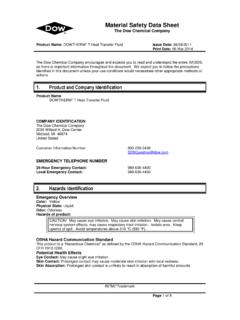
1 Product Name: DOWTHERM* J HEAT TRANSFER FLUID Issue Date: 12/24/2012 Print Date: 06 Mar 2014 (TM)*Trademark Page 1 of 9 The Dow Chemical Company encourages and expects you to read and understand the entire (M)SDS, as there is important information throughout the document. We expect you to follow the precautions identified in this document unless your use conditions would necessitate other appropriate methods or actions. 1. Product and Company Identification Product Name DOWTHERM* J HEAT TRANSFER FLUID COMPANY IDENTIFICATION The Dow Chemical Company 2030 Willard H. Dow Center Midland, MI 48674 United States Customer Information Number: 800-258-2436 EMERGENCY TELEPHONE NUMBER 24-Hour Emergency Contact: 989-636-4400 Local Emergency Contact: 989-636-4400 2.
2 Hazards Identification Emergency Overview Color: Colorless Physical State: Liquid. Odor: Aromatic Hazards of product:WARNING! Combustible liquid and vapor. Causes skin irritation. Prolonged exposure may cause skin burns. May cause eye irritation. May be harmful if inhaled. May cause anesthetic effects. Aspiration hazard. Can enter lungs and cause damage. Vapor explosion hazard. Vapors may travel a long distance; ignition and/or flash back may occur. Isolate area. Keep upwind of spill. Stay out of low areas. Highly toxic to fish and/or other aquatic organisms. OSHA Hazard Communication Standard This product is a Hazardous Chemical as defined by the OSHA Hazard Communication Standard, 29 CFR Potential Health Effects Eye Contact: May cause slight eye irritation.
3 Corneal injury is unlikely. Material Safety data Sheet The Dow Chemical Company Product Name: DOWTHERM* J HEAT TRANSFER FLUID Issue Date: 12/24/2012 Page 2 of 9 Skin Contact: Brief contact may cause severe skin irritation with pain and local redness. Prolonged contact may cause skin burns. Symptoms may include pain, severe local redness, swelling, and tissue damage. Skin Absorption: Prolonged skin contact is unlikely to result in absorption of harmful amounts. Inhalation: Prolonged excessive exposure may cause adverse effects. Symptoms of excessive exposure may be anesthetic or narcotic effects; dizziness and drowsiness may be observed.
4 Based on the available data , respiratory irritation was not observed. Ingestion: Low toxicity if swallowed. Small amounts swallowed incidentally as a result of normal handling operations are not likely to cause injury; however, swallowing larger amounts may cause injury. Aspiration hazard: Aspiration into the lungs may occur during ingestion or vomiting, causing lung damage or even death due to chemical pneumonia. Effects of Repeated Exposure: In animals, effects have been reported on the following organs: Central nervous system. Kidney. Liver. Peripheral nervous system. Inhalation of diethylbenzene in concentrations above 100 ppm or ingestion of near lethal doses caused tissues of test animals to turn blue and urine to turn green.
5 Birth Defects/Developmental Effects: Has been toxic to the fetus in laboratory animals at doses toxic to the mother. Component CAS # Amount Diethylbenzene 25340-17-4 > % 4. First-aid measures Description of first aid measures General advice: First Aid responders should pay attention to self-protection and use the recommended protective clothing (chemical resistant gloves, splash protection). If potential for exposure exists refer to Section 8 for specific personal protective equipment. Inhalation: Move person to fresh air. If not breathing, give artificial respiration; if by mouth to mouth use rescuer protection (pocket mask, etc).
6 If breathing is difficult, oxygen should be administered by qualified personnel. Call a physician or transport to a medical facility. Skin Contact: Wash skin with plenty of water. Suitable emergency Safety shower facility should be available in work area. Eye Contact: Flush eyes thoroughly with water for several minutes. Remove contact lenses after the initial 1-2 minutes and continue flushing for several additional minutes. If effects occur, consult a physician, preferably an ophthalmologist. Ingestion: Do not induce vomiting. Call a physician and/or transport to emergency facility immediately.
7 Most important symptoms and effects, both acute and delayed Aside from the information found under Description of first aid measures (above) and Indication of immediate medical attention and special treatment needed (below), no additional symptoms and effects are anticipated. Indication of immediate medical attention and special treatment needed Maintain adequate ventilation and oxygenation of the patient. The decision of whether to induce vomiting or not should be made by a physician. If lavage is performed, suggest endotracheal and/or esophageal control. Danger from lung aspiration must be weighed against toxicity when considering emptying the stomach.
8 If burn is present, treat as any thermal burn, after decontamination. No specific antidote. Treatment of exposure should be directed at the control of symptoms and the clinical condition of the patient. 5. Fire Fighting Measures 3. Composition Information Product Name: DOWTHERM* J HEAT TRANSFER FLUID Issue Date: 12/24/2012 Page 3 of 9 Suitable extinguishing media Water fog or fine spray. Dry chemical fire extinguishers. Carbon dioxide fire extinguishers. Foam. General purpose synthetic foams (including AFFF type) or protein foams are preferred if available. Alcohol resistant foams (ATC type) may function.
9 Special hazards arising from the substance or mixture Hazardous Combustion Products: During a fire, smoke may contain the original Material in addition to combustion products of varying composition which may be toxic and/or irritating. Combustion products may include and are not limited to: Carbon monoxide. Carbon dioxide. Unusual Fire and Explosion Hazards: Violent steam generation or eruption may occur upon application of direct water stream to hot liquids. When product is stored in closed containers, a flammable atmosphere can develop. Vapors are heavier than air and may travel a long distance and accumulate in low lying areas.
10 Ignition and/or flash back may occur. Advice for firefighters Fire Fighting Procedures: Keep people away. Isolate fire and deny unnecessary entry. Stay upwind. Keep out of low areas where gases (fumes) can accumulate. Use water spray to cool fire exposed containers and fire affected zone until fire is out and danger of reignition has passed. Do not use direct water stream. May spread fire. Eliminate ignition sources. Burning liquids may be moved by flushing with water to protect personnel and minimize property damage. Avoid accumulation of water. Product may be carried across water surface spreading fire or contacting an ignition source.