Transcription of MATERIAL SAFETY DATA SHEET Blitz - chemflo
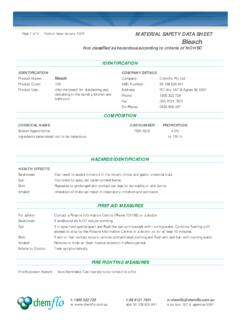
1 Page 1 of 4 Date of Issue: August 2009 MATERIAL SAFETY data SHEETB litzNot classifi ed as hazardous according to criteria of NOHSCt: 1300 322 729 f: 08 8121 7601 e: chemfl o@chemfl : abn: 50 138 626 641 a: po box 167 st agnes sa 5097 IDENTIFICATION IDENTIFICATIONCOMPANY DETAILSP roduct Name: BlitzCompany:Chemfl o Pty LtdProduct Code: ABN Number:50 138 626 641 Product Use: Manual dishwashing liquid & general purpose cleaner Address:PO Box 167 St Agnes SA 5097 Phone:1300 322 729 Fax:(08) 8121 7601Em Phone:0432 056 487 COMPOSITION CHEMICAL NAMECAS NUMBERPROPORTIONW ater7732-18-5> 60%Ingredients determined not to be hazardousto 100 % HAZARDS IDENTIFICATION HEALTH EFFECTSC lassifi cation:Non hazardous substance according to the criteria of NOHSC.
2 Non-dangerous goods classifi cation according to the Australian Dangerous Goods Code Poisons Schedule Not classifi edRisk Phrase:None allocated SAFETY Phrases:None allocated however: S2 - Keep out of reach of children FIRST AID MEASURES For advice:Contact a Poisons Information Centre (Phone 131126) or a doctorIngestion:Do NOT induce vomiting. Wash out mouth with water. Seek medical attention Eye:If contact with eye(s) occurs, hold eyes lids apart and fl ush the eye continuously with running water. Continue fl ushing until advised to stop by the Poisons Information Centre or a doctor, or for at least 15 minutes.
3 Seek immediate medical attentionSkin:Wash affected area thoroughly with water. If symptoms develop, seek medical attention. Inhaled:Not considered a probable path of exposure. If inhaled, remove victim from contaminated area. Apply artifi cial respiration if not breathing. If symptoms develop seek medical attention. First Aid Facilities:Eye wash and normal wash room facilitiesAdvice to Doctor:Treat symptomatically. Consult Poisons Information Centre (Phone Aus 131 126) t: 1300 322 729 f: 08 8121 7601 e: chemfl o@chemfl : abn: 50 138 626 641 a: po box 167 st agnes sa 5097 FIRE FIGHTING MEASURES Suitable Extinguishing Media Non fl ammable.
4 Water spray or fog, foam, dry chemical powder, BCF (where regulations permit) and carbon dioxide. Hazards from Combustion: This product is not combustible under normal conditions. However, it will break down under fi re conditions and the hydrocarbon element will burn. Heating may cause expansion or decomposition leading to violent rupture of containers. The packaging is not combustible under normal conditions. However, it will break down under fi re conditions and the hydrocarbon element will burn. Combustion products include combustible materials, toxic fumes of carbon monoxide (CO), poisonous fumes, corrosive fumes and acrid smoke.
5 Mists containing combustible materials may be explosive. Precautions for Fire Fighters & Special Protective Equipment Alert Fire Brigade and tell them location and nature of hazard. Wear full body protective clothing with breathing apparatus. Prevent, by any means available, spillage from entering drains or water course. Use water delivered as a fi ne spray to control fi re and cool adjacent area. Avoid spraying water onto liquid pools. DO NOT approach containers suspected to be hot. Cool fi re exposed containers with water spray from a protected location. If safe to do so, remove containers from path of fi re. Protective Clothing & EquipmentFire fi ghters should wear full protective clothing and self contained breathing apparatus(SCBA) Hazchem Code No Hazchem code allocated ACCIDENTAL RELEASE MEASURES Emergency Procedures: Clean up spills immediately.
6 Restrict access to the area of spill until completion of cleanup. Spill area will remain slippery until com-pletion of cleanup. For spills involving the release of a signifi cant amount of product (for example: product released by the puncture or damage of containers resulting in a spill of more than a few litres) spilled MATERIAL should be stopped from spreading by con-tainment using a barrier of sand or other inert MATERIAL . Use a mop or cloth to absorb spilled MATERIAL . Flush collected product to sewer. Rinse spill area thoroughly with water. Materials used for containment may be discarded to tip or landfi ll.
7 Copious amounts of foam may be generated during cleanup, especially during fi nal rinse of spill area. Foam will collapse of its own accord. Completion of cleanup of spill area will be indicated when rinse fails to generate foam. If large quantities of this MATERIAL enter storm water or waterways contact the Environmental Protection Authority. Personal Protective Equipment advice is contained below under heading EXPOSURE CONTROLS + PERSONAL PROTECTION of this MSDS. HANDLING + STORAGE Precautions for Safe Handling: - Chemicals packaging is generally secure and safe, and handlers do not require special SAFETY equipment to carry a chemical container containing this The product is usually dispensed directly into a sink or other tub and diluted with water.
8 When dispensing, ensure that the risk of splashing is When product is supplied in bulk containers (5L and 25L drums) the product may be transferred into smaller bottles. When such transfer occurs, ensure risk of splashing is minimised. 25 L drums should be tapped for dispensing product (the drums are drilled and bunged for this purpose).- Lifting bulk containers should be performed in accordance with the National Standard for Manual Handling [NOHSC:1001(1990)]Suitable container:Store in original containersStorage Incompatibilities: No information availableFlammability:Store product away from incompatible materials and foodstuff containers.
9 Store product in original containers in a cool, dry, well ventilated area away from direct sunlight. Keep containers securely sealed. Store out of reach of childrenPage 2 of 4 Date of Issue: August 2009t: 1300 322 729 f: 08 8121 7601 e: chemfl o@chemfl : abn: 50 138 626 641 a: po box 167 st agnes sa 5097 EXPOSURE CONTROLS + PERSONAL PROTECTION Exposure Standards: None established for this product. Engineering Controls: Natural ventilation should be adequate under normal use conditions. Respiratory Protection: Not required under normal use conditions. Eye Protection: Not required under normal use conditions.
10 Where a risk of splashing exists or when cleaning up signifi cant spills, wear chemical goggles or full face shield. Skin Protection: Not required under normal use conditions. Where a risk of splashing exists or when cleaning up signifi cant spills, wear PVC or rubber gloves on hands and suitable impervious protective clothing. SAFETY boots with non-slip soles should be worn for spill clean up. PHYSICAL + CHEMICAL PROPERTIES Appearance:Clear yellow viscous foaming liquid Flash Point:Non fl ammableOdour:Lemon Limits:N/ABoiling Point:N/ASolubility in Water:Soluble at all use proportionsSpecifi c :7 in neat formMelting Point:N/AVapour Pressure:N/ASTABILITY + REACTIVITYC hemical Stability: Stable under normal conditions of storage, handling and use.