Transcription of MATERIAL SAFETY DATA SHEET - Expl
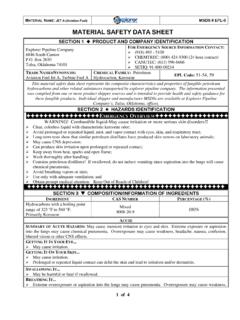
1 MATERIAL NAME: raffinate MSDS # EPL-8 1 of 5 MATERIAL SAFETY DATA SHEET SECTION 1 X PRODUCT AND COMPANY IDENTIFICATION Explorer Pipeline Company 6846 South Canton Box 2650 Tulsa, Oklahoma 74101 FOR EMERGENCY SOURCE INFORMATION CONTACT: (918) 493 - 5100 CHEMTREC: (800) 424-9300 (24 hour contact) CANUTEC: (613) 996-6666 SETIQ: 91-800-00214 TRADE NAMES/SYNONYMS: Petroleum Naphtha, Straight Run, Refined Light raffinate CHEMICAL FAMILY: Aliphatic Naphtha EPL Code: 18 This MATERIAL SAFETY data SHEET represents the composite characteristics and properties of fungible petroleum hydrocarbons and other related substances transported by explorer pipeline company. The information presented was compiled from one or more product shipper sources and is intended to provide health and SAFETY guidance for these fungible products. Individual shipper and manufacturer MSDSs are available at Explorer Pipeline Company s, Tulsa, Oklahoma, offices.
2 SECTION 2 ; HAZARDS IDENTIFICATION )))))))))))))))))EMERGENCY OVERVIEW)))))))))))))))))Danger Flammable Liquid!! Colorless liquid with characteristic gasoline odor, estimated odor threshold 15 ppm; Harmful or fatal if swallowed, inhaled or absorbed through skin. May cause CNS depression. Can produce skin irritation upon prolonged or repeated contact. Keep away from heat, sparks and open flame; Wash thoroughly after handling; Contains petroleum distillates! If swallowed, do not induce vomiting since aspiration into the lungs will cause chemical pneumonia; Avoid breathing vapors or mist; Use only with adequate ventilation and; Obtain prompt medical attention. Keep Out of Reach of Children! )))))))))))))))))))))))))))))))))))))))) )))))) SECTION 3 W COMPOSITION/INFORMATION OF INGREDIENTS INGREDIENT CAS NUMBER PERCENTAGE (%) raffinate , Straight Run Naptha Paraffins: Cycloparaffins: Aromatic Hydrocarbons: 8030-30-6 99+% Benzene 71-43-2 ACUTE SUMMARY OF ACUTE HAZARDS: May cause transient irritation to eyes and skin.
3 Extreme exposure or aspiration into the lungs may cause chemical pneumonia. Overexposure may cause weakness, headache, nausea, confusion, blurred vision or other CNS effects. At extremely high concentrations and excessive exposure conditions some aliphatic naphtha s may produce cardiac sensitization. GETTING IT IN YOUR May cause irritation. MATERIAL NAME: raffinate MSDS # EPL-8 2 of 5 GETTING IT ON YOUR May cause irritation. Prolonged or repeated liquid contact can defat the skin and lead to irritation and/or dermatitis. SWALLOWING May be harmful or fatal if swallowed. BREATHING Extreme overexposure or aspiration into the lungs may cause pneumonia. Overexposure may cause weakness, headache, nausea, confusion, blurred vision, drowsiness, and other nervous system effects. Inhalation of vapors can produce pulmonary irritation. CHRONIC Repeated and prolonged overexposure to vapors can cause benzene toxicity to blood-forming tissues including decreases in blood cells, aplastic anemia or leukemia.
4 Exposure to such high levels is not likely to be encountered in typical Naptha stream operations due to relatively low benzene concentrations. Chronic human health effects would not be expected as long as good personal hygiene and proper SAFETY precautions are practiced. CANCER, REPRODUCTIVE AND GENETIC EFFECTS Some components of naphtha, , paraffins and olefins, have been shown to produce a species specific, sex hormonal dependent kidney lesion in male rats from repeated oral or inhalation exposure. The exact relationship between these results and human health is not known. See Toxicological Information (Section 11) For More Information SECTION 4 FIRST AID MEASURES EMERGENCY MEDICAL TREATMENT PROCEDURES: Activated charcoal slurry may be administered. To prepare activated charcoal slurry, suspend 50 grams activated charcoal in 400 mL water and mix thoroughly.
5 Administer 5mL/kg, or 350 mL for an average adult. EYES: In case of contact, immediately flush eyes with plenty of water for at least 15 minutes. Call a physician. SKIN: In case of contact, immediately wash skin with soap and water. Wash contaminated clothing before reuse. If irritation develops, consult a physician. INGESTION: If swallowed, do not induce vomiting. Immediately give two glasses of water. Never give anything by mouth to an unconscious person. Call a physician. INHALATION: If inhaled, remove to fresh air. If not breathing, give artificial respiration. If breathing is difficult, give oxygen. Call a physician. NOTE TO PHYSICIAN: TREAT SYMPTOMATICALLY AND SUPPORTIVELY SECTION 5 a FIRE FIGHTING MEASURES Class IA Flammable Liquid. Highly flammable. Products of combustion my contain carbon monoxide, carbon dioxide and other toxic materials. Do not enter enclosed or confined space without proper protective equipment including respiratory protection.
6 May evolve hydrogen sulfide. FLASH POINT:(Method Used) -40 F (Closed Cup) FLAMMABLE LIMITS: LEL: UEL: AUTOIGNITION TEMPERATURE: 531 F EXTINGUISHING MEDIA: Foam, Dry Chemical, Carbon Dioxide HAZARDOUS REACTIONS/DECOMPOSITION: Complete and incomplete combustion may produce nitrous oxides and oxides of carbon and sulfur. Polymerization will not occur. May produce nitrous oxides and oxides of carbon and sulfur. SPECIAL INSTRUCTIONS: Water may be ineffective, but water should be used to keep fire-exposed containers cool. If a leak or spill has not ignited, use water spray to disperse the vapors and to protect personnel attempting to stop a leak. Water spray may be used to flush spills away from exposures. MATERIAL NAME: raffinate MSDS # EPL-8 3 of 5 SECTION 6 ACCIDENTAL RELEASE MEASURES Review FIRE AND EXPLOSION HAZARDS and SAFETY PRECAUTIONS before proceeding with clean up. Use appropriate PERSONAL PROTECTIVE EQUIPMENT during clean up.
7 Dike spill. Prevent liquid from entering sewers, waterways or low areas. Recover free liquid for reuse or reclamation. Soak up with sawdust, sand, oil dry or other absorbent MATERIAL . Remove source of heat, sparks, flame, impact, friction, and electricity including internal combustion engines and power tools. If equipment is used for spill cleanup, it must be explosion-proof and suitable for flammable liquid and vapors. NOTE: Vapors released from the spill may create an explosive atmosphere. SECTION 7 HANDLING AND STORAGE Prior to working with this product workers should be trained on its proper handling and storage Store in accordance with National Fire Protection Association regulations. Protect against physical damage to containers. Separate from oxidizing materials. Store in cool, well ventilated area of non-combustible construction away from possible sources of ignition.
8 SECTION 8 EXPOSURE CONTROLS / PERSONAL PROTECTION ENGINEERING CONTROLS: Both local exhaust and general room ventilation are usually required in enclosed areas. OTHER HYGIENIC AND WORK PRACTICES: Emergency eyewash fountains and SAFETY showers should be available in the immediate vicinity of any potential direct exposure. Use good personal hygiene practices. Wash hands before eating, drinking, smoking, or using the toilet facilities. Promptly remove soiled clothing. Wash thoroughly before reuse. Shower after work using plenty of soap and water. EXPOSURE LIMITS OSHA PEL ACGIH TLV (2005) Naphtha Hydrocarbons (Aromatic & Paraffinic) TWA STEL TWA STEL 100 ppm (Coal Tar Naphtha) Not Applicable ( ) 400 ppm (Rubber Solvent) BENZENE TWA STEL TWA STEL 1 ppm 5 ppm ppm ppm HYDROGEN SULFIDE Ceiling STEL TWA STEL 20 ppm 10 ppm 15 ppm PERSONAL PROTECTIVE EQUIPMENT EYES.
9 Where the possibility of splashing exists, chemical goggles are recommended. SKIN: Neoprene or NBR recommended protective gloves, coveralls, sleeves, and/or splash aprons. RESPIRATORY PROTECTION: If exposure may or does exceed occupational exposure limits, use a NIOSH approved respirator to prevent overexposure. In accordance with 29 CFR , use either a full-face, air-supplied or air-purifying respirator with organic vapor filters. SECTION 9 PHYSICAL AND CHEMICAL PROPERTIES BOILING POINT (760 MM HG): <100-435 F PERCENT VOLATILE BY VOLUME: 100% SPECIFIC GRAVITY (H2O = 1): @ F VISCOSITY UNITS, TEMP: EVAPORATION RATE (BuAc = 1): VAPOR DENSITY (AIR =1): VAPOR PRESSURE: 525 @ 68 F SOLUBILITY IN WATER: Negligible APPEARANCE AND ODOR: Colorless liquid with characteristic gasoline odor, estimated odor threshold 15 ppm. MATERIAL NAME: raffinate MSDS # EPL-8 4 of 5 SECTION 10 STABILITY AND REACTIVITY CHEMICAL STABILITY: Stable CONDITIONS TO AVOID: Heat, flame, sparks, strong oxidizing conditions.
10 OTHER PHYSICAL AND CHEMICAL PROPERTIES: No Data MATERIALS TO AVOID: Oxidizing agents such as oxygen, chlorine, nitric acid. HAZARDOUS POLYMERIZATION: Has not been reported SECTION 11 U TOXICOLOGICAL INFORMATION BENZENE Benzene is known to be a human carcinogen based on sufficient evidence in humans. Case reports and case series have reported leukemia (mostly acute myelogenous leukemia) in individuals exposed to benzene. The strongest epidemiological evidence that benzene causes cancer is from several cohort studies in various industries and geographical locations, which found that occupational exposure to benzene, increased the risk of mortality from leukemia. TOXICITY Type Of Dose Specie Result Type Of Dose Specie Result Type Of Dose Specie Result LD50(oral) Mouse 4700 mg/kg LC50(inh) Mouse 9980 ppm TDLO(oral) Human 50 mg/kg CARCINOGENICITY IARC Sufficient evidence in animals Sufficient evidence in humans Group 1: classifiable as a human carcinogen NTP Carcinogen California (Prop 65): Listed as carcinogen NIOSH: Potential Occupational Carcinogen ACGIH: A1 - Confirmed human carcinogen OSHA: Select Carcinogen MUTAGENICITY, TERATOGENICITY AND REPRODUCTIVE EFFECTS Repeated or prolonged breathing of benzene vapor has been associated with the development of chromosomal damage in experimental animals and various blood diseases in humans ranging from aplastic anemia to leukemia (a form of cancer).