Transcription of MATERIAL SAFETY DATA SHEET - Fermentation …
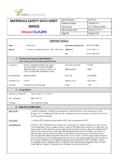
1 MATERIAL SAFETY DATA SHEET fusel OIL MIXTURE OF ISOMERS OF AMYL ALCOHOL PAGE 1 OF 9 MAJOR COMPONENT 3-METHYL-1- butanol F013/MS1 (CH3)2CH CH2 CH2OH 1996-04-24 NCP ALCOHOLS EMERGENCY TELEPHONE No.: +27 (31) 579 2004 SEA COW LAKE ROAD TELEPHONE No.: +27 (31) 560 1111 DURBAN SOUTH AFRICA FAX : +27 (31) 579 2776 1. PRODUCT IDENTIFICATION TRADE NAME fusel Oil CHEMICAL FAMILY Mixture of primary Aliphatic Alcohols CHEMICAL NAME 3-Methyl-1- butanol (Major component), and 2-Methyl-1- butanol .
2 SYNONYMS Isoamyl Alcohol and Active Amyl Alcohol CHEMICAL ABSTRACTS No. 123-51-3 (3-Methyl-1- butanol ) 137-32-6 (2-Methyl-1- butanol ) NIOSH No. EL5425000 and EL5250000 HAZCHEM CODE 3(Y) UN No. 1201 2. COMPOSITION HAZARDOUS COMPONENTS 3-Methyl-1- butanol (44-65 %), 2-Methyl-1- butanol (10-15 %), (Isobutanol (4-6%), 1 butanol (0, ), 1-Propanol (trace), Ethanol (7-9%), and water (12-15%). EEC CLASSIFICATION Not available R PHRASES (R10, R20) Flammable; harmful by inhalation.)
3 S PHRASES (S16) Keep away from sources of ignition - no smoking. 3. HAZARD IDENTIFICATION MAIN HAZARDS Flash Point 42 C (closed cup) Flammable Vapour/air mixtures are explosive. USA TLV (TWA) 100 ppm (361 mg/m3) for 3-Methyl-1- butanol CHEMICAL HAZARDS The hazards of fusel Oil are principally concerned with its flammability. MATERIAL SAFETY DATA SHEET fusel OIL MIXTURE OF ISOMERS OF AMYL ALCOHOL PAGE 2 OF 9 MAJOR COMPONENT 3-METHYL-1- butanol F013/MS1 CH3)2CH CH2 CH2OH 1996-04-24 BIOLOGICAL HAZARDS Harmful if in haled, absorbed through the skin or swallowed.
4 Mild central nervous system depressant. High vapour concentrations may cause headache, nausea, dizziness, drowsiness and incoordination. Causes eye irritation. Aspiration hazard. Swallowing or vomiting may result in aspiration into the lungs. HEALTH EFFECTS - EYES Vapours or liquid fusel Oil may cause severe corneal irritation. HEALTH EFFECTS - SKIN Liquid may cause mild irritation to the skin. Tests on animals indicates that isoamyl alcohol may be absorbed through the skin and cause central nervous system effects. Repeated or prolonged exposure can cause redness, drying and cracking of the skin (dermatitis). HEALTH EFFECTS - INGESTION Ingestion of fusel Oil can cause central nervous effects such as nausea , vomiting, stomach and chest pain , headache weakness, dizziness, and at higher doses, collapse, coma and death.
5 HEALTH EFFECTS - INHALATION Concentrations of 150 ppm can cause irritation to the nose and throat. High concentrations of fusel Oil vapours can cause severe irritation to the nose, throat, and respiratory tract, cough and difficult breathing as well as central nervous system depression effects such as nausea, vomiting, headache, dizziness, and eventually unconsciousness. CARCINOGENICITY No information available. MUTAGENICITY No information available REPRODUCTIVE HAZARDS No information available TOXICOLOGICALLY SYNERGISTIC MATERIALS No information available POTENTIAL FOR ACCUMULATION Does not accumulate in the body. Absorbed isoamyl alcohol is largely broken down or excreted through the urine. A small amount is eliminated unchanged in the expired air and urine.
6 MATERIAL SAFETY DATA SHEET fusel OIL MIXTURE OF ISOMERS OF AMYL ALCOHOL PAGE 3 OF 9 MAJOR COMPONENT 3-METHYL-1- butanol F013/MS1 CH3)2CH CH2 CH2OH 1996-04-24 4. FIRST AID MEASURES PRODUCT IN EYE Flush immediately with water or neutral saline solution for at least 15 minutes., while holding the eyelids open. Remove contact lenses if worn. Obtain medical attention immediately. PRODUCT ON SKIN Remove contaminated clothing and wash the affected area with soap and water.
7 Obtain medical assistance if irritation persists after washing. Completely decontaminate clothing before reuse. PRODUCT INGESTED Never give anything by mouth if victim is rapidly losing consciousness, is unconscious or convulsing. Have victim rinse mouth thoroughly with water. DO NOT INDUCE VOMITING. Have victim drink 240 to 300 m . of water. If vomiting occurs naturally, have victim lean forward to reduce risk of aspiration. Repeat administration of water. If breathing has stopped, trained personnel should begin artificial respiration (AR) or, if the heart has stopped, cardiopulmonary resuscitation (CPR) immediately. Avoid mouth-to-mouth contact by using mouth guards or shields. Obtain medical advice immediately PRODUCT INHALED Remove the victim to fresh air. If breathing is weak, irregular or has stopped, apply artificial respiration.
8 Oxygen may be beneficial. Obtain urgent medical assistance. 5. FIRE FIGHTING MEASURES EXTINGUISHING MEDIA Use dry chemical powder extinguishers, especially near electrical equipment. Carbon dioxide, alcohol-resistant foams, or water spray may also be used. Water spray may be useful to keep containers cool near a fire. PROTECTIVE CLOTHING Self contained breathing apparatus and full protective clothing should be worn, especially eye protection (goggles or face shield) and neoprene, or nitrile gloves. 6. ACCIDENTAL RELEASE MEASURES PERSONAL PRECAUTIONS Restrict access to area until completion of the cleanup. Ensure that the cleanup is conducted by trained personnel only. Protective clothing should be worn to prevent excessive skin contact. fusel Oil should be handled wearing an approved respirator or self contained breathing apparatus, Neoprene, butyl or natural rubber gauntlets or gloves, MATERIAL SAFETY DATA SHEET fusel OIL MIXTURE OF ISOMERS OF AMYL ALCOHOL PAGE 4 OF 9 MAJOR COMPONENT 3-METHYL-1- butanol F013/MS1 CH3)2CH CH2 CH2OH 1996-04-24 SAFETY goggles and other protective clothing.
9 An apron or rubber boots should be worn if there is a risk of splashing. ENVIRONMENTAL PRECAUTIONS Keep MATERIAL out of sewers, storm drains, surface waters, and soil Toxic to aquatic life at low concentrations. CLEAN-UP METHODS Small Spills Eliminate all sources of ignition, ventilate the area and wear a laboratory coat or overalls, gloves, approved self-contained breathing apparatus and SAFETY boots. Small quantities may be absorbed on paper and evaporated in a fume cupboard (do not pour into drains as explosive concentrations may develop). Soak up spill with absorbent MATERIAL which does not react with spilled chemical. Place MATERIAL in suitable, covered, labelled containers. Flush area with water. Contaminated absorbent MATERIAL may pose the same hazards as the spilled product.
10 Large Spills Contact Fire and emergency services and supplier for advice. Do not touch spilled MATERIAL . Prevent MATERIAL from entering sewers or confined spaces. Stop or reduce leak if safe to do so. Contain spill with earth, sand, or absorbent MATERIAL which does not react with spilled MATERIAL . Remove liquid with flame-proof pumps or vacuum equipment. Place in suitable, covered, labelled containers for removal and disposal at a controlled site. Dispose of contaminated product and materials used in cleaning up spills or leaks in a manner approved for this MATERIAL . Consult appropriate state and regulatory agencies to ascertain proper disposal procedures. Ideally, fusel Oil should be disposed of in a chemical incinerator with appropriate precautions. Flush spill area with a large volume of water and allow to drain to a waste treatment system 7.