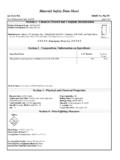
Transcription of MATERIAL SAFETY DATA SHEET - National Trade Supply
1 MATERIAL SAFETY data SHEET ICE MACHINE CLEANER MSDS ID: MI0895 Revised: 01-29-2009 Replaces: 04-26-2006 Page: 1 of 7 1. PRODUCT AND COMPANY IDENTIFICATION Product Name: ICE MACHINE CLEANER MSDS ID: MI0895 Synonyms: O-99725 CAS Number: MIXTURE Chemical Family: Acid Detergent Formula: Proprietary Information DISTRIBUTED BY: EMERGENCY RESPONSE NUMBERS: Manitowoc Ice, Inc. 24 Hour Emergency #: (920) 682-0161 2110 South 26th St. CHEMTREC Emergency #: (800) 424-9300 Manitowoc, WI 54220 (920) 682-0161 MANUFACTURED BY: HYDRITE CHEMICAL CO. 2. HAZARDS IDENTIFICATION EMERGENCY OVERVIEW: DANGER! CORROSIVE. Causes severe burns to eyes, skin, and respiratory tract. Harmful or fatal if swallowed. Harmful if inhaled. Reacts with most metals to form explosive/flammable hydrogen gas. Physical State: Liquid. Color: Clear. Green. Odor: No odor. POTENTIAL HEALTH EFFECTS Routes Of Exposure: Eyes.
2 Skin. Inhalation. Ingestion. Target Organs: Eyes. Skin. Respiratory System. Mucous Membranes. No data . Eye Contact: CORROSIVE-Causes severe irritation and burns. May cause: permanent eye damage. blindness. redness. pain. swelling. tearing. conjunctivitis. impaired vision. burns. ulcerations. corneal damage. irritation. Skin Contact: CORROSIVE-Causes severe irritation and burns. Contact may cause: permanent skin damage. Contact may not produce an immediate burning sensation, delaying awareness that contact has occurred. swelling. discomfort. redness. itching. pain. burns. allergic reaction in some individuals. Prolonged and repeated contact with skin can cause defatting and drying of the skin which may result in skin irritation and dermatitis. irritation. Skin Absorption: No absorption hazard expected under normal use. No more than slightly toxic based on toxicity studies.
3 Prolonged skin contact is unlikely to result in absorption of harmful amounts. Inhalation: May be corrosive to the respiratory tract. Severe irritation and burns may result. Vapors or mists may irritate: respiratory tract. Serious cases of inhalation may cause: respiratory problems and late pulmonary edema. May irritate: mucous membranes. nose. throat. lungs. May cause: coughing. sneezing. shortness of MATERIAL SAFETY data SHEET ICE MACHINE CLEANER MSDS ID: MI0895 Revised: 01-29-2009 Replaces: 04-26-2006 Page: 2 of 7 breath. sore throat. chest discomfort. pain. allergic reaction in some individuals. Inhalation of high concentrations may cause: permanent damage. Ingestion: CORROSIVE-Causes severe irritation and burns. May irritate or burn: mouth. throat. stomach. May cause: nausea. vomiting. abdominal discomfort. abdominal pain. burning sensation. Severe exposures may cause: shock.
4 Circulatory collapse. death. gastrointestinal irritation. diarrhea. gastrointestinal disturbances. burns. hypocalcemia (possible life-threatening lowering of serum calcium). Erosion of teeth is possible. No data available. Do not swallow. Medical Conditions Aggravated By Exposure To Product: Eye disorders. Skin disorders. Impaired respiratory function. Respiratory system disorders. None known. Other: In animals, effects have been reported on the following organs: lungs. Cancer Information: This product does not contain or more of the known or potential carcinogens listed in NTP, IARC, or OSHA. Potential Environmental Effects: See Section 12. 3. COMPOSITION/INFORMATION ON INGREDIENTS Component CAS Number OSHA Hazard % by Wt. Phosphoric Acid 7664-38-2 YES < 40 % Citric Acid 77-92-9 YES 0 - 5 % 4. FIRST-AID MEASURES Eye Contact: Immediately flush eyes with plenty of water for at least 15 minutes while holding eyelids open.
5 Tilt head to avoid contaminating unaffected eye. Get immediate medical attention. Remove contact lens if easy to do. Remove contact lenses if worn. Skin Contact: Immediately flush skin with plenty of water for at least 15 minutes while removing contaminated clothing and shoes. Get medical attention immediately. Do not reuse clothing and shoes until cleaned. Do not apply oils or ointments unless ordered by the physician. Wash with soap and water. Flush skin with water for at least 15 minutes. Inhalation: Remove to fresh air. If breathing is difficult, administer oxygen. If not breathing, give artificial respiration, preferably mouth-to-mouth. GET MEDICAL ATTENTION IMMEDIATELY. Keep at rest. Ingestion: If fully conscious, drink a quart of water. DO NOT induce vomiting. CALL A PHYSICIAN IMMEDIATELY. If unconscious or in convulsions, take immediately to a hospital or a physician.
6 NEVER induce vomiting or give anything by mouth to an unconscious victim. If vomiting occurs spontaneously, keep head below hips to prevent aspiration of liquid into the lungs. Give large amounts of water to drink. Note to Physicians: Treatment is symptomatic and supportive. 5. FIRE FIGHTING MEASURES MATERIAL SAFETY data SHEET ICE MACHINE CLEANER MSDS ID: MI0895 Revised: 01-29-2009 Replaces: 04-26-2006 Page: 3 of 7 Extinguishing Media: Not flammable or combustible. For fires in area use appropriate media. For example: Water spray. Dry chemical. Carbon dioxide. Foam. Alcohol foam. Water. DO NOT USE: Fire Fighting Methods: Evacuate area of unprotected personnel. Wear protective clothing including NIOSH-approved self-contained breathing apparatus. Remain upwind of fire to avoid hazardous vapors and decomposition products. Use water spray to cool fire-exposed containers. Product generates heat upon addition of water, with possible spattering.
7 Run-off from fire control may cause pollution. Move containers from fire area if possible without hazard. Fire And Explosion Hazards: None known. This product may react with certain metals to produce flammable Hydrogen Gas. Hazardous Combustion Products: Thermal decomposition may release: Phosphorous oxides. Phosphine. Toxic vapors. Carbon dioxide. Carbon monoxide. Dense smoke. No data available. 6. ACCIDENTAL RELEASE MEASURES Spill Clean-Up Procedures: CORROSIVE MATERIAL . Evacuate unprotected personnel from area. Maintain adequate ventilation. Follow personal protective equipment recommendations found in Section 8. Never exceed any occupational exposure limit. Contain spill, place into drums for proper disposal. Soak up residue with inert absorbent MATERIAL . Place in non-leaking containers for immediate disposal. Flush remaining area with water and neutralize with Soda Ash, Lime or Limestone and dispose of properly.
8 Adequate ventilation is required if soda ash is used, because of the consequent release of carbon dioxide gas. Avoid direct discharge to sewers and surface waters. Notify authorities if entry occurs. Flush remaining area with water and neutralize with Soda Ash or Lime and dispose of properly. 7. HANDLING AND STORAGE Handling: Avoid contact with eyes, skin, and clothing. Use with adequate ventilation. Do not swallow. Avoid breathing vapors, mists, or dust. Do not eat, drink, or smoke in work area. Wash thoroughly after handling. CORROSIVE MATERIAL . Storage: CORROSIVE MATERIAL . Store in a cool, well ventilated area, out of direct sunlight. Store in a dry location away from heat. Keep away from incompatible materials. Keep containers tightly closed. Do not store in unlabeled or mislabeled containers. Do not freeze. May react with certain metals to produce flammable hydrogen gas.
9 Protect against physical damage. Citric acid can release explosive hydrogen gas if in contact with reactive metals (iron, zinc, aluminum). Keep containers tightly closed. 8. EXPOSURE CONTROLS/PERSONAL PROTECTION Exposure Guidelines: Component OSHA PEL OSHA STEL/C ACGIH TWA ACGIH STEL/C Phosphoric Acid 1 mg/m3 1 mg/m3+ Not Estab. 3 mg/m3+ 1 mg/m3 3 mg/m3 Citric Acid Not Estab. Not Estab. Not Estab. Not Estab. Note: + Vacated 1989 OSHA PEL(s). MATERIAL SAFETY data SHEET ICE MACHINE CLEANER MSDS ID: MI0895 Revised: 01-29-2009 Replaces: 04-26-2006 Page: 4 of 7 Engineering Controls: General room ventilation and local exhaust are required. Maintain adequate ventilation. Do not use in closed or confined spaces. Avoid creating dust or mist. Keep levels below exposure limits. To determine exposure levels, monitoring should be performed regularly. General room ventilation and/or local exhaust are required.
10 Eye/Face Protection: Wear chemical SAFETY goggles and a full face shield while handling this product. Do not wear contact lenses. Wear additional eye protection such as a face shield when the possibility exists for eye contact with splashing or spraying liquid, or airborne MATERIAL . Skin Protection: Prevent contact with this product. Wear gloves and protective clothing depending on condition of use. Protective gloves: Acid-proof. Gauntlet-type. Rubber. Neoprene. Nitrile. Plastic. Chemical-resistant. Respiratory Protection: Respiratory protection must be worn if ventilation does not eliminate symptoms or keep levels below recommended exposure limits. If exposure limits are exceeded, wear: NIOSH-Approved respirator. Acid gas cartridge. DO NOT exceed limits established by the respirator manufacturer. All respiratory protection programs must comply with OSHA 29 CFR and ANSI requirements and must be followed whenever workplace conditions require a respirator's use.