Transcription of Material Safety Data Sheet – Perchloroethylene
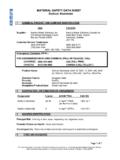
1 Colonial Chemical Solutions, Inc. Page 1of 3 Material Safety data Sheet Perchloroethylene SECTION I product IDENTIFICATION CHEMTREC 24HR Emergency Telephone 1-800-424-9300 Manufacturers Address: Information Phone: (912) 443-6702 916 West Lathrop Avenue Date Prepared: 26 Sept 08 Savannah, Georgia 31415 Preparer: Synonym: PERC, Tetrachloroethylene Chemical Family: Chlorinated Aliphatic SECTION II HAZARDOUS INGREDIENTS CHEMICAL NAME CAS Number %WT TLV PEL Tetrachloroethylene 127-18-4 100 25ppm 100 ppm SECTION III HAZARDOUS IDENTIFICATION Potential Acute Health Effects: Irritating to skin and eye tissue. Slightly toxic by inhalation. Potential Chronic Health Effects: Repeated abuse of high levels produces adverse effects on the liver and to a lesser extent on the kidneys SECTION IV PHYSICAL and CHEMICAL PROPERTIES Boiling Point Range: 250 F Vapor Density (Air=1): pH: NA Vapor Pressure (mmHg): 14 Solubility In Water: Insoluble VOC %: No available data .
2 Appearance/Odor: Clear colorless liquid with sweet odor. Specific Gravity (H2O=1): Melting Point/Freezing Point: No available data . SECTION V FIRE FIGHTING MEASURES Flash Point: None Auto Ignition: No data Extinguishing Media: As apparent to surrounding fire. Flammable Limits: Lower: None Upper: None Fire Fighting Procedures: Evacuate the area and fight from a safe distance. Cool fire-exposed containers with water spray to prevent container weakening and possible rupture. Do not enter fire zone without self-contained breathing apparatus (SCBA) and structural firefighter s protective clothing. Unusual Fire and Explosion Hazards: Explosive mixtures of tetrachloroethylene and air can be formed, but are difficult to ignite and require high intensity sources of heat. SECTION VI STABILITY AND REACTIVITY Stability: Stable. Conditions to Avoid: Red hot surfaces and Open Flames Incompatibility: Avoid contact with powdered metals and strong alkalis.
3 Hazardous Decomposition Products: Oxides of Carbon, hydrogen chloride and phosgene. Hazardous Polymerization: Will not occur. 0 3 0 NFPA Rating 0- Minimal 1- Slight 2- Moderate 3- Serious 4- Extreme Colonial Chemical Solutions, Inc. Page 2of 3 SECTION VII STORAGE AND HANDLING Precautions To Be Taken In Handling and Storage: Do not use in confined spaces. Always store in tightly sealed, properly labeled, original container. Store in a cool, dry well ventilated area. Other Precautions: DO NOT get in eyes, on skin, or on clothing. DO NOT breath vapors, mist, or fumes. DO NOT swallow. May be aspirated into the lungs which could be fatal. SECTION VIII HEALTH AND FIRST AID Skin: Slight/Mildly irritating. Can be absorbed through the skin. Eyes: Vapors may be irritating. Irritation accompanied by redness. Inhalation: High vapor concentrations may be irritating to respiratory system. Breathing of vapor may cause headaches, irritation of throat and may cause central nervous system depression.
4 Ingestion: May cause gastric distress, diarrhea and vomiting. FIRST AID PROCEDURES: Eyes: Flush with large amounts of cool running water for at least 15 minutes. If irritation persists get medical attention. Skin: Wash skin with soap and water. If irritation persists seek medical attention. Inhalation: For excessive inhalation remove to fresh air. If breathing is difficult seek medical attention. Ingestion: DO NOT induce vomiting. Drink large amounts of water or milk. Seek medical attention immediately. SECTION IX EXPOSURE CONTROLS / PERSONAL PROTECTION Eye Protection: Eye Protection when pouring. Goggles, Safety glasses with side shields are recommended. Respiratory Protection: Where adequate ventilation is not available an approved NIOSH respirator must be worn. In confined areas, use a self-contained breathing apparatus. Skin Protection: Use suitable chemically resistant gloves, and clothing. Ventilation: General Mechanical ventilation to prevent TLV from exceeding control limits.
5 Protective Clothing: Selection of protective clothing depends on potential exposure conditions and may include gloves, and other protective items. Other Equipment: Eye wash station and shower in close proximity to use are advised SECTION X ACCIDENTAL RELEASE MEASURES Small Spill: Isolate and stop source of spill provided it is safe to do so. Absorb on inert media and collect into suitable container. Wear necessary PPE. Large Spill: Shut off or plug source of spill provided it is safe to do sol. Dike area to contain spill. Salvage as much liquid as possible into a suitable container. Absorb residual on inert media and collect into suitable container. Do not allow Material to enter drains, sewers or waterways. Personal Protection in Case of Large Spill: Wear protective equipment and/or garments as described in Section IX as conditions warrant. SECTION XI DISPOSAL CONSIDERATIONS Waste Disposal Method: Dispose of in accordance with EPA 40 CFR 262 for concentrations at or above mg/L.
6 Avoid contaminating ground and surface water. Do not flush to drain. Follow local, state and federal applicable regulations for disposal. Colonial Chemical Solutions, Inc. Page 3of 3 SECTION XII TRANSPORTAION Proper Shipping Name: Tetrachloroethylene Hazard Class: UN Number: 1879 Packaging Group: III SECTION XIII TOXICOLOGY Carcinogenicity: Tetrachloroethylene is listed by NTP as reasonably anticipated to be a human carcinogen and by IARC as a Group 2A carcinogen. Mutagenicity: data suggest this to be a Mutagenic. Reproductive: data suggest this to have reproductive effects. Sensitization: No sensitizer data found. SECTION XIV REGULATORY RMP/PSM: Not Listed CERCLA-RQ: 100 LBS EPCRA 311/312: Yes, See Sections III and VIII EPCRA 313: Yes FIFRA: No documented information available. RCRA-CODE: U210; D039 TSCA: Listed SECTION XV OTHER INFORMATION The information contained on this Material Safety data Sheet is considered accurate as of the date of publication.
7 It is not necessarily all inclusive nor fully adequate in every circumstance. The suggestions should not be confused with, nor followed in violation of applicable laws, regulations, rules or insurance requirements. No warranty, express or implied, of merchantability, fitness, accuracy of data , or the results to be obtained from the use thereof is made. The vendor assumes no responsibility for injury or damages resulting from the inappropriate use of this product .