Transcription of MATERIAL SAFETY DATA SHEET Polyethylene Glycol
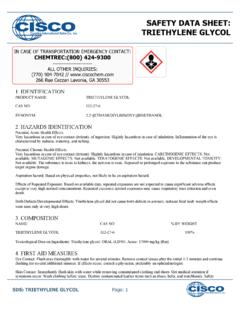
1 MATERIAL SAFETY data SHEET Polyethylene Glycol ( Polyethylene Glycol Monooleate & Polyethylene Glycol Dioleate), 100% FIRST AID (GET MEDICAL ATTENTION IF SYMPTOMS PERSIST) EYES: FLUSH WITH LARGE AMOUNTS OF WATER FOR AT LEAST 15 MINUTES SKIN: REMOVE CONTAMINATED CLOTHING; WASH WITH SOAP AND WATER INHALATION: REMOVE FROM EXPOSURE INGESTION: DILUTE STOMACH CONTENTS WITH WATER HEALTH: 0 FLAMMABILITY: 0 REACTIVITY: 0 PRECAUTIONS: NONE CHEMTREC 24-HOUR EMERGENCY HOTLINE: (800) 424-9300 To be used only in the event of chemical emergencies involving a spill, leak, fire, exposure or accident. MANUFACTURER Lonza Incorporated 90 Boroline Road Allendale NJ 07401 (800) 365-8324 PHYSICAL data solubility: dispersible flash point: 255 C appearance: yellow liquid pH of 5% solution: specific gravity: REACTIVITY stability: stable materials to avoid: strong acids, bases, oxidizers conditions to avoid: none hazard classification: none FIRE FIGHTING special procedures: wear NIOSH-approved self-contained breathing apparatus and full protective clothing extinguishing media: dry chemical, alcohol foam, carbon dioxide, water combustion products: organic fumes and carbon oxides Products of combustion are toxic.
2 Hazardous polymerization will not occur. Treat as hot oil or fat; if water must be used, use a fog nozzle to avoid spattering of hot MATERIAL . PERSONAL PROTECTION handling / storage: follow good hygiene practices eyes: none required skin: none required respiratory: if vaporous, use NIOSH-approved respiratory protection ventilation: general HEALTH HAZARD data - NOT HAZARDOUS route of entry: eyes, skin eye contact: not an irritant skin absorption: not an irritant toxicology: LD50 (oral, rat): >5000 mg/kg No significant eye, skin, ingestion or inhalation hazard when good personal hygiene practices are followed. STORAGE & HANDLING Store in a cool, dry area, away from sunlight. Keep container closed. SPILLS & DISPOSAL Prevent spills and contaminated wash water from entering sewers and bodies of open water. Contain spills with inert MATERIAL , such as sand or earth; scoop absorbed MATERIAL into containers.
3 Dispose of in accordance with all local, state and federal regulations; incineration is preferred.