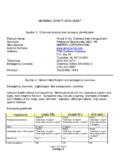
Transcription of MATERIAL SAFETY DATA SHEET - Riepert Salt
1 MATERIAL SAFETY data SHEET1. Product and Company IdentificationProduct nameSifto Safe Step Xtreme, Sifto Xtreme Performance, Sifto ProfessionalCAS #MixtureProduct Canada Compass Minerals Company9900 West 109th Street, Suite 100 Overland Park, KS 66210 USPhone: 913-344-9200 CANUTEC1-800-996-66662. Hazards IdentificationEmergency overviewCAUTIONCAUSES EYE IRRITATION. Exposure to powder or dusts may be irritating to eyes, nose short term health effectsRoutes of exposureEye, Skin contact, Inhalation, irritation. Dust in the eyes will cause cause irritation.
2 Dust or powder may irritate the of this product may cause irritation of the nose, throat, and respiratory tract. Dust may irritaterespiratory cause stomach distress, nausea or vomiting. May cause organsEyes. Skin. Respiratory effectsProlonged or repeated exposure can cause drying, defatting and and symptomsSymptoms may include redness, oedema, drying, defatting and cracking of the skin. Symptoms ofoverexposure may be headache, dizziness, tiredness, nausea and environmental effectsSee section #Percent3. Composition/Information on Ingredients10043-52-415 - 40 Calcium chlorideComposition commentsThe criteria for listing components in this section are: Carcinogens, Respiratory Sensitizers,Mutagens, Teratogens and Reproductive toxins are listed when present at or greater;components which are otherwise hazardous according to WHMIS are listed when present at greater.
3 Non hazardous components are not listed. The deicing products pertaining to thisMSDS have various proportions of components which do not meet the listing First Aid MeasuresFirst aid proceduresEye contactImmediately flush with cool water. Remove contact lenses, if applicable, and continue flushing for15 minutes. Obtain medical attention if irritation develops or contactBrush away excess of dry MATERIAL . Flush with water. Obtain medical attention if irritation symptoms develop move victim to fresh air. If symptoms persist, obtain medical not induce vomiting.
4 Never give anything by mouth if victim is unconscious, or is medical to physicianTreat patient adviceIf you feel unwell, seek medical advice (show the label where possible). Ensure that medicalpersonnel are aware of the MATERIAL (s) involved, and take precautions to protect themselves. Showthis SAFETY data SHEET to the doctor in attendance. Avoid contact with eyes. Wear SAFETY out of reach of : 1 of 5#21261 Issue date 09-January-20145. Fire Fighting MeasuresFlammable propertiesNot flammable by WHMIS mediaSuitable extinguishingmediaTreat for surrounding extinguishingmediaNot availableProtection of firefightersSpecific hazards arisingfrom the chemicalNot availableProtective equipment forfirefightersFirefighters should wear full protective clothing including self contained breathing combustionproductsMay include and are not limited to: Hydrogen chloride.
5 Oxides of dataSensitivity to mechanicalimpactNot to staticdischargeNot Accidental Release MeasuresPersonal precautionsAvoid contact with precautionsDo not contaminate for containmentPrevent entry into waterways, sewers, basements or confined for cleaning upBefore attempting clean up, refer to hazard data given above. Use broom or dry vacuum to collectmaterial for proper disposal without raising dust. Finish cleaning by spreading water on thecontaminated surface and allow to evacuate through the sanitary Handling and StorageHandlingUse good industrial hygiene practices in handling this contact with breathing dusts from this out of reach of containers tightly closed in a cool, well-ventilated Exposure Controls/Personal ProtectionExposure limitsThis MATERIAL does not have established exposure controlsTWA PEL.
6 No specific limits have been established for sodium chloride, potassium chloride orcalcium chloride (soluble substances). As a guideline, OSHA (United States) has established thefollowing limits which are generally recognized for inert or nuisance dust. Particulates NotOtherwise Regulated (PNOR): 5 Respirable Dust 8-Hour TWA PEL, 15 TotalDust 8-Hour TWA TLV: No specific limits have been established for sodium chloride, potassium chloride orcalcium chloride (soluble substances). As a guideline, ACGIH (United States) has established thefollowing limits which are generally recognized for inert or nuisance dust.
7 Particulates (insolubles)Not Otherwise Classified (PNOC): 10 Inhalable Particulate 8-Hours TWA TLV,3 Respirable Particulate TWA process enclosures, local exhaust ventilation, or other engineering controls to control airbornelevels below recommended exposure limits. If user operations generate dust, fumes, or mist, useventilation to keep exposure to airborne contaminants below the exposure protective equipmentEye/Face protectionSafety glassesHand protectionRubber gloves. Confirm with a reputable supplier and body protectionAs required by employer protectionWhere exposure guideline levels may be exceeded, use an approved NIOSH : 2 of 5#21261 Issue date 09-January-2014 General hygieneconsiderationsHandle in accordance with good industrial hygiene and SAFETY practices.
8 When using do not eat ordrink. Wash hands before breaks and immediately after handling the Physical and Chemical / WhiteFormCrystalsOdourOdourlessOdour thresholdNot pointNot pointNot pointNot rateNot pointNot temperatureNot Limits in Air,Upper, % by VolumeNot Limits in Air,Lower, % by VolumeNot of combustionNot pressureNot densityNot gravityNot coefficient(n-octanol/water)Not (Water)Partially solubleRelative densityNot volatileNot Stability and ReactivityReactivityNone of hazardousreactionsHazardous polymerisation does not stabilityStable under recommended storage to avoidDo not mix with other materialsAcids.
9 DecompositionproductsMay include and are not limited to: Hydrogen chloride. Sodium Toxicological InformationTest resultsToxicological dataComponentsSpeciesCalcium chloride (CAS 10043-52-4)LD50 RatDermalAcute2630 mg/kgLD50 MouseOral1940 mg/kgPage: 3 of 5#21261 Issue date 09-January-2014 Test resultsComponentsSpeciesRat1000 mg/kgEffects of acute exposureEye contactCauses irritation. Dust in the eyes will cause contactMay cause irritation. Dust or powder may irritate the of this product may cause irritation of the nose, throat, and respiratory tract.
10 Dust mayirritate respiratory cause stomach distress, nausea or vomiting. May cause by WHMIS effectsNon-hazardous by WHMIS classified or listed by IARC, NTP, OSHA and by WHMIS effectsNon-hazardous by WHMIS by WHMIS of ToxicologicallySynergistic ProductsNot Ecological InformationEcotoxicityMay be harmful to freshwater aquatic species and to plants that are not saline dataComponentsTest resultsSpeciesCalcium chloride (CAS 10043-52-4)EC50 Crustacea52 mg/L, 48 HoursDaphniaAquaticLC50 Fish3930 - 5360 mg/l, 96 hoursFathead minnow (Pimephales promelas)