Example: barber
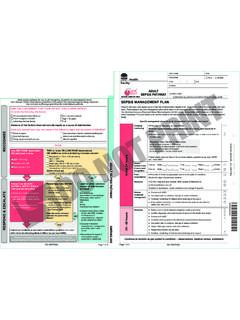
MATERNAL ADDRESS SEPSIS PATHWAY
Order and collect other cultures prior to antibiotics (unless a SENIOR CLINICIAN assesses that this would result in an unacceptable delay in commencing antibiotic therapy) E.g. Urine, vaginal swabs/lochia, breast milk, stool, wound, placental, viral swabs and throat Document cultures collected: Fluid Resuscitation Emergency DepartmentUse ...
Tags:
Information
Domain:
Source:
Link to this page:
Documents from same domain
ADULT - NSW Health
www.cec.health.nsw.gov.auRESUSCITATE A Airway-Septic Shock or locally Assess and maintain patent airway B Breathing - Assess and administer oxygen if required; aim SpO 2 ≥ 95% (or 88-92% for COPD) C Circulation - Vascular access, blood/culture collection, fluid resuscitation and antibiotics Consider intraosseous access after two failed attempts at cannulation Collect Blood Cultures
Why is hand hygiene important? - NSW Health
www.cec.health.nsw.gov.auPage 2 of 3 Patients and visitors: what you need to know about hand hygiene. • Patients and visitors should never touch wounds, dressings, intrave- nous lines or other tools being used to treat a patient. • Patients should have good personal hygiene…
INFECTION PREVENTION AND CONTROL …
www.cec.health.nsw.gov.auNot controlled if printed – Last updated 28 August 2017 INFECTION PREVENTION AND CONTROL PRACTICE HANDBOOK
NOAC GUIDELINES - Clinical Excellence Commission
www.cec.health.nsw.gov.aunoac guidelines non-vitamin k antagonist oral anticoagulant updated july 2017

Recommended Guidelines for Conducting and …
www.cec.health.nsw.gov.auRecommended Guidelines for . Conducting and Reporting . Mortality and Morbidity / Clinical Review Meetings . October 2016
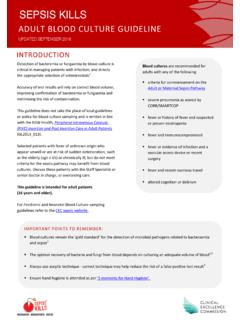
Page 1 SEPSIS KILLS - NSW Health
www.cec.health.nsw.gov.auA u dit U s e r Gu i de : Page 1 SEPSIS KILLS . ADULT BLOOD CULTURE GUIDELINE . UPDATED SEPTEMBER 2016 . INTRODUCTION . Detection of bacteremia or fungaemia by blood culture is
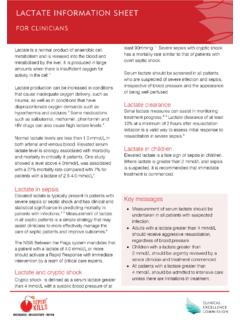
LACTATE INFORMATION SHEET - NSW Health
www.cec.health.nsw.gov.auactivity in . LACTATE INFORMATION SHEET FOR CLINICIANS least 90mmHg Lactate is a normal product of anaerobic cell metabolism and is released into the blood and
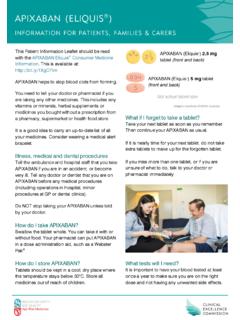
INFORMATION FOR PATIENTS, FAMILIES & CARER S
www.cec.health.nsw.gov.auSide effects of APIXABAN . Bleeding is the main side effect of APIXABAN. To lower the chance of bleeding, take your medicine exactly as your doctor explained.
Pressure Injury Prevention for Critically ill Adults
www.cec.health.nsw.gov.auUse a pressure injury risk assessment scale in conjunction with a comprehenswe visual assessment to determine the patient's risk of pressure injury and to inform the development of a prevention plan.
ADULT - NSW Health
www.cec.health.nsw.gov.auADULT Antibiotic Guideline for Severe Sepsis and Septic Shock. Updated September 2016. Version 3. Clinical Excellence Commission Page 4 of 26
Related documents

ADVANCED SWAB TRANSPORT SYSTEM FOR MICROBIOLOGY
www.copanusa.comoriginal formulation, results in proliferation of these organisms from throat, wound and fecal specimens. Amies demonstrated that coliform organisms in throat cultures increased with the duration of delay in transit and the level of ambient temperature. NaCl at 0.3% w/v was discovered by Amies to be optimal for the preservation of Neisseria ...
Samples, Forms, and Worksheets
conductingclinicalresearch.comMicrobiology Blood cultures x 2 sets $100 $100 $200 Sputum culture $60 $60 $120 Sputum gram stain $20 $20 $40 Sensitivities $75 $75 $150 Ancillary EKG $100 $100 $200 CXR $200 $200 $400 Patient stipend for ... C Wound classiÞcation stage if a pressure ulcer: ____ Samples, Forms, and Worksheets

Introduction to the Clinical Microbiology Laboratory
www.publichealth.lacounty.govof the clinical microbiology laboratory: • Clinical: diagnosis and management of infections • Epidemiological: understand infectious microbes in patients and populations, and to find sources and routes of transmission necessary for prevention efforts • General rules in clinical microbiology: • #1: Positive cultures do not make an ...
Specimen Collection and Transportation of Microbiology ...
www.adventisthealth.orgf. Develop an understanding of the microbiology laboratory’s source identification schemes. Know when to include “rule-out” request. For example, the laboratory may routinely screen for Shigella, Salmonella, and Campylobacter species in stool cultures but not for …
10 METHODS OF ISOLATION OF - National Institute of Open ...
nios.ac.inMicrobiology 110 Notes zMicroscopic examination of sample zVarious methods used for isolation of bacteria Specimen collection Many different specimens are sent for microbiological examination from patients with suspected bacterial infection. Common specimens include urine, faeces, wound swabs, throat swabs, vaginal swabs, sputum, and blood. Less
CHAPTER 5 Collection and Transport of Clinical Specimens
www.cdc.govBecause the presence of blood can affect cultures of CSF, if more than one tube of CSF is collected from a patient, the first tube collected (which could contain contaminating blood from the lumbar puncture) should not be the tube sent to the microbiology laboratory. The kit for collection of CSF should contain (Figure 1):
TREATMENT OF ANIMAL BITES IN PATIENTS ADMITTED TO …
www.med.umich.eduMar 20, 2020 · wound. Avoid removal of deep tissue (e.g., "coring"). e. Wound closure – Closure of a bite wound may increase the risk of infection depending on species inflicting the bite, location, type and age of wound and host factors. In general, wound closure is discouraged except in locations where cosmetic or functional impairment may result.
MRSA Guidelines for Long Term Care Facilities (LTCF)
ldh.la.govFeb 08, 2008 · 3.4. Procedures for Obtaining Cultures to Identify MRSA 3.4.1. Surface cultures of broken skin or weeping lesions If a culture is needed from broken skin, a pressure ulcer, etc., gently wipe area with a sterile gauze pad moistened with saline. The site should then be swabbed with the culture swab, using a rolling motion.