Transcription of MaxolonTM - Medicines
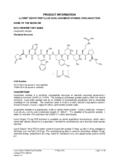
1 1 PRODUCT INFORMATION MaxolonTM Composition Metoclopramide hydrochloride. C14H22 ClN3O2, HCl, H2O CAS number: 54143 -57-6 Description Chemical name: N-(diethyl-aminoethyl)-2-methoxy-4-amino -5- chlorbenzamide monohydrochloride monohydrate. Maxolon 10 mg tablets also contain the excipients lactose, magnesium stearate, silica - colloidal anhydrous, starch maize and starch - pregelatinised maize. Maxolon ampoules contain the following excipients sodium chloride and water for injections. Pharmacology Maxolon stimulates motility of the upper gastrointestinal tract without stimulating gastric, biliary, or pancreatic secretions.
2 Its mode of action is unclear. It seems to sensitise tissues to the action of acetylcholine. The effect of Maxolon on motility is not dependent on intact vagal innervation, but it can be abolished by anticholinergic drugs. Maxolon increases the tone and amplitude of gastric (especially antral) contractions, relaxes the pyloric sphincter and the duodenal bulb, and increases peristalsis of the duodenum and jejunum resulting in accelerated gastric emptying and intestinal transit. It increases the resting tone of the lower oesophageal sphincter.
3 It has little, if any effect on the motility of the colon or gall bladder. Maxolon has dopamine antagonist activity. Like the phenothiazines and related drugs, which are also dopamine antagonists, Maxolon produces sedation and may produce extra-pyramidal reactions (see Precautions). Maxolon inhibits the central and peripheral effects of apomorphine, induces release of prolactin and causes a transient increase in circulating aldosterone levels. Pharmacokinetics Absorption: The onset of pharmacological action is 1 to 3 minutes following an intravenous dose, 10 to 15 minutes following intramuscular administration, and 30 to 60 minutes following an oral dose; pharmacological effects persist for 1 to 2 hours.
4 There is marked variability in peak plasma concentrations of Maxolon after oral administration, which appears to be due to interindividual differences in first-pass metabolism. Protein Binding: Plasma protein binding is 13 to 22%. Metabolism: About 80% of the drug is excreted in the urine in the first 24 hours, approximately half as the glucuronide and sulfate conjugates and half as unchanged drug. Elimination: Elimination half-life varies in different studies from to 5 hours. Impaired renal function results in reduced clearance of Maxolon and an increased half-life (15 hours).
5 Indications Adults (20 years and over): As an adjunct to X-ray examination of the stomach and duodenum. To assist in intestinal intubation. To control nausea and vomiting associated with the following conditions: intolerance to essential drugs possessing emetic properties; uraemia; radiation sickness; malignant disease; postoperative vomiting ; labour; infectious diseases. There is no clear benefit in motion sickness or other labyrinth disturbances. Intramuscular administration of Maxolon facilitates the absorption of a range of drugs including the absorption of aspirin in people with migraine.
6 Maxolon has been found useful in the management of gastric retention after gastric surgery. Maxolon may be useful in the treatment of diabetic gastroparesis of mild to moderate severity. Once control of diabetes has been established by diet and/or insulin, Maxolon should be discontinued. 2 Young Adults and Children over 1 year of age: The use of Maxolon in patients under 20 years should be restricted to the following situations and only used as second line therapy: Severe intractable vomiting of known cause.
7 vomiting associated with radiotherapy and intolerance to cytotoxic drugs. As an aid to gastrointestinal intubation. Contraindications Maxolon should not be used whenever stimulation of gastrointestinal motility might be dangerous, in the presence of gastrointestinal haemorrhage, mechanical obstruction, or perforation. Phaeochromocytoma because Maxolon may cause a hypertensive crisis, probably due to release of catecholamines from the tumour. Such hypertensive crises may be controlled by phentolamine. Known hypersensitivity or intolerance to the drug.
8 Porphyria. Epilepsy as Maxolon may increase the frequency and severity of seizures. Metoclopramide should not be administered to patients receiving other drugs which are likely to cause extrapyramidal reactions, since the frequency and severity of extrapyramidal reactions may be increased. Metoclopramide should not be used in children below 1 year of age. Precautions Persistent tardive dyskinesia - Tardive dyskinesia may appear in some patients on long-term therapy or may appear after drug therapy has been discontinued.
9 The risk appears to be greater in elderly patients on high dose therapy, especially females. The symptoms are persistent and can oftentimes appear to be irreversible. The syndrome is characterised by rhythmical involuntary movement of the tongue, face, mouth or jaw ( protrusion of tongue, puffing of cheeks, puckering of mouth, chewing movements). Sometimes these may be accompanied by involuntary movement of extremities. There is no known effective treatment for tardive dyskinesia, however, in some patients symptoms may lessen or resolve after Maxolon treatment is stopped.
10 Antiparkinson agents usually do not alleviate the symptoms of this syndrome. Although the risk of tardive dyskinesia with metoclopramide has not been extensively studied, one published study reported a tardive dyskinesia prevalence of 20% among patients treated for at least 3 months. Both the risk of developing the syndrome and the likelihood that it will become irreversible are believed to increase with the duration of treatment and the total cumulative dose. Maxolon therapy should routinely be discontinued in patients who develop signs or symptoms of tardive dyskinesia.