Transcription of Millennials - Sept27 DD
1 93619 Laura Cooper Economist (416) 974-8593 Millennials October 2016 In 1979, the average price of a home in Canada was $67,000. Inflation was running at , and the Bank of Canada s interest rate hit 14%. It was the year that the snowboard was invented, ESPN was launched and the first com-mercial cellular network was established a harbinger of things to come. The newest toy of the country s young baby boom generation aged 15 to 33 - was the $200 Sony Walkman. The prime minister was a Trudeau, at least for the first half of the year.
2 There s still a prime minister named Trudeau. But today, the average home costs $493,000, and inflation is running around The Bank of Canada s key rate is just There s talk about artificial intelligence disrupting our lives. Mobile devices and streaming have put a vast trove of entertainment in the hands of Canada s Millennials . And they re in the driver s seat. The sheer size of the millennial cohort at million, it accounts for the largest share of Canada s population ensures it will dominate Canada s future, just as the baby boom generation did the past three decades.
3 And while there s often focus on the obstacles Millennials face, such as a tough job market and sky-high prices for starter homes, the data sug-gest they re in pretty good shape. A favourable starting point Canadian Millennials have inherited a labour environment in many ways better than that of their parents. Rising female participation in the workforce, in-creasing educational attainment, and narrowing wage differentials between Millennials and people of prime working age are trends they can expect to benefit from.
4 This tech-savvy, well-educated and diverse cohort will increas-ingly determine economic and social trends given their sheer numbers and rising purchasing power. Millennials tech savvy is a source of economic clout The rise of computers, the Internet and then smartphones coincided with mil-lennials early years. For this generation, communicating through mobile de-vices and social media, engaging in e-commerce and consuming and produc-ing digital content are second nature. These abilities ensure they will have a significant impact on the evolution of Canadian economic activity.
5 The emergence of the gig economy highlights this power companies like Uber, Lyft and Airbnb blossomed, in part, due to millennial adoption and have become household names. Millennials deep engagement with technology is fueling disruption across a number of sectors, including news dissemination and retailing. For instance, more than three-quarters of Millennials who follow the news rely on the Inter-net, and 30% of them order groceries online for home delivery, the highest among all age groups1.
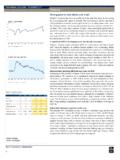
6 Those shifting habits are having serious economic consequences for news publishers and retailers. But the list of affected indus-020004000600080001000012000 Gen Z (0-12) Millennials (13-33)Gen X (34-50)Baby Boomers (51-69)Silent (70 and older)Population by age cohort: 2015 Source: Statistics Canada, RBC Economics ResearchThousands020406080100120 Less than 30 years30 to 39 years40 to 54 years55 to 64 years65 years and overThousands $Average Household Expenditure: 2014 Source: Statistics Canada, RBC Economics ResearchMillennials | October 2016 2 tries doesn t end there banking and transportation come to mind and their tech habits are launching new industries too.
7 Millennials are also set to foster the development of the so-called sharing economy, which covers transportation and hotel accommodation but could expand to other sectors. Notably, Millennials aged 18 to 24 are twice as like-ly as people over the age of 25 to view access to the sharing economy as the new ownership 2. Millennials are actively engaged in the workforce millennial youth are pursuing more education than their parents, which in turn, is contributing to a rising share of them working on a part-time basis.
8 In 2015, 35% of 20-to-24 year olds in Canada worked part time, up from 10% in 1979. And despite the common perception that Millennials have less job security than previous generations, they actually tend to change jobs about as fre-quently as baby boomers. On average, Millennials stay at a full-time job for just over 19 months compared with 21 months for baby boomers back in 1979. They also hold part-time employment only slightly longer than their predecessors ( months versus 15 months). These figures suggest that the path to establishing a career isn t that much different for Millennials .
9 Notably, the unemployment rate for 20-to-24 year olds was in both 1979 and 2015. Millennials are taking on entrepreneurship The share of self-employed 15-to-24-year-olds has doubled over the past two decades, a trend that is not unique to Canada3. And the proportion of all start-ups owned by someone under the age of 30 is increasing, reaching almost 9% in 20144. The rise of the gig economy is likely influencing these labour market trends. Technological growth has coincided with an increase in self-employment within the professional, scientific and technical sector, where human capital tends to be the primary input.
10 A rise in contract employment, which account-ed for a record of all youth employment in 2015, is another example. An expanded focus on experiential learning may also be a factor. More than half of undergraduate students in Canada participated in co-ops or intern-ships in 2015 with enrolment in co-op programs alone increasing 25% over the past decade5. Integrating work experience into the post-secondary curric-ulum has gone a step further, with many Canadian universities establishing technology incubators to foster young entrepreneurial talent.