Transcription of MRI in Practice Brochure 2018 - mrieducation.com
1 MRIIN Practice THE COURSEDr Catherine Westbrook Dr John TalbotMRI in Practice | The Course. Brochure (World Edition) 1992-2018, visit Welcome to MRI in Practice - The Course MRI in Practice the book, was first published in 1993. Now in its fourth edition, it is considered an essential text for many MRI courses including the registry exam in the US and for post graduate MRI programmes in the UK. The amazing success of this book, which is the World s best-seller in its genre, mainly lies in its clarity and logicality. It clearly provides clinical MRI practitioners relevant information at the right level. With this philosophy in mind MRI in Practice is now the basis for one of the World's most popular MRI Courses. Presented by authors Cathy Westbrook and John Talbot, the course has been delivered in over 20 countries across 5 continents, and teaches hundreds of delegates each year.
2 In addition to these impressive figures, the course has a well deserved reputation for having an informal approach that allows delegates to enjoy the learning experience - and take advantage of the networking opportunities that are fostered by this model. MRI as a modality is still expanding and evolving rapidly, and poses many challenges for the radiographer and radiologist. An in-depth understanding of the technology and clinical Practice are necessary to exploit the full potential of the MR system. To take advantage of this exciting new career direction, many practitioners are advancing their knowledge of MRI using a variety of educational pathways. Here at MRI in Practice , we appreciate that everyone is different, and have very different learning needs. For this reason we have given the course a gentle learning curve, starting with first principles, and each day building on the concepts covered on the day before.
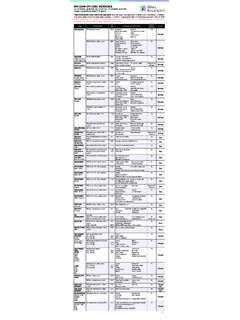
3 Take a look at our programme on the next MRI in Practice A Fresh Approach to Learning MRIPage 2 MRI in Practice | The Course. Brochure (World Edition) 1992-2018, visit The full UK course (shown above) is may be attended in two blocks of two days each. Individual days or combinations of days are not offered. Non-UK versions of the course are run as one single course and may vary in length and structure to allow for the requirements of the local organiser/sponsor/cultural norms. In the USA the course is a three-day course (having longer days) a sample programme can be found at the end of the Brochure . The lecture content is the same and is outlined on the following pages. The Course Programme (length, content and timing may vary by country/organiser)Page 3 Timings may varyDay 01 Day 02 Day 03 Day 0409:00 - 10:00 ARRIVE for 10:00 Spin Echo Pulse Sequences TalbotFlying Through k-Space WestbrookFlow and MRA TalbotBasic Principles Westbrook Image Contrast Westbrook Break11:00 - 13:00 Image Optimisation WestbrookFlying Through k-Space WestbrookGradient Echo Pulse Sequences WestbrookLunchImage Artefacts from the Group Talbot & Group14:00 - 15:30 Equipment TalbotImage Production TalbotRevision Session TalbotDEPART at 2:30 Break16:00 - 17:00 Safety TalbotImage Artefacts TalbotPrinciples of Gradient Echo WestbrookMRI in Practice | The Course.
4 Brochure (World Edition) 1992-2018, visit Reflecting the pace of evolution in the field of MRI itself, our course is constantly being updated to take advantage of the latest multimedia and presentation technology. Our hardware set-up features high-power Mac computers, screening HD computer-generated imagery projected through crisp, bright and whisper-quiet DVI data projectors, giving the ultimate engaging graphic experience. Of course it is the content that is the most important thing - and when it comes to quality you don t have to take our word for it, MRI in Practice is the World s best selling MRI textbook, and has a consistent 5-star customer rating on Used as the key text across America by technologists studying for the registry exam, our book now in its 4th major edition, has become the go-to reference text in the field of MRI.
5 MRI in Practice | The Course delivers the same trusted content in a slick lecture format that is designed to engage and inform in equal measure. Lectures and quiz sessions are interspersed with revision and discussion so that delegates can put the physics of MRI into a practical context. Every underpinning principle we discuss can be directly applied to how you work at the scanner console. All sessions are delivered by MRI in Practice authors and fully qualified professional educators Dr Cathy Westbrook & Dr John Talbot. The lectures are presented in an informal atmosphere where audience participation is actively encouraged. Due to the intensive nature of the course, delegates are often provided with the ultimate set of written course notes - a signed, complimentary copy of MRI in Practice *. The book contains all of the important information about the topics within the course, as well as some supplementary reading.
6 This means that delegates do not have to spend hours scribbling frantic notes, but can instead turn their full attention to the lectures, and can relax in the knowledge that their book will provide valuable reference material for the future. The following pages give some typical course content. Course contentPage 4* selected venues only, please check with the course organiser before in Practice | The Course. Brochure (World Edition) 1992-2018, visit Day 1 AMBasic Principles (Westbrook) 1 hour Aim: to investigate the fundamental principles of MRI including: Nuclear structure MR active nuclei Alignment Precession and resonance Signal generation Relaxation processes Image Contrast Mechanisms (Westbrook) 1 hour Aim: to evaluate the various mechanisms responsible for image contrast in MRI including: Molecular make-up of fat and water T1 recovery T2 decay Diffusion Weighting Image weighting characteristics Introduction to pulse sequencesPage 5 MRI in Practice | The Course.
7 Brochure (World Edition) 1992-2018, visit Day 1 PMInstrumentation (Talbot) 1 hour Aim: to investigate types of equipment used in MRI and their safe use including: Magnets: principles of, construction, homogeneity. Shielding Shimming Gradients Radio Frequency: shielding, transmit/receive coils This lecture includes high definition computer generated imagery of the magnet components, allowing you to see how they all work together like never (Talbot) hours Aim: to review all MRI safety issues including: Static-field dangers - projectiles Gradient-field dangers nerve stimulation Secondary (RF) field dangers - heating & antenna effect Cryogens quenches and anoxia Contraindications for MRI with real-life examples of safety incidents from around the 6 MRI in Practice | The Course. Brochure (World Edition) 1992-2018, visit Day 2 AMPrinciples of Spin Echo (Talbot) hours Aim: to investigate the basic mechanisms of spin echo imaging including: T2* effects RF rephasing Single and dual echo spin echo Fast (Turbo) Spin Echo, advantages and trade-offs Driven Equilibrium Inversion recovery Image Optimisation (Westbrook) 2 hours Aim: to facilitate the understanding of the factors that affect image quality; their mechanisms and trade-offs including: Signal to noise ratio (SNR) Contrast to noise ratio (CNR) Spatial resolution Scan time Decision making strategies Page 7 MRI in Practice | The Course.
8 Brochure (World Edition) 1992-2018, visit Day 2 PMImage Production (Talbot) hours Aim: to facilitate the understanding of gradient functions for the purpose of spatial encoding including: An introduction to data sampling Slice selection Frequency encoding Phase encoding Fourier TransformationBasic Artefacts - Identification and Compensation (Talbot) hours Aim: to facilitate the understanding of the appearances and cause of common artefacts and their remedies. May include: Aliasing Nyquist ghost Tissue-dependent out-of-phase signal loss Magnetic susceptibility artefact Entry slice phenomenon Phase mismapping Page 8 MRI in Practice | The Course. Brochure (World Edition) 1992-2018, visit Day 3 AMK space and data acquisition (Westbrook) 4 hours Aim: to explore in-depth the principles that underpin data acquisition in MRI including: K space functions and characteristics Data sampling techniques K space traversal K space filling in basic and advanced sequencing K space filling modifications including parallel imaging Page 9 MRI in Practice | The Course.
9 Brochure (World Edition) 1992-2018, visit Day 3 PMRevision Quiz hours Aim: to consolidate the basic knowledge gained through self-marked timed evaluation: Basic Principles Contrast Mechanisms Instrumentation Basic Pulse sequences Image Optimisation Gradient echo sequences (Westbrook) 1 hour Aim: to provide an introduction to gradient echo sequences Principles of Gradient Echo Pulse Sequences Weighting in Gradient Echo Pulse Sequences Page 10 MRI in Practice | The Course. Brochure (World Edition) 1992-2018, visit Day 4 AMFlow and Flow-Dependent Vascular Imaging (Talbot) hours Aim: to provide an overview and basic understanding of the scope of Magnetic Resonance Angiography including: Time of flight, entry slice phenomenon, and flow anomalies Post processing and the maximum intensity projection algorithm Inflow, Phase Contrast, Black-Blood, BOLD and Fresh Blood Imaging, Mechanism of flow-dependent MRA sequences Advantages & disadvantages in clinical use Gradient echo sequences (Westbrook) 2 hours Aim: to investigate the advanced mechanisms of gradient echo imaging and their clinical uses including.
10 The steady state (advanced concepts) Coherent gradient echo Balanced Gradient Echo Incoherent gradient echo Steady state free precession Fast gradient echo Echo planar imaging Diffusion Weighting Page 11 MRI in Practice | The Course. Brochure (World Edition) 1992-2018, visit Day 4 PMArtefacts II (Talbot) lecture timing varies Aim: To explore the appearances, causes and remedies in relation to complex MRI artefacts may include: Chemical Shift Inhomogeneity RF anomalies The magic angle Moir fringing Dielectric effects Cross excitation Delegates are welcome to bring digital images (on USB flash-drive) that demonstrate an artefactual appearance from their own 12 MRI in Practice | The Course. Brochure (World Edition) 1992-2018, visit The following testimonials are genuine comments taken from the anonymous delegate satisfaction survey forms handed in at the end of each course, and from unsolicited letters that we receive from delegates.