Example: stock market
MRS A 感染症の 治療ガイドライン
mrs a 感染症の治療ガイドライン作成委員会 編 mrs a 感染症の 治療ガイドライン 公益社団法人日本化学療法学会・一般社団法人日本感染症学会 改訂版 2019,12 感染症の治療ガイドライン
Information
Domain:
Source:
Link to this page:
Documents from same domain

参考文献 ・高齢者施設と感染 ... - kansensho.or.jp
www.kansensho.or.jp参考文献 ・高齢者施設と感染対策 院内感染対策テキスト 第4版 (編)日本感染症学会 へるす出版

Q1(MRSA、接触感染予防策 ... - kansensho.or.jp
www.kansensho.or.jpq1(mrsa、接触感染予防策) 当院nicuでのmrsa管理についてのご相談です。 当施設は症例としては33-34週前後または比較的軽症、短期間入院の患児が多く、入院時は全例細菌検査

MRSA感染症の治療ガイドライン - kansensho.or.jp
www.kansensho.or.jpmrsa感染症の治療ガイドライン 序 文 mrsa感染症は今日でも最も代表的な院内感染症の一つであり、その予防、診断、治療
抗MRSA 薬使用の手引き - kansensho.or.jp
www.kansensho.or.jp抗mrsa 薬使用の手引き ① 感染症の治療に十分な知識と経験を持つ医師またはその指導のもとで行うこと ② 原則として抗mrsa薬および他の抗菌薬に対する感受性(耐性)を確認すること

MRSA感染症の治療ガイドライン―2017年改訂版
www.kansensho.or.jpmrsa感染症の治療ガイドライン―2017年改訂版 「mrsa感染症の治療ガイドライン2017年改訂版」公表にあたって

第89回日本感染症学会学術 ... - kansensho.or.jp
www.kansensho.or.jp750 感染症学雑誌 第89巻 第6号 第89回日本感染症学会学術講演会後抄録(iii) 期日平成27年4月16日(木)・17日(金)
JAID/JSC感染症治療ガイドライン2015 ―尿路感染 …
www.kansensho.or.jp委員会報告 jaid/jsc感染症治療ガイドライン2015 ―尿路感染症・男性性器感染症― 一般社団法人日本感染症学会,公益社団法人日本化学療法学会

JAID/JSC感染症治療ガイドライン ―呼吸器感染症―
www.kansensho.or.jp委員会報告 jaid/jsc感染症治療ガイドライン ―呼吸器感染症― 一般社団法人日本感染症学会,公益社団法人日本化学療法学会

東日本大震災 -地震・津波後 ... - kansensho.or.jp
www.kansensho.or.jp東日本大震災 -地震・津波後に問題となる感染症- Version 2 今回の震災および避難生活に関連して問題となる可能性のある感染症について概説

隔離用の陰圧室,陽圧室に ... - kansensho.or.jp
www.kansensho.or.jp医師 隔離用の陰圧室,陽圧室に関する施設基準について教えてください. 隔離用の個室として重要なことは,①独立空調として,換気回数,温度,湿度等の管理が行える
Related documents
Guide to the Elimination of Ventilator-Associated Pneumonia
www.apic.orgGuide to the Elimination of Ventilator-Associated Pneumonia ASSOCIATION FOR PROFESSIONALS IN INFECTION CONTROL AND EPIDEMIOLOGY 7 The role of the infection preventionist in the effort to reduce the incidence of VAP includes policy and best practice
Continuous Aspiration of Subglottic Secretions in the ...
www.ccmpitt.comContinuous Aspiration of Subglottic Secretions in the Prevention of Ventilator-Associated Pneumonia in the Postoperative Period of Major Heart Surgery*
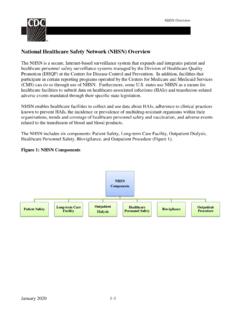
National Healthcare Safety Network (NHSN) Overview
www.cdc.govrelated to their use which might increas e infection risk. Specifically, surveillance of central line-associated bloodstream infection (CLABSI), catheter-associated urinary tract infection (CAUTI), ventilator-associated events (VAE and PedVAE), and/or ventilator- associated pneumonia (VAP) is possible using the NHSN. In

Prevention of hospital-acquired infections
www.who.int6.3.1 Ventilator-associated pneumonia in the intensive care unit 41 6.3.2 Medical units 41 6.3.3 Surgical units 41 6.3.4 Neurological patients with tracheostomy 41 6.4 Infections associated with intravascular lines 41 6.4.1 Peripheral vascular catheters 42 6.4.2 Central vascular catheters 42 6.4.3 Central vascular totally implanted catheters 42

AHRQ National Scorecard on Hospital-Acquired Conditions ...
www.ahrq.govVentilator-Associated Pneumonias 36,000 1.2 (Post-op) Venous Thromboembolisms 25,000 0.9 All Other HACs 584,000 19.6 Total 2,940,000 99 . The new baseline established with the 2014 data was developed using a new method that was based on the method previously used to calculate the 2010-2014 NHR. 4. The major difference
![Pneumonia (Ventilator-associated [VAP] and non-ventilator ...](/cache/preview/d/3/6/5/6/9/b/6/thumb-d36569b6dc8a7d8c6714d2f268ee79b7.jpg)
Pneumonia (Ventilator-associated [VAP] and non-ventilator ...
www.cdc.govVentilator-associated pneumonia (VAP): A pneumonia where the patient is on mechanical ventilation for > 2 consecutive calendar days on the date of event, with day of ventilator placement being Day 1,* AND . the ventilator was in place on the date of event or the day before.

Skin Manifestations with COVID-19: The Purple Skin and ...
cdn.ymaws.comA 32-year-old male with a medical history of obesity-associated sleep apnea and anabolic steroid use, currently taking testosterone, presented with a 1-week history of fever and cough. He became progressively more dyspneic with fevers to 40°C, ultimately becoming ventilator dependent from acute respiratory failure.
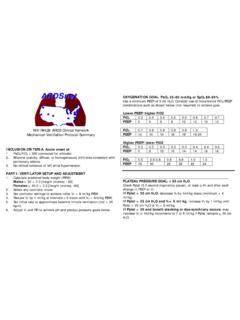
Ventilator Protocol - ARDS Net
www.ardsnet.orgPART I: VENTILATOR SETUP AND ADJUSTMENT 1. Calculate predicted body weight (PBW) Males = 50 + 2.3 [height (inches) - 60] Females = 45.5 + 2.3 [height (inches) -60] 2. Select any ventilator mode 3. Set ventilator settings to achieve initial V T = 8 ml/kg PBW 4. Reduce V T by 1 ml/kg at intervals ≤ 2 hours until V T = 6ml/kg PBW. 5.