Transcription of Near Miss Reporting Policy
1 NEAR MISS Reporting Policy PURPOSE This Policy sets out The Company s position on the Reporting , suitable recording and investigation of all accidents, incidents and near misses. The Company is committed to providing a safe and healthy work environment by protecting employees from workplace injury and disease when reasonably possible to do so. The purpose of this Policy is to ensure that all near-miss incidents (including minor incidents) are reported, recorded and investigated. Reporting and sharing information with relevant parties creates an opportunity to answer the questions of what happened and why and then to use this insight to determine how to prevent a reoccurrence.
2 Following the steps outlined in this Policy will: Promote an open, learning culture in regards to workplace safety; Employ a systematic approach for all employees to report near miss incidents; Encourage an opportunity to gain understanding and insight from an incident s analysis; Utilize that knowledge to prevent or reduce future risk of reoccurrence; and Support management s goal of establishing a Reporting culture with an aim to identify and control hazards, reduce risk and prevent harmful incidents. SCOPE This Policy applies to all employees of The Company, who, regardless of level, location, or job description, all have a role in creating and maintaining an injury-free workplace.
3 While the Management of The Company acknowledges responsibility for implementing and managing health and safety for the workplace as a whole, employees must also recognize and accept responsibility for their decisions and actions which can, and will, affect their own personal safety as well as the personal safety of others THE IMPORTANCE OF TRACKING NEAR MISSES Above all, near misses are a valuable source of information. Near misses provide The Company with an opportunity to identify hazards or weaknesses in their risk management programs and correct them to prevent future incidents.
4 Proactive monitoring Near misses are symptoms of undiscovered safety concerns. Near-miss Reporting can help The Company be proactive when it comes to identifying negative trends and safeguarding employees. This, in turn, can help reduce workplace accidents overall and increase company safety culture. IDENTIFYING A NEAR MISS A near miss is an opportunity to improve health and safety in a workplace based on a condition or an incident with potential for more serious consequences, including: Unsafe conditions Unsafe behavior, such as a worker modifying personal protection equipment for comfort Minor incidents and injuries that had potential to be more serious Events where injury could have occurred but didn t Events where property damage could have resulted but didn t Events where a safety barrier was challenged, such as a worker bypassing a machine guard Events where potential environmental damage could have resulted but didn t Reporting A NEAR MISS Workers must report all workplace incidents, hazardous conditions.
5 Near misses, and property and environmental damage to their immediate supervisor as soon as possible. Workers who experience a work-related injury or occupational illness should seek immediate medical attention and promptly report the injury/illness to their supervisor. Note: All work-related injuries/illnesses, no matter how slight, must be reported to a supervisor. Near Miss Reporting : 1. An employee who witnesses a near miss incident must complete the Near Miss Reporting form (located in the main office) and submit to a Manager or Human Resources.
6 The Reporting system will not result in disciplinary action of the reporter and, if desired by the person Reporting , may be anonymous; 2. All near miss incidents will be reviewed by company management to identify the root cause and the weaknesses in the system contributing to the incident. The Reporting individual may be asked to participate in the incident investigation; and 3. Investigation results will be used to improve safety systems, hazard control, risk reduction, and to educate employees. All of these represent opportunities for training, feedback on performance, and a commitment to continuous improvement.
7 COMMUNICATION The steps taken (engineering or administrative controls, training, new policies & procedures, etc.) to improve workplace safety as a result of the near miss investigation will be reported to management as well as all staff. Monitoring and investigation results of near miss incidents will be communicated to employees in at least one of the following venues: Manager discussion with employees; Bulletin board postings; and/or Safety Committee Meeting minutes. ROLES & RESPONSIBILITIES It is the responsibility of Company Management to: Enforce federal health and safety laws, standards and procedures; Support the development and implementation of safe working practices through provision of proper resources; Review health and safety procedures annually (minimum) or as necessary; and Consider incentives that encourage NEAR MISS Reporting and enhance the culture.
8 It is the responsibility of the Safety & Compliance Manager to: Enforce federal health and safety laws, standards and procedures; Acknowledge and document potential hazards reported by employees; Monitor health & safety performance, re-designing health and safety practices and procedures when prudent to do so; Include training for new employees to identify hazards and work safely as part of their orientation. Perform thorough investigations based on facts and provide recommendations for corrective action to ensure that the potential for any future occupational injury, disease and accidents is eliminated.
9 It is the responsibility of Employees to: Ensure action has been taken to maintain safety and ensure safety of the area; Promptly report (within 24 hours) all incidents by completing the near miss report form ( Reporting only FACTS) and submit to a Manager or Human Resources; and Provide statements and participate in the near miss investigation. NON-RETALIATION Near miss Reporting is encouraged/required and workers will not be subject to progressive disciplinary measures unless their behaviour coincides with one of the following serious offences: Willful breach of safety policies; Acts of gross negligence; Acts of gross misconduct (eg.)
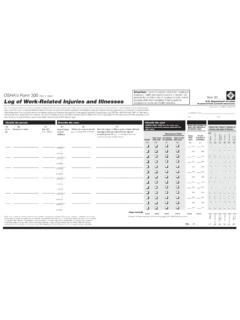
10 Possession of alcohol, illicit narcotics or non-prescribed pharmaceuticals while on company property, or use thereof while operating equipment); Repeated unreported violations; Malicious activities (including malicious Reporting of untrue allegations against a colleague); and/or Workplace violence, including but not limited to: fighting, assault, harassment or possession of a weapon REMINDER Reporting ACTUAL SAFETY INCIDENTS/INJURIES The OSH Act requires employers to keep records of certain injuries and illnesses, and to report certain workplace incidents to OSHA within specific time periods.