Example: confidence
Nurture groups: A handbook for schools
This principle underlies the adult response to the children's often challenging or difficult behaviour. ‘Given what I know about this child and their development what is this child trying to tell me?' Understanding what a child is communicating through behaviour helps staff to respond in a firm but non-punitive way by not
Tags:
Information
Domain:
Source:
Link to this page:
Documents from same domain

Practice Guide to the Early Years Developmental Journal
bso.bradford.gov.ukPractice Guide to the Early Years Developmental Journal 5 Early Years Developmental Journal Record The Early Years Developmental Journal presents behaviours i.e. ways in which children act, the things they do and the skills they show, and it structures these in a series of Developmental Steps.

2 Strategies for Supporting Pupils with SEN
bso.bradford.gov.uk•••• pupils with learning difficulties will acquire and retain new concepts and ideas slowly . Implications for classroom practice •••• break lesson down into small steps •••• ensure that written text and spoken language is appropriately differentiated to take into account

Good practice for students with SEND is good practice for all
bso.bradford.gov.ukthe SEND Code of Practice •What quality first teaching looks like •The need for policy which inspires ... implementation meets the needs of all pupils, and builds in high expectations for all pupils, including those with SEN. It is about the day-to-day interactions that take place in the classroom and the different pedagogical approaches ...

Bradford Matrix of Need v2.2 May 2021
bso.bradford.gov.ukYoung people with profound and multiple learning difficulties (PMLD), will have severely limited understanding and will have multiple disabilities, which can include impairments of vision, hearing and movement as well as other challenges such as epilepsy and autism.
Related documents

What is your child’s Challenging Behaviour trying to tell you?
ddwa.org.auWHAT IS YOUR CHILD’S CHALLENGING BEHAVIOUR TRYING TO TELL YOU? - A HANDBOOK FOR FAMILIES 9 Setting the scene for good behaviour All children will communicate their needs and respond to situations differently. But there are some general principles that will help you manage your child’s day-to-day behaviour. These

Non-violent Resistance (NVR) - Oxleas
oxleas.nhs.ukGrowing up involves challenging and questioning your parents' ideas and beliefs. This is a normal part of ... You are not trying to make your child someone they are not ... that no one will want to help them or that exposing the child or young person's behaviour will label the child or young person as bad. Your reaction as a supporter is crucial in
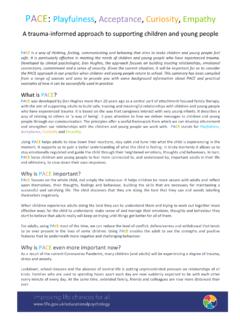
PACE: Playfulness, Acceptance, Curiosity, Empathy
girfec.fife.scotThe child discovers that they are doing the best that they can and avoids labelling themselves negatively. When children experience adults doing the best they can to understand them and trying to work out together more effective ways for the child to understand, make sense of and manage their emotions, thoughts and behaviour they
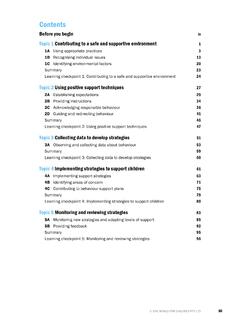
CHCECE006 Support behaviour of children and young people ...
aspire-solidus-production.s3-ap-southeast-2.amazonaws.comDisruptive behaviour is when a child is uncooperative and prevents themselves and/ or others from focusing on what they are doing. A disruptive child might also grab the . educator’s attention, distracting them from the other children and the task at hand. It is normal for children to exhibit disruptive behaviour as they struggle to learn self-

Behaviour Guidance Policy - Park Ridge Child Care
www.parkridgechildcare.com.auManaging children’s behaviour can be a complex task, at times it may be necessary for the group leader to discuss with the Director elements of a child’s behaviour that they may find challenging. The Director will take the following steps: 1. Continue to document with the group leader the behaviour, looking for patterns, causes and triggers.

a glossary of Applied behaviour analysis (ABA)
www.bhncdsb.caFunctional Behaviour Assessment (FBA): An approach that incorporates a variety of techniques and strategies to identify the causes (functions) of behaviour and identify likely interventions to address challenging behaviours. Functions of Behaviour: There are four functions of behaviour: Attention, Tangible, Sensory and Escape/Avoid.

YOUR GUIDE TO POSITIVE PARENTING
www.womenwork.orgCoping with your child’s misbehaviour can be stressful.Sometimes it can seem like you’re about to reach boiling point. Parents need to find ways to reduce the pressure in the home and can do alot to help their child’sbehaviour through positive parenting. In fact,parents can make the difference between their child’s behaviour getting out ...

How to Address Excessive Reassurance Seeking
anxietycanada.comIf you give in to your child’s demand for reassurance even once, your child has learned a powerful lesson: “ If I persist and ask enough times, eventually I will get the reassurance . that I want”. So, rather than getting rid of the problem behaviour, …

The Social Workers Role in Domestic Abuse
www.basw.co.uk• Behaviour that is abusive (violent, threatening or intimidating), with the effects: • Making ex/partner dependent on or subordinate to • Isolating ex/partner from friends, relatives or other sources of support • Controlling, regulating or monitoring ex/partner’s activities • Depriving or restricting ex/partner’s freedom of action