Example: stock market
Palliative Care Symptom Control
Guideline 12FM.3 1 of 26 Uncontrolled if printed. 12FM.3 PALLIATIVE CARE SYMPTOM CONTROL GUIDELINES. Who are these guidelines intended for: Which patients . These palliative care guidelines are intended to help alleviate symptoms in adults with advanced life-
Tags:
Information
Domain:
Source:
Link to this page:
Documents from same domain

Rivaroxaban and Apixaban - Management of Overdose ...
www.bucksformulary.nhs.ukperioperative bridging therapy in many patients, but you must consider the risk of thrombosis very ... Makris M el al. Guideline for the management of bleeding of patients on antithrombotic agents. British Journal of Haematology 2012; 160: 35-46.
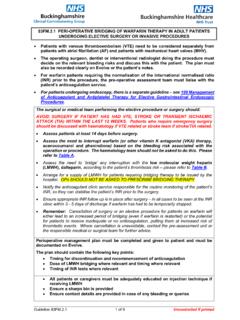
Peri-operative Bridging of Warfarin
www.bucksformulary.nhs.uk(INR) prior to the procedure, -operative assessmenthe pre t team must liaise with the patient’s anticoagulation service. • For patients undergoing endoscopy, there is a separate guideline – see 199 Management

Thromboprophylaxis in the Hospital Setting
www.bucksformulary.nhs.ukThrombosis and Pulmonary Embolism ... Patients being Nursed in Paediatric Areas of BHT, including: Ward 3, PDU, St ... (DVT) in the Ambulatory Setting and Anticoagulation Management of DVT and Pulmonary Embolism (PE) In Adults (aged 16 and over) and for PE see Trust guidelines 9AFM Acute PE.

Phenytoin Information for Prescribing, Monitoring and ...
www.bucksformulary.nhs.ukGuideline 73FM.5 2 of 3 Uncontrolled if printed Changing route Dose adjustments will be required when switching to liquid formulation from IV or capsule. Further TDM should be performed after a switch is made in order to ensure therapeutic levels are

Dabigatran, Rivaroxaban, Edoxaban and Apixaban for AF
www.bucksformulary.nhs.ukconsider cover with proton pump inhibitor (PPI) if using dabigatran Stroke/transient ischaemic attack (TIA) whilst on warfarin and aged <80 years Dabigatran Dabigatran 150 mg BD is the only DOAC shown to be superior to well controlled warfarin in reducing ischaemic stroke. (Dabigatran 110 mg dose non-inferior to warfarin.) Severe renal impairment
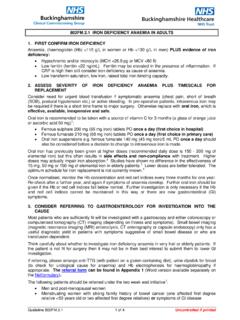
Iron Deficiency Anaemia In Adults
www.bucksformulary.nhs.ukMost patients who are sufficiently fit will be investigated with a gastroscopy and either colonoscopy or ... Guideline 222 Adult and Paediatrics Injectables Guide Title of Guideline Iron Deficiency Anaemia in Adults ... Is the patient fit for Endoscopy under normal sedation and full bowel prep Please send an accompanying letter: This form is ...

Management and Antibiotic Therapy for Respiratory Tract ...
www.bucksformulary.nhs.ukOrganisms common in community acquired pneumonia such as S. pneumoniae may also cause hospital acquired infections, but Gram-negative bacilli such as Klebsiella spp. and Pseudomonas spp. are also important. Methicillin resistant Staph. aureus (MRSA) may also need to be considered especially in those already known to be colonised.

785FM.3 VITAMIN D TESTING AND TREATMENT IN ADULTS
www.bucksformulary.nhs.ukTitle of Guideline Vitamin D Testing and Treatment in Adults Guideline Number 785FM Version 3 Effective Date March 2015 Review Date March 2018 Approvals: FMG Vitamin D Subgroup February 2013 Clinical Guidelines Subgroup 12th March 2015 Bucks Area Prescribing Committee th25 March 2015 Authors Lead: Maire Stapleton, Formulary Manager, BHNHST
Related documents

ENHANCED SUPORTIVE CARE - NHS England
www.england.nhs.ukintegration of supportive/palliative care has also been shown to optimize the timing of final chemotherapy administration (with a longer interval between last dose of chemotherapy and death)(Greer 2012). • Early integration of supportive/palliative care into cancer care may therefore benefit

Symptom Management Guidelines: Chemotherapy Induced ...
www.bccancer.bc.caChemotherapy – Induced ... Pain and Symptom Management/Palliative Care (PSMPC) (if interfering with ADLs and if pt willing to try pharmacological management)- Home Health Nursing Neurologist – referral for nerve conduction studies, electromyography

A Guide to Symptom Management in Palliative Care
www.hey.nhs.ukpalliative care medicines can be found in the current version of the PCF. Prescribing unauthorised medicines, or authorised ... as chemotherapy-induced neuropathy and pains unrelated to the underlying illness, such as tension headache, post-herpetic pain, muscle
Vomits, Constipation and Bowel Obstruction
www.sth.nhs.uk•Drugs – opioids, chemotherapy, dig toxicity, antibiotics, anaesthetics •Infection – (sepsis, abx), GI specific infections ... titrated) ineffective discuss with Palliative Care . Titrating treatment •If oral laxatives used, should suspect a bowel action within 3 …
Treating Non-Hodgkin Lymphoma - American Cancer …
www.cancer.orgPalliative and Supportive Care for Non-Hodgkin Lymphoma Who treats non-Hodgkin lymphoma? Based on your treatment options, you may have different types of doctors on your treatment team. These doctors could include: A€medical oncologist or hematologist: a doctor who treats lymphoma with chemotherapy, immunotherapy, and targeted therapy.
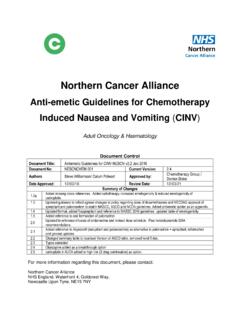
Anti-emetic Guidelines for Chemotherapy Induced Nausea …
www.northerncanceralliance.nhs.ukChemotherapy Induced Nausea and Vomiting (CINV) is one of the most frequently experienced side effects encountered by chemotherapy patients. Patients will often find the symptoms distressing, and develop anxiety about the potential for such symptoms to recur on future cycles of chemotherapy.

Commonly Used ICD-10-CM Codes - American College of …
www.acponline.orgEncounter for palliative care Z51.5 Long term (current) use of anticoagulants Z79.01 Long term (current) use of aspirin Z79.82 Other long term (current) drug therapy Z79.89_ Long term (current) use of opiate analgesic Z79.891 *also use CPT code for type of vaccine The use of "_" indicates the need for further specificity.