Example: air traffic controller
Palliative Care Symptom Control
Review causes • Note: Adjuvant analgesics can be added on any step of the ladder. Try to Diagnose Cause of Pain Assess Pain STEP 1 NON-OPIOID . e.g. paracetamol 1 g qds . and/or NSAID STEP 2 . WEAK OPIOID. e.g. dihydrocodeine 30 – 60 mg qds . AND . non-opioid. STEP 3 . STRONG OPIOID . Stop weak opioid . Initiate morphine m/r 10 mg bd . or ...
Tags:
Information
Domain:
Source:
Link to this page:
Documents from same domain

Rivaroxaban and Apixaban - Management of Overdose ...
www.bucksformulary.nhs.ukperioperative bridging therapy in many patients, but you must consider the risk of thrombosis very ... Makris M el al. Guideline for the management of bleeding of patients on antithrombotic agents. British Journal of Haematology 2012; 160: 35-46.
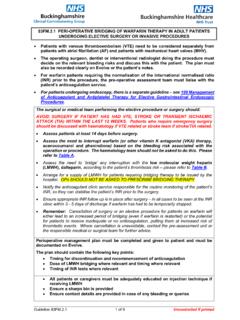
Peri-operative Bridging of Warfarin
www.bucksformulary.nhs.uk(INR) prior to the procedure, -operative assessmenthe pre t team must liaise with the patient’s anticoagulation service. • For patients undergoing endoscopy, there is a separate guideline – see 199 Management

Thromboprophylaxis in the Hospital Setting
www.bucksformulary.nhs.ukThrombosis and Pulmonary Embolism ... Patients being Nursed in Paediatric Areas of BHT, including: Ward 3, PDU, St ... (DVT) in the Ambulatory Setting and Anticoagulation Management of DVT and Pulmonary Embolism (PE) In Adults (aged 16 and over) and for PE see Trust guidelines 9AFM Acute PE.

Phenytoin Information for Prescribing, Monitoring and ...
www.bucksformulary.nhs.ukGuideline 73FM.5 2 of 3 Uncontrolled if printed Changing route Dose adjustments will be required when switching to liquid formulation from IV or capsule. Further TDM should be performed after a switch is made in order to ensure therapeutic levels are

Dabigatran, Rivaroxaban, Edoxaban and Apixaban for AF
www.bucksformulary.nhs.ukconsider cover with proton pump inhibitor (PPI) if using dabigatran Stroke/transient ischaemic attack (TIA) whilst on warfarin and aged <80 years Dabigatran Dabigatran 150 mg BD is the only DOAC shown to be superior to well controlled warfarin in reducing ischaemic stroke. (Dabigatran 110 mg dose non-inferior to warfarin.) Severe renal impairment
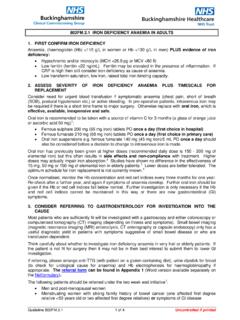
Iron Deficiency Anaemia In Adults
www.bucksformulary.nhs.ukMost patients who are sufficiently fit will be investigated with a gastroscopy and either colonoscopy or ... Guideline 222 Adult and Paediatrics Injectables Guide Title of Guideline Iron Deficiency Anaemia in Adults ... Is the patient fit for Endoscopy under normal sedation and full bowel prep Please send an accompanying letter: This form is ...

Management and Antibiotic Therapy for Respiratory Tract ...
www.bucksformulary.nhs.ukOrganisms common in community acquired pneumonia such as S. pneumoniae may also cause hospital acquired infections, but Gram-negative bacilli such as Klebsiella spp. and Pseudomonas spp. are also important. Methicillin resistant Staph. aureus (MRSA) may also need to be considered especially in those already known to be colonised.

785FM.3 VITAMIN D TESTING AND TREATMENT IN ADULTS
www.bucksformulary.nhs.ukTitle of Guideline Vitamin D Testing and Treatment in Adults Guideline Number 785FM Version 3 Effective Date March 2015 Review Date March 2018 Approvals: FMG Vitamin D Subgroup February 2013 Clinical Guidelines Subgroup 12th March 2015 Bucks Area Prescribing Committee th25 March 2015 Authors Lead: Maire Stapleton, Formulary Manager, BHNHST
Related documents

URTICARIA AND ANGIOEDEMA - British Association of ...
www.bad.org.ukThere are different types of urticaria of which the most common form is called ... causes an urticarial-like rash, and is therefore different from normal urticaria). ... sometimes of the gut, leading to colic. The condition is due to an inherited deficiency of a blood protein and can be identified by a blood test. It can be

Colic types and causes - University of Liverpool
www.liverpool.ac.ukColic types and causes Name Spasmodic Parasitic Pedunculated lipoma Epiploic foramen entrapment Idiopathic focal eosinophilic enteritis Anterior enteritis Grass sickness Ileal impaction Cause or risk factors One of the most common causes of colic seen in the general horse population The exact cause is ...

TYPES OF FEEDS - Suwannee River Youth Livestock Show and …
mysrf.orgTYPES OF FEEDS We can conveniently classify feeds into three main types: (1) roughages, (2) concentrates, and (3) mixed feeds. ... DRY ROUGHAGES and also causes a loss of these nutrients from fermentation. In general, the best hay for horses is a good quality ... cause colic if fed alone, it should be mixed with at least 15 percent bran or 25 ...
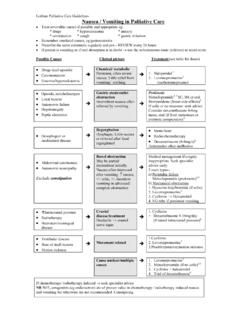
Nausea / Vomiting in Palliative Care
www.palliativedrugs.comcauses Î1. Levomepromazine 2. Metoclopramide (if no colic)4,5 3. Cyclizine + haloperidol 4. Trial of dexamethasone6 If chemotherapy/ radiotherapy induced → seek specialist advice NB 5HT3 antagonists (eg ondansetron) are of proven value in chemotherapy / radiotherapy induced nausea and vomiting but otherwise are not recommended. Constipating.
CAUSES, SYMPTOMS, PREVENTION, AND TREATMENT OF …
www.birdvilleschools.netCauses abortion & sterility. Symptoms are blood-tinged milk & urine. Susceptible animals should be vaccinated. Tuberculosis Three types of tubercle bacilli causing the disease are human, bovine, & avian. The human type rarely produces TB in lower animals, but the bovine type is capable of producing the disease in most warm-blooded vertebrates.
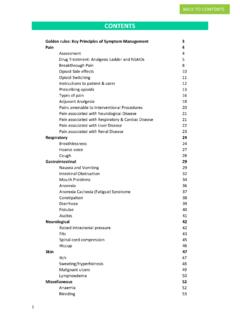
CONTENTS
www.hee.nhs.uk3 GOLDEN RULES There are some key principles or ‘Golden Rules’ which underpin symptom management. These include: Assess and diagnose the cause of symptoms, before planning symptom management Treat potentially reversible causes, where appropriate Always consider non-drug approaches as they can be as important as the use of drugs Management plan is …
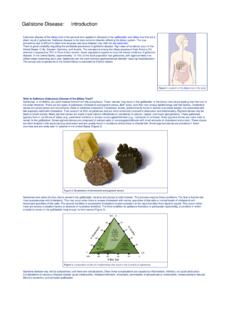
Gallstone Disease: Introduction - Hopkins Medicine
www.hopkinsmedicine.orgGallstone Disease: Causes Age The incidence of gallstone disease increases with age. Symptomatic calculous disease of the biliary tract is rare before the age of 20, and when found in this group, is commonly among patients with chronic predisposing conditions such as cystic fibrosis or hemolytic anemia. Drugs