Transcription of Plasmid DNA purification - MACHEREY-NAGEL …
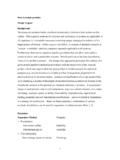
1 MACHEREY-NAGELEN ISO 9001EN ISO 13485 CERTIFIEDMACHEREY-NAGEL GmbH & Co. KG Neumann-Neander-Str. 6 8 52355 D ren GermanyFrance: MACHEREY-NAGEL EURLTel.: +33 388 68 22 68E-mail: AGTel.: +41 62 388 55 00E-mail: international:Tel.: +49 24 21 969-0E-mail: : +1 484 821 0984E-mail: DNA purificationUser manualNucleoSpin Plasmid EasyPureJuly 2014 / Rev. 02A0xxxxx Plasmid DNA purificationProtocol-at-a-glance (Rev. 02) MACHEREY-NAGEL GmbH & Co. KG Neumann-Neander-Str. 6 8 52355 D ren Germany Tel.: +49 24 21 969-270 Fax: +49 24 21 969-199 Plasmid EasyPure1 Cultivate and harvest bacterial cells12,000 x g, 30 s2 Cell lysis150 L Buffer A1250 L Buffer A2RT, up to 2 min350 L Buffer A33 Clarification of the lysate> 12,000 x g, 3 min4 Bind DNALoad supernatant1,000 2,000 x g, 30 s5 Wash and dry silica membrane450 L Buffer AQ> 12,000 x g, 1 min6 Elute DNA50 L Buffer AERT, 1 min> 12,000 x g, 1 min3 Plasmid DNA purificationMACHEREY-NAGEL 07 / 2014, Rev.
2 02 Table of contents1 Components Kit contents Reagents, consumables, and equipment to be supplied by user About this user manual 52 Product description Basic principle Kit specifications Growth of bacterial cultures Elution procedures 83 Storage conditions and preparation of working solutions 104 Safety instructions 115 NucleoSpin Plasmid EasyPure protocol 136 Appendix Troubleshooting Ordering information References Product use restriction / warranty 19 Plasmid DNA purificationMACHEREY-NAGEL 07 / 2014, Rev. 0241 Components Kit contentsNucleoSpin Plasmid EasyPure10 preps50 preps250 Buffer A15 mL15 mL75 mLLysis Buffer A25 mL15 mL100 mLNeutralization Buffer A35 mL20 mL100 mLWash Buffer AQ (Concentrate)*6 mL6 mL25 mLElution Buffer AE**13 mL13 mL30 mLLiquid RNase A2 mg6 mg30 mgNucleoSpin Plasmid EasyPure Columns (dark blue rings)1050250 Collection Tubes (2 mL)1050250 Short protocol111* For preparation of working solutions and storage conditions see section 3.
3 **Composition of Elution Buffer AE: 5 mM Tris/HCl, pH DNA purificationMACHEREY-NAGEL 07 / 2014, Rev. Reagents, consumables, and equipment to be supplied by userReagents 96 100 % ethanolConsumables mL microcentrifuge tubes for sample lysis and DNA elution Disposable pipette tipsEquipment Manual pipettors Centrifuge for microcentrifuge tubes Vortex mixer Personal protection equipment (lab coat, gloves, goggles) About this user manualIt is strongly recommended reading the detailed protocol sections of this user manual if the NucleoSpin Plasmid EasyPure kit is used for the first time. Experienced users, however, may refer to the Protocol-at-a-glance instead. The Protocol-at-a-glance is designed to be used only as a supplemental tool for quick referencing while performing the purification procedure.
4 All technical literature is available on the internet at Please visit the MACHEREY-NAGEL website to verify that you are using the latest revision of this user contact Technical Service regarding information about changes of the current user manual compared to previous DNA purificationMACHEREY-NAGEL 07 / 2014, Rev. 0262 Product Basic principleWith the NucleoSpin Plasmid EasyPure method, the pelleted bacteria are resuspended (Buffer A1) and Plasmid DNA is liberated from the E. coli host cells by SDS / alkaline lysis (Buffer A2). Buffer A3 neutralizes the resulting lysate and creates appropriate conditions for binding of Plasmid DNA to the silica membrane of the NucleoSpin Plasmid EasyPure Column.
5 Precipitated protein, genomic DNA, and cell debris are then pelleted by a centrifugation step. The supernatant is loaded onto a NucleoSpin Plasmid EasyPure Column. With the NucleoSpin Plasmid EasyPure kit contaminations like salts, metabolites, nucleases, and soluble macromolecular cellular components are removed by only a single washing step with Buffer AQ. Pure Plasmid DNA is finally eluted under low ionic strength conditions with slightly alkaline Buffer AE (5 mM Tris/HCl, pH ). Kit specifications The NucleoSpin Plasmid EasyPure kits are designed for the rapid, small-scale preparation of highly pure Plasmid DNA (mini preps). The NucleoSpin Plasmid EasyPure Column features a new specially treated silica membrane which allows speeding up the procedure by a combined washing and drying step.
6 The number of washing and drying steps is reduced from 3 to only 1! LyseControl: The Lysis Buffer A2 contains a blue pH indicator to ensure complete neutralization for maximum yield. The purified Plasmid DNA is suitable for applications like automated fluorescent DNA sequencing, PCR, or any kind of enzymatic manipulation. * For preparation of working solutions and storage conditions see section 3.** Composition of Elution Buffer AE: 5 mM Tris/HCl, pH DNA purificationMACHEREY-NAGEL 07 / 2014, Rev. 02 Table 1: Kit specifications at a glanceParameterNucleoSpin Plasmid EasyPureCulture volume2 10 mLTypical yield15 30 gElution volume50 LBinding capacity35 gVectors< 15 kbpPreparation time*14 min /6 prepsFormatMini spin Growth of bacterial culturesYield and quality of Plasmid DNA highly depend on the type of culture media and antibiotics, the bacterial host strain, the Plasmid type, size, or copy number.
7 For cultivation of bacterial cells harbouring standard high-copy plasmids, we recommend LB (Luria Bertani) medium. The cell culture should be incubated at 37 C with constant shaking (200 250 rpm) preferably 12 16 h over night. Usually an OD of 3 6 can be achieved. Alternatively, rich media like 2 x YT (Yeast / Tryptone), TB (Terrific Broth), or CircleGrow can be used. In this case bacteria grow faster, reach the stationary phase much earlier than in LB medium ( 12 h), and higher cell masses can be reached. However, this does not necessarily yield more Plasmid DNA. Overgrowing a culture might lead to a higher percentage of dead or starving cells and the resulting Plasmid DNA might be partially degraded or contaminated with chromosomal DNA.
8 To find the optimal culture conditions, the culture medium and incubation times have to be optimized for each host strain / Plasmid construct combination cultures should be grown under antibiotic selection at all times to ensure Plasmid propagation. Without this selective pressure, cells tend to lose a Plasmid during cell division. Since bacteria grow much faster without the burden of a high-copy Plasmid , they take over the culture rapidly and the Plasmid yield goes down regardless of the cell mass. Table 2 gives information on concentrations of commonly used antibiotics.* Hands-on-timePlasmid DNA purificationMACHEREY-NAGEL 07 / 2014, Rev. 028 Table 2: Information about antibiotics according to Maniatis*AntibioticStock solution (concentration)StorageWorking concentrationAmpicillin50 mg/mL in H2O-20 C20 50 g/mLCarbenicillin50 mg/mL in H2O-20 C20 60 g/mLChloramphenicol34 mg/mL in EtOH-20 C25 170 g/mLKanamycin10 mg/mL in H2O-20 C10 50 g/mLStreptomycin10 mg/mL in H2O-20 C10 50 g/mLTetracycline5 mg/mL in EtOH-20 C10 50 g/mLAs rule of thumb use 5 mL of a well grown LB culture as given in the kit specifications.
9 However, the culture volume can be increased if the cell culture grows very poorly or has to be decreased if, , very rich culture media were used. Refer to Table 3 to choose the best culture volume according to the optical density at 600 nm (OD600).Table 3: Recommended culture volumes for NucleoSpin Plasmid EasyPureOD600123456 Culture volume15 mL8 mL5 mL4 mL3 mL2 mLNote, if too much bacterial material is used, the lysis and precipitation steps become inefficient causing decreased yield and Plasmid quality! If more than the recommended amount of cells shall be processed increase all lysis buffers proportionally. Elution proceduresThe elution buffer volume and method can be adapted to the subsequent downstream application to achieve higher yield and / or concentration than the standard method (recovery about 70 90 %): Higher yield in general, especially for larger constructs: Heat elution buffer to 70 C, add 50 100 L to the NucleoSpin Plasmid EasyPure Column and incubate at 70 C for 2 min.
10 High yield: Perform two elution steps with the volume indicated in the individual protocol. About 90 100 % of bound nucleic acids can be eluted.* Maniatis T, Fritsch EF, Sambrook J: Molecular cloning. A laboratory manual, Cold Spring Harbor, Cold Spring, New York DNA purificationMACHEREY-NAGEL 07 / 2014, Rev. 02 High concentration: Perform one elution step with 60 % of the volume indicated in the individual protocol. Concentration of DNA will be higher than with standard elution (approx. 130 %). Maximal yield of bound nucleic acids is about 80 %. High yield and high concentration: Apply half of the volume of elution buffer as indicated in the individual protocol, incubate for 3 min and centrifuge. Apply a second aliquot of elution buffer, incubate, and centrifuge again.