Transcription of PRACTICE ENHANCEMENT EXAMPLES …
1 72 IMPACT PRACTICE ENHANCEMENT Guide Copyright 2006. All rights reservedA. ENHANCEMENT ObjectivesA hypertension care policy monitors patient bloodpressure and ensures the appropriate patients have theirblood pressure checked during a physician visit. Thepolicy is documented so all PRACTICE members know howto proceed. B. Tool or ENHANCEMENT DescriptionA hypertension care policy is a documented procedureused by a PRACTICE site to monitor patients bloodpressure levels. Please see the end of this chapter for an example of ahypertension care policy. C. Medication Management ImprovementsA hypertension care policy can remindphysicians tocheck blood pressure, identifypatients withuncontrolled blood pressure who require anti-hypertensive medications, facilitatethe monitoring ofblood pressure medications patients are taking, andindicatechanges needed in dosing.
2 Each of theseactions improves medication management. A hypertension care policy gives pharmacists theinformation they need to provide patient care. It allowsphysicians and pharmacists to monitor treatmentefficacy, which benefits patients. The PRACTICE may see more patients reach their targetsfor hypertension or screen more patients forhypertension. In addition, it can improve the care ofpatients on a PRACTICE also benefit through increased opportunities todiscuss their blood pressure results with their health careteam. If the patients know their target blood pressure,their actual blood pressure and why it is important tomeet their target, the patients compliancemayimprove.
3 Patients may want to know how to improvetheir condition and why medications may need to bechanged, instead of just following instructions orignoring them completely. Patients can achieve other health benefits through thepolicy. For example, if the blood pressures of the patientsin the PRACTICE site are known, their riskof heart diseasecan be determined using the 10-year Framingham addition, if a physician is hesitant to reach bloodpressure targets aggressively using medications, thephysician can use a borderline high blood pressure levelas a reason to encourage lifestylemodifications in thepatient, such as losing hypertension care policy has the potential to benefit alarge proportion of the patients at a PRACTICE site,because all patients older than 40 will be affected (theage at which PRACTICE sites commonly begin monitoringpatient blood pressure).
4 In-service trainingmay be required for PRACTICE sitepersonnel who help with blood pressure information on a patient s blood pressure levels alsohelps community pharmacistsif they receive it fromthe PRACTICE site or the patient directly. For instance, acommunity pharmacist can determine if targets are beingreached, patients are compliant with their medications,or if patients have uncontrolled hypertension. They canthen relay information back to the PRACTICE site andthe patient. D. Development ProcessAlthough many PRACTICE sites have policies regardingmonitoring patients blood pressures, they may not beformally documented or may have less frequentmonitoring than recommended by current guidelines.
5 If apolicy is not formally documented, it may be difficult fora pharmacist joining a PRACTICE to be aware of the exactdetails of the PRACTICE s current policy. PRACTICE ENHANCEMENT EXAMPLESH ypertension Care Policy99 ENHANCEMENT Author: Shelly HouseAcknowledgement: Caroline Medical Group,Burlington, ONIMPACT PRACTICE ENHANCEMENT Guide Copyright 2006. All rights reserved 73 Organize a meeting with the PRACTICE site staff to discussthe current policy. Through discussion, the physicians candetermine if the policy and the roles of the PRACTICE sitepersonnel will be changed. Document the policy, likelywith only one draft, and begin the process ofimplementing it.
6 References and resourcesReview clinical PRACTICE guidelines, such as the CanadianHypertension Education Program (CHEP) guidelines, todetermine what to use in a hypertension care guidelines to reflect the PRACTICE site s needs ( ,frequency of monitoring).E. Implementation ProcessContact the clinic/office manager to discuss the newpolicy and to gain insight into the best way to implementit. Hold a meeting with PRACTICE site personnel to informthem of any changes in policy, particularly those whoseresponsibilities will change as a result. F. Overcoming ChallengesWhen a pharmacist first joins a PRACTICE , it may bechallenging to determine what the blood pressure policyis, if it is not documented.
7 Asking the PRACTICE sitephysicians what their blood pressure monitoring policy is,if indeed they have one, overcomes this site personnel may benefit from assistance oreducation about the names of all anti-hypertensivemedications (particularly those with other indications) inorder to consistently monitor blood pressure inappropriate patients. The pharmacist can offer to trainthese team members to help them recognize bloodpressure medications when implementing the new potential problem arises if blood pressure ismonitored but the value is not recorded in the chart. Forexample, the personnel at the PRACTICE may place thepatient on the blood pressure monitoring machine andthen leave the patient while the measurements next individual to enter the room is the physician may not document the blood pressurevalue in the chart, particularly if it is at this is an issue at a PRACTICE site, the personnelresponsible for placing the patients on the blood pressuremonitoring machine can place an abbreviation for bloodpressure in the chart with a space beside it.
8 This servesas a prompt for the physicians to document the bloodpressure value in the that may be difficult to overcomeA challenge may arise when the pharmacist is attemptingto organize a meeting time to implement thehypertension policy that is conducive to all relevantpractice site personnel who must attend. This challengemight not be overcome, as it is unlikely that all therelevant personnel will be able to attend one Facilitating FactorsSome factors may help a policy be adopted at a the site already has other policies, another can beeasily added and implemented. If certain PRACTICE staffare directly responsible for monitoring blood pressure,only a small group of people need to be informed ofthe new policy.
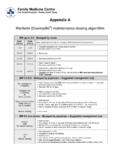
9 H. Evaluation ResultsNo strategy to evaluate this ENHANCEMENT wasundertaken. PRACTICE ENHANCEMENT EXAMPLESH ypertension Care Policy9974 IMPACT PRACTICE ENHANCEMENT Guide Copyright 2006. All rights reservedHypertension Care Policy Example Check patient s blood pressure (BP) when the patient is in for a BP check and/or a medication review when the patientis on antihypertensive medication. Check the patient s blood pressure (BP) if it has not been checked within the past year. Check the patient s blood pressure (BP) if they are on antihypertensive medicationsand the patient has not hadtheir BP checked within the past three ENHANCEMENT EXAMPLESH ypertension Care Policy 99 Table 1: How Medication-focused PRACTICE Enhancements Improve Medication Management MedicationManagement ProcessProblems in FamilyPracticeExample of EnhancementDeveloped Provide group educationregarding medicationsPatients need additionalinformation on theircondition.
10 Physicianunable to provide allthat is neededCholesterol Clinic Day (Chapter 5) provides information that would benefitthe patients and physicians of thepractice site, and that is often notavailable in the communityCompleting Section 8formsForms are neither readilyavailable nor easilycompletedSection 8 Forms (Chapter 6) incorporates the forms into theelectronic medical record (EMR) tomake use easierReporting adverse drugreactions (ADR)Rarely done; voluntarysystem; forms notreadilyavailableor easilyADR Forms (Chapter 6) incorporatesthe forms into the EMR for ADRIMPACT Integrating family Medicine and Pharmacy to Advance primary Care Therapeutics.