Transcription of Product Information - Medicines
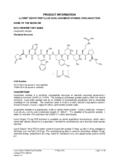
1 LUCRIN leuprorelin acetate 5mg/mL injection multidose Version 16 09 October 2018 Page 1 of 10 AUSTRALIAN Product Information LUCRIN (LEUPRORELIN ACETATE) 1. NAME OF THE MEDICINE NON-PROPRIETARY NAME Leuprorelin acetate 2. QUALITATIVE AND QUANTITATIVE COMPOSITION Each 5mL multi-dose vial contains of solution (14 doses). In solution contains 1mg of leuprorelin acetate. For the full list of excipients, see Section List of excipients. 3. PHARMACEUTICAL FORM Clear, sterile solution supplied in clear glass multi-dose vials 4. CLINICAL PARTICULARS Therapeutic Indications Lucrin (leuprorelin acetate) is indicated in the palliative treatment of metastatic or locally extensive prostatic cancer (Stage C and D).
2 Dose and Method of Administration The recommended dose is 1mg ( ) administered as a single daily subcutaneous injection. As with other drugs administered chronically by subcutaneous injection, the injection site should be varied periodically. Note: Parenteral drug products should be inspected visually for particulate matter and discolouration prior to administration, whenever solution and container permit. Contraindications Although not relevant to the approved indication, leuprorelin is contraindicated in pregnancy due to its embryotoxic effects.
3 (See Section Fertility, Pregnancy and Lactation) Although not relevant to the approved indication, leuprorelin acetate should not be administered to a nursing mother as it is not known whether leuprorelin acetate is excreted into human milk. (See Section Fertility, Pregnancy and Lactation) Although not relevant to the approved indication, leuprorelin acetate should not be administered to patients with undiagnosed vaginal bleeding. LUCRIN leuprorelin acetate 5mg/mL injection multidose Version 16 09 October 2018 Page 2 of 10 Leuprorelin acetate injection is contraindicated in patients with known hypersensitivity to leuprorelin acetate or similar nonapepetides or any of the excipients.
4 Special Warnings and Precautions for use General Isolated cases of short-term worsening of signs and symptoms have been reported during initiation of therapy. Patients with urinary tract obstruction should be closely observed during the first few weeks of treatment. Patients with metastatic vertebral lesions should begin leuprorelin therapy under close supervision. (See Section Adverse Effects section) Hyperglycaemia and an increased risk of developing diabetes have been reported in men receiving GnRH agonists. Hyperglycaemia may represent development of diabetes mellitus or worsening of glycaemic control in patients with diabetes.
5 Monitor blood glucose and-or glycosylated haemoglobin (HbA1c) periodically in patients receiving GnRH agonists and manage with current practice for treatment of hyperglycaemia or diabetes. Increased risk of developing myocardial infarction, sudden cardiac death and stroke has been reported in association with the use of GnRH agonists in men. The risk appears low based on the reported odds ratios, and should be evaluated carefully along with cardiovascular risk factors when determining a treatment for patients with prostate cancer.
6 Patients receiving GnRH agonists should be monitored for symptoms and signs suggestive of development of cardiovascular disease and be managed according to current clinical practice. Castration Resistant Prostate Cancer In patients treated with GnRH analogues for prostate cancer, treatment is usually continued upon development of castrate-resistant prostate cancer. Reference should be made to relevant guidelines. Effect on QT/QTc Interval In patients with a history of or risk factors for QT prolongation and in patients receiving concomitant medicinal products that might prolong the QT interval physicians should assess the benefit risk ratio including the potential for Torsade de pointes prior to initiating leuprorelin acetate.
7 Since androgen deprivation treatment may prolong the QT interval, the concomitant use of leuprorelin acetate with medicinal products known to prolong the QT interval or medicinal products able to induce Torsade de pointes such as class IA ( quinidine, disopyramide, procainamide) or class III ( amiodarone, sotalol, dofetilide, ibutilide) antiarrhythmic medicinal products, methadone, moxifloxacin, antipsychotics, etc. should be carefully evaluated. Bone mineral density changes can occur during any hypoestrogenic state.
8 Bone mineral density loss may be reversible after withdrawal of leuprorelin acetate. Convulsions Postmarketing reports of convulsions have been observed in patients on leuprorelin acetate therapy. These included patients in the female and paediatric populations, patients with a history of seizures, epilepsy, cerebrovascular disorders, central nervous system anomalies or tumours, and in patients LUCRIN leuprorelin acetate 5mg/mL injection multidose Version 16 09 October 2018 Page 3 of 10 on concomitant medications that have been associated with convulsions such as bupropion and SSRIs.
9 Convulsions have also been reported in patients in the absence of any of the conditions mentioned above. 'Flare' Phenomenon The initial increase in circulating levels of pituitary gonadotropins and gonadal steroids leads in some patients to a transient exacerbation of symptoms and signs ('flare' phenomenon). The exacerbation may include worsened bone pain, ureteric obstruction and spinal cord compression. This possibility should be taken into account in deciding to initiate leuprorelin therapy in patients with existing obstructive uropathy or vertebral metastases.
10 Early symptoms of spinal cord compression such as paraesthesiae should alert the physician to the need for intensive monitoring and possible treatment. There is no Information available on the clinical effects of interrupting leuprorelin therapy and whether this will produce a withdrawal 'flare'. Use in the elderly No data available Paediatric Use Safety and effectiveness in children have not been established. Effect on Laboratory Tests Response to leuprorelin therapy may be monitored by measuring serum levels of testosterone as well as prostate-specific antigen and prostatic acid phosphatase.