Example: bankruptcy
Protecting Student Privacy While Using Online Educational ...
written consent from the parents (or from “eligible students,” i.e., those who are 18 years of age or older or attending a postsecondary school). Accordingly, schools and districts must either obtain consent, or ensure that the arrangement with the provider meets one of FERPA’s exceptions to the written consent requirement.
Tags:
Information
Domain:
Source:
Link to this page:
Documents from same domain

Understanding the Implications of Online Learning
tech.ed.govUnderstanding the Implications of Online Learning for Educational Productivity . U.S. Department of Education . Office of Educational Technology . Prepared by: Marianne Bakia . Linda Shear . Yukie Toyama . Austin Lasseter . Center for Technology in Learning . SRI International . January 2012
Understanding the Implications of Online Learning
tech.ed.govimproving educational productivity. Studies designed to inform educational decisions should follow rigorous methodologies that account for a full range of costs, describe key implementation characteristics and use valid estimates of student learning. Even less is known about the impact of online learning for students with disabilities.
Enhancing Teaching and Learning Through Educational Data ...
tech.ed.govcorrection. At the most complex, they hold promise of detecting boredom from patterns of key clicks and redirecting the student’s attention. Because these data are gathered in real time, there is a real possibility of continuous improvement via multiple feedback loops that operate at

Reimagining the Role of Technology in Higher Education
tech.ed.govOFFICE OF Educational Technology 4 Introduction This document is an outgrowth of the 2016 National Education Technology Plan (NETP). The NETP presents a shared vision and call to action for transformational learning enabled by technology at all levels of our education system. Building on the work of leading educa-
Professional Learning Strategies Self-Assessment Tool
tech.ed.gov1 Professional Learning Strategies Self-Assessment Tool About the Professional Learning Strategies Self-Assessment Tool The primary purpose of the Professional Learning Strategies Self-Assessment Tool is to support districts in the planning, integration, and implementation of professional learning for continuous improvement.

Characteristics of Future Ready Leadership
tech.ed.govnew roles and new approaches to classroom instruction. Superintendents throughout the country have expressed the desire for evidence-based approaches they can rely upon to lead this change.

Effective Professional Learning Strategies
tech.ed.govThe following are some strategies for embedding connected learning into professional learning policy and practice. Develop a connected coach program in which staff members immersed in connected learning can be paired with staff who are not. Then, create a shared space (e.g., Google Docs, blogs, wikis) to

Emergency Broadband Benefit Program
tech.ed.govDec 12, 2021 · struggling to afford their monthly internet service, the Federal Communications Commission’s . Emergency Broadband Benefit Program (EBB Program) may be able to help. Households with a child who is approved to receive free or reduced price meals under the National School
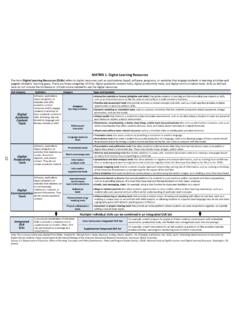
MATRIX 1: Digital Learning Resources
tech.ed.gov22 analysis t MATRIX 1: Digital Learning Resources The term Digital Learning Resources (DLRs) refers to digital resources such as applications (apps), software, programs, or websites that engage students in learning activities and support students’ learning goals. There are three categories of DLRs: digital academic content tools, digital productivity tools, and digital …

Future Ready Learning
tech.ed.govSection 2: Teaching—Teaching With Technology 25 ... reflect the positions or policies of the U.S. Department of Education. The U.S. Department of ... Our schools, community colleges, and universities should be incubators of exploration and invention. Educators should be collaborators in learning, seeking new knowledge and constantly ...
Related documents

Below is an example of an Informed Consent form. Informed ...
medicine.hofstra.eduBelow is an example of an Informed Consent form. Informed consents should include the information listed below. Informed Consent . Title of Research: Principle Investigator, Affiliation and Contact Information: Additional Investigators and Affiliations: Institutional Contact: Institutional Review Board . Hofstra University

CONSENT TO PHOTOGRAPH, FILM, OR VIDEOTAPE A …
infohub.nyced.orgCONSENT TO PHOTOGRAPH, FILM, OR VIDEOTAPE A STUDENT FOR NON-PROFIT USE (e.g. educational, public service, or health awareness purposes) Student Name: _____ School: _____ I hereby consent to the participation in interviews, the use of quotes, and the taking of photographs, movies or video tapes of the Student named above by . ...

patient consent form - Wiley
authorservices.wiley.comNote to principal author: The original signed consent form should be retained by the principal author. Note to health professional: In addition to the consent form, please ensure that any other necessary permissions are cleared for use of the information, including any permissions required for use of information contained in medical records.

Guide to Psychiatric Crisis and Civil Commitment Process ...
namivirginia.orgThe legal age of consent for hospitalization is 14 in Virginia. This means that if the individual is a minor between the ages of 14 and 18, he or she has the legal ability to voluntarily receive services, with or without parent consent, and will be asked to sign a consent form during the
Personal Health Information Protection Act
www.ipc.on.caThe purpose of this guide This guide was created to give health information custodians a basic understanding of how the Personal Health Information Protection Act (the Act) applies in the course of day-to-day activities. This guide has been designed to help health information custodians understand their rights