Transcription of Quality Control: Microbial Limit Tests for Nonsterile ...
1 305international Journal of Pharmaceutical compoundingVol. 18 No. 4 | July | August | control Part 1 of this 2-part article contains important facts about the topic of Microbial Limit Tests for Nonsterile pharmaceuticals, including the following statements1: Nonsterile pharmaceuticals are not produced by aseptic processes and, therefore, are not expected to be totally free from Microbial contami-nations. The degree of contamination in non-sterile products is regulated, and is based on the acceptance criteria for microbiological Quality established in Pharmacopeial monographs. The major contaminants of Nonsterile pharmaceutical products and ingredi-ents are bacteria, yeast, and ,2 Also, the following excerpt from part 1 of this topic stated1:United States Pharmacopeia (USP) Chapters <61> Microbiological Examination of Non-Sterile Products: Microbial Enumeration Tests and <62> Microbiological Examination of Non-Sterile products: Tests for Specified Microorganisms provide protocols that allow quantitative enumeration of the presence of bacteria and fungi.
2 The Tests help determine whether a Nonsterile product complies with an established specification for microbiological qual-ity. Additionally, these two USP chap-ters provide guidance on determining the absence of, or the limited occur-rence of, specified microorganisms that may be detected under the conditions of the Tests .[3] It is necessary to emphasize here that the USP provides methodolo-gies for selected indicator organisms, but not all objectionable organisms in the FDA opinions.[4] Quality Control: Microbial Limit Tests for Nonsterile Pharmaceuticals, Part 2nicole Vu, PhDJessica R.
3 Lou, BSThomas c. Kupiec, PhDNicole Vu and Thomas C. Kupiec are affiliated with Analytical Research Laboratories, Inc., Oklahoma City, Oklahoma; Jessica R. Lou is a PharmD Candidate at the Oklahoma University Health Science Center, Oklahoma City, article represents part 2 of a 2-part article on the topic of Microbial Limit Tests for Nonsterile pharmaceuticals. Part 1, which was published in the International Journal of Pharmaceutical Com-pounding s May-June 2014 issue (Volume 18, No. 3), provided an intro-duction to this topic as well as a discussion on the acceptance criteria for microbiological Quality of Nonsterile pharmaceu-ticals and an overview of United States Pharmaco-peia Chapter <61>.
4 Part 2 brings us back to this topic with an overview of United States Pharmaco-peia Chapter <62>.Photo source: aNalytical research laboratories & PicKeNs PhotograPhyAbstrAct cases of contaminated Nonsterile products have been reported in increasing numbers. often, these contaminated products are associated with the presence of objectionable microorganisms. the major contaminants of Nonsterile pharmaceutical products and ingredients are bacteria, yeasts, and molds. the combination of parts 1 and 2 of this series of articles provides a thorough examination of microbiological Quality testing for Nonsterile products.
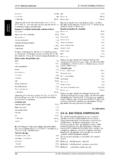
5 306international Journal of Pharmaceutical compoundingVol. 18 No. 4 | July | August | Control Part 1 of this 2-part series of articles provided an overview of USP Chapter <61>, as well as a discussion on other chapters within the USP that relate to the microbio-logical Quality of Nonsterile pharmaceuti-cals. This article provides an overview of USP Chapter <62>.overview of United StateS PharmacoPeia chAPter <62>: Tests for sPecified microorgAnisms USP Chapter <62> provides proce-dures and test conditions for determin-as objectionable (Table 1).3 Alternative methods may be applied if their equivalence to Pharmacopeial procedures has been demon-strated.
6 As with all microbiological Tests , growth properties of the media must be demonstrated, and the method must show to be suit-able for Microbial recovery in the presence of a product using the test strains listed in Table 2. The challenge Microbial species must be detected with the same indication reactions described in USP Chapter <62> under the Testing of Products section. testiNg of Products by UNited StateS PharmacoPeia chaPter <62> The procedure for the preparation of test samples follows the same principle as previously described for Microbial enumeration testing (USP <61>). If neutralization of antimicrobial activities cannot be accomplished, then it may be assumed that the inhib-ited microorganisms will not be present in the product.
7 In most instances, the product is diluted 1:10 in a general purpose medium ( , TSB or SCD broth), and then incubated for a defined time to resuscitate but not to promote growth of Microbial species in the product. After the resuscitation step, an aliquot of the sample solution equivalent to 1 g (or 1 mL) of the product is transferred to an enrichment medium for culturing under conditions optimal for growth of the target species, and then sub-cultured on selec-tive medium for indication Tests . The properties of selective media employed in testing by USP <62> are summarized in Table 3. Test for Absence of Specified Microorganism USP Chapter <62> entails procedures to test for absence of Bile-Tolerant Gram-negative Bacteria, Escherichia coli, Samonella, Pseudomonas aeruginosa, Staphylococcus aureus, Clostridia, and Candida albicans.
8 While most procedures specify a sample volume equivalent to 1 g (or 1 mL) of the product, the Samonella test is the only case that requires that a sample volume equivalent to 10 g (or 10 mL) of the product be used. In the test for Clostridia, a portion of the diluted sample is heated to 80 C for 10 minutes and then cooled aMinimum amount of product to be used in sample preparationcfu = colony-forming unit; TAMC = total aerobic Microbial count; TyMC = total combined yeasts and molds countTABLe 1. United States Pharmacopeial (chapter <1111>) Acceptance criteria for Microbiological Quality of Nonsterile Dosage ABSence oF TAMc TyMc SPeciFieDRouTe oF (cFu/g, (cFu/g, MicRooRgAniSM(S)ADMiniSTRATion cFu/ML ) cFu/ML) (1 g, 1 ML)aOral (non-aqueous) 10 10 Escherichia coliOral (aqueous)
9 10 10 Escherichia coliRectal 10 10 None designatedOromucosal 10 10 Staphylococcus aureus Pseudomonas aeruginosa Gingival 10 10 Staphylococcus aureus Pseudomonas aeruginosaCutaneous 10 10 Staphylococcus aureus Pseudomonas aeruginosa Nasal 10 10 Staphylococcus aureus Pseudomonas aeruginosa Auricular 10 10 Staphylococcus aureus Pseudomonas aeruginosa Vaginal 10 10 Pseudomonas aeruginosa Staphylococcus aureus Candida albicans Transdermal Patch(drug matrix, adhesive Staphylococcus aureuslayer and backing)
10 10 10 Pseudomonas aeruginosa Inhalation 10 10 Staphylococcus aureus Pseudomonas aeruginosa Bile-tolerant Gram-negative bacteriaPharmaceutical substances 10 10 None designatedTABLe 2. Representative Microorganisms for use in Validation of United States Pharmacopeia chapters <61> and <62>.3oRgAniSM ATcc nciMB ciP nBRc ncTc ncPF iPStaphylococcus aureus 6538 9518 13276 NA NA NAPseudomonas aeruginosa 9027 8626 13275 NA NA NABacillus subtilis 6633 8054 3134 NA NA NACandida albicans 10231 NA NA 1594 NA 3179 coli 8739 8545