Transcription of Quality Management - National Disability Services
1 Quality ManagementAcknowledgement This resource was created by National Disability Services Inc (NDS). Development of this guide has been supported through grant funding from the Australian Government via the NDIS Commission s Support for Providers Program and from the NSW (previously known) Department of Family and Community Services , Industry Development Fund. Disclaimer National Disability Services Limited (NDS) believes that the information contained in this publication is correct at the time of publishing. However, NDS reserves the right to vary any of this publication without further notice. The information provided in this publication should not be relied up on instead of other legal, medical, financial or professional ..4 About this guide ..61. Introduction: Context for Quality Management ..72. Quality Management systems ..93. Participant feedback ..144. Implementing a Quality Management system.
2 165. Quality Management documentation ..206. Conclusion ..21 References ..22 Resources ..23 Checklists and planners ..23 Documentation templates ..23 Project planner ..24 Reviewing Quality Management processes ..25 Documentation templates ..29 Compliance register ..29 Document control register ..30 Continuous Quality improvement register ..30 Working with Key Performance Indicators (KPIs) ..31 Performance reporting template ..324 GlossaryDisclaimer: NDS does not warrant that these definitions are correct. Providers should seek professional legal advice relevant to their certification by a licensed agency (Approved Quality Auditor) that a service provider complies with Quality auditor a person or body approved by the NDIS Commission to conduct audits using the NDIS Practice a standard or point of reference against which things may be compared or (see Accreditation ).
3 Compliance meeting specific requirements (of, for example, standards, legislation or regulation).Continuous improvement/continuous Quality improvement (CQI) the process of reviewing and making improvements in an ongoing information collected for use in planning, decision making or a person formally elected and/or appointed under law to a board, in accordance with the organisation s constitution. Note: some organisations refer to the members of their governing body as Management committee members. The term director is used in this manual to include Management committee the formal process of assessing whether the implementation of a strategic business plan, or an activity, has been documents, reports or other information, including obtained via interviews that demonstrate compliance or review checking of evidence to ascertain compliance against a set of standards by an independent third party (also referred to as external or third party verification).
4 Governance The framework of rules, relationships, systems and processes within and by which authority is exercised and controlled in performance indicators (KPIs) the benchmarks or targets that have been chosen to measure how successfully a service provider has achieved its the measurable stages of progress towards achieving a planned objective, such as the date something is achieved or the quantity of an to check, supervise, observe critically, or record the progress of an activity, action or system on a regular basis to identify Practice Standards required standards for NDIS registered what a service provider wants to achieve as a result of its planned activities. Sometimes the term objective is used interchangeably with the terms goal or aim .Outcomes the results of planned approach a way of supporting and working with people with a Disability that puts the person at the centre of planning, funding and support and service relating to, measuring, or measured by the Quality of something rather than its improvement plan plan for action to make improvements that will impact on the Quality of service delivery or Management process any set of procedures or activities that control or monitor the Quality of the service provider s Management system a structured set of processes for monitoring and managing Quality within a service a numeric measure of an the chance of something happening that will have an impact on an organisation s objectives.
5 Risk is measured in terms of likelihood and Management the process of identifying and implementing strategies to prevent or control the impact of (industry or service standards) specific procedures or outcomes that service providers are required to meet within an industry any person or organisation with an interest in the operations of a service business planning a process to map how a service provider can use its resources to successfully achieve its objectives over a period of time (usually three to five years).Strategic directions the parameters for defining what a service provider will do, based on an analysis of its operating environment and its internal audit is a mid-term audit used to monitor compliance between full re-registration specific levels of performance set by the service provider in relation to plans and performance this guideThis guide is a resource for developing and implementing Quality Management for Disability service providers.
6 For organisations new to Quality Management , the guide provides a starting point and a step by step guide, while experienced providers may find it useful for checking their existing Management provides a framework for Disability service providers to understand what works well in their organisation, what needs to be improved and what needs to change to meet the needs of both participants and the is an important part of making sure that there are consistent and effective ways of managing service delivery and that the Services provided are working well for the people you assurance of Quality Services is particularly important in the context of person-centred approaches to service person-centred approach to service delivery is a way of supporting and working with people with Disability that puts the person at the centre of planning, and support arrangements. In a person-centred Services system, Quality is crucial in supporting choice for participants.
7 It is a basic part of good practice in service delivery and ensures there is a strong, vibrant and sustainable service sector which offers choice of service providers and high Quality need to ensure that they have a Quality Management system and that internal controls are in place to comply with the NDIS Commission Practice Standards within a person-centred and individualised NDIS plan environment. The resources included at the end of this guide provide templates and checklists to assist providers with oversight of a Quality Management system. 71. Introduction: Context for Quality What makes a Quality service ?The provision of Quality service is the core business of any Disability service provider. Essentially, this means ensuring that service provision and Management : meet industry or service standards for example, the NDIS Practice Standards, provide a benchmark for procedures and outcomes against which a service provider can measure itself receive positive feedback high levels of satisfaction from participants is one indicator of Quality deliver Quality outcomes for individuals Services are effective when they successfully meet the needs of people and improve their What is Quality Management ?
8 Quality Management is the action a service provider takes to make sure that it always provides the best possible service for the people it supports. Quality Management involves the service provider: listening to people who receive Services and valuing their feedback understanding what it is doing well identifying where improvements are needed taking action in order to best meet the needs of Management is also about a service provider gathering the information that it needs to change and innovate as part of a cycle of continuous : It is important your organisation is aware of the need to maintain or improve your Services . For example, a Disability service provider might encourage staff to ask participants specific questions about how easily staff can be contacted when there is a need. By gathering this information from staff, the service provider could identify ways to improve access and the responsiveness of the The policy context for Disability service providers in AustraliaThere are a number of different Quality requirements and industry standards that may apply to Disability service providers.
9 NDIS registered service providers need to comply with the applicable NDIS Practice Responsibility of the boardThe board is responsible for the overall activity and performance of the service provider. This includes ensuring that Services are well planned, effective in meeting needs and provided at the best possible level of Quality by: ensuring that the service provider has a Quality Management system and that internal controls are in place to comply with relevant standards monitoring the results of Quality reviews and making changes as needed ensuring compliance with reporting and related requirements implementing organisational risk Management pursuing organisational goals of service board also has the responsibility for providing leadership in Quality Management . To provide this leadership, the board needs to work with senior staff to: foster a positive attitude to Quality improvement across the staff team implement policy and procedures for Quality Management that will provide guidance to staff identify key indicators for Quality for the service establish documentation and reporting processes that will enable the ongoing tracking of Quality Management and continuous improvement occur at all levels within an organisation.
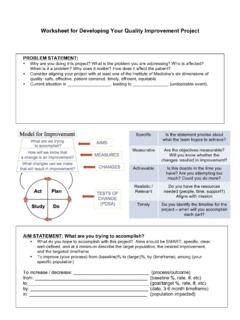
10 Board and staff should foster a culture which critically reflects on current practice, explores new ways of doing things and embraces change when may require a change in existing attitudes and ways of working. Any organisational change needs to be introduced in a planned and considered manner that: identifies existing attitudes and perceptions challenges old ways of thinking provides good reasons for a different way of thinking and working ensures that resistance is addressed through people becoming engaged in the change Quality Management What is a Quality Management process ?The basis of any Quality Management process is a simple cycle of continuous improvement. As part of this process the service provider might: identify and document current practices collect and review feedback from participants and other stakeholders review the results it is achieving against standards and other indicators identify improvements that can be made to better reach or exceed standards, meet needs or achieve results develop a plan for improvement implement the plan for improvement re-assess practices and performance the cycle commences cycle of continuous improvement (also known as continuous Quality improvement or CQI ) has many variations, the most common being the Plan/Do/Check/Act cycle, also used in broader planning and evaluation the version, the principles remain the same.