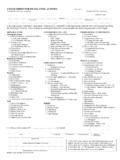
Transcription of Reasonable Compensation Analysis
1 46 INSIGHTS SPRING 2012 Compensation Analysis for C Corporations and S CorporationsJohn C. RamirezIncome Tax Compensation InsightsThe reasonableness of shareholder/employee Compensation is often a highly controversial issue in the context of federal income taxation. This is because what is considered Reasonable Compensation by the shareholder/employee taxpayer is often considered unreasonable by the Internal Revenue Service ( Service ). According to Internal Revenue Code Section 162, in order to be deductible for federal income tax purposes, executive Compensation must be (1) Reasonable in amount and (2) based on services actually rendered.
2 The income tax related consequences associated with unreasonable shareholder/employee Compensation can be significant (and include payroll taxes, late payments, and tax return filing penalties). For this reason, it is important that valuation analysts and other financial advisers understand the factors that the Service and the federal courts consider when analyzing the reasonableness of shareholder/employee Compensation . This discussion focuses on the generally accepted factors and methods used to analyze the reasonableness of shareholder/employee onThe reasonableness of shareholder/employee com-pensation is an important, and often controversial, income tax consideration for closely held corpora-tions.
3 This is particularly true for the closely held corporation structured as either a C corporation or an S is because the shareholder/employees of such closely held corporations are often motivated to deviate from arm s-length levels of Compensation in order to minimize their income tax this reason, the reasonableness of compensa-tion paid to the shareholder/employees of such close-ly held corporations is often one of the first issues scrutinized by the Service during the examination of either the employee or the employer , the income tax-related consequences asso-ciated with a finding of unreasonable shareholder/employee Compensation can be significant.
4 These consequences can include payroll taxes plus late payments, and return filing the S corporation shareholder/employee, the Service is typically concerned with an unreasonably low level of employee Compensation . This is because S corporation earnings are not subject to the self-employment tax, so officer/shareholders often receive minimal, small, or no wages salary income to avoided employment taxes. 1 That is, earnings distributed to S corporation shareholder/employees in excess of payments for services rendered to, or on behalf of, their compa-nies are not subject to various federal employment taxes.
5 Such employment taxes include FICA, FUTA, Medicare, and a C corporation, the Service is typically concerned with an unreasonably high (or excessive) level of employee Compensation . In such cases, the Service often claims that the excess employee com-pensation:1. absorbs taxable income and2. represents a disguised dividend to the INSIGHTS SPRING 2012 47 The role oF The ValuaTI on analysTValuation analysts and other financial advisers often analyze the reasonableness of closely held corporation shareholder/employee Compensation for various reasons.
6 These reasons include income taxation, financial accounting, ownership transi-tion, litigation, and corporate governance ensure that Reasonable Compensation analy-ses can withstand the scrutiny of the Service or the federal courts, it is important that the valu-ation analyst fully understand what factors and methods should be considered when determining the reasonableness of shareholder/employee discussion focuses on the generally accepted factors and methods that should be considered dur-ing an Analysis of the reasonableness of shareholder/employee Compensation for a C corporation or an S Reasonable comPensaTI on objecTIVeThis discussion does not focus on the Reasonable -ness of Compensation paid to the owners of part-nerships, sole proprietors.
7 Or limited liability com-panies (LLCs). This is because the Compensation paid to owners of these types of entities are char-acterized as distributions which are not subject to employment the purposes of this discussion, the objective of a reasonableness of Compensation Analysis is to estimate the amount of shareholder/employee com-pensation that is Reasonable and thus deductible as a business expense under Internal Revenue Code Section 162 ( Section 162 ).To achieve this objective, valuation analysts often look for guidance both to:1.
8 Securities and Exchange Commission (SEC) administrative rulings and2. judicial following discussion considers some of the SEC administrative rulings and the judicial precedent that valuation analysts and other finan-cial advisers may look to for procedural guidance when analyzing the reasonableness of shareholder/employee oF shareholder/emPloyee comPensaTI onFor income tax purposes, the reasonableness of shareholder/employee Compensation is often con-troversial. This is because, like other business expenses, salaries, wages, and other executive com-pensation should be directly connected with a trade or business in order to qualify for a tax to Regulation Section , Business expenses deductible from gross income include the ordinary and necessary expenditures directly connected with or pertaining to the taxpay-er s trade or business.
9 Among the items included in business expenses are management expenses. According to Section 162(a)(1), there shall be allowed as a deduction all the ordinary and neces-sary expenses paid or incurred during the taxable year in carrying on any trade or business, including a Reasonable allowance for salaries or other compen-sation for personal services actually rendered. The difficulty in estimating Reasonable compen-sation is that the amount that is considered reason-able to one party is often considered unreasonable to another Auto Wrecking, struggle to determine what is a Reasonable amount of Compensation was articulated in Mad Auto Wrecking, Inc.
10 V. Commissioner, as follows:Inherently there is a natural tension between: (1) shareholders/employees who feel that they are entitled to be paid from a corporation s profits, even to the exhaus-tion thereof, of an amount that reflects their skills and efforts, and (2) a provision in the tax law that conditions the deduct-ibility of Compensation on the concept of reasonableness. What is Reasonable to the entrepreneur/employee often may not be to the tax collector. The term Reasonable , however, must reflect the intrinsic value of employees in the broadest and most com-prehensive form of employee Compensation does not affect its tax deductibility to the taxpayer What is important, however, is that the employee Compensation should reflect what would ordinarily be paid for like services by like enter-prise under like circumstances.