Example: tourism industry
Recommendation EULAR/ERA-EDTA recommendations for …
(5.7 mg/dL) due to rapidly progressive glomerulonephritis in the setting of new or relapsing disease. 1B B 6. (ii) Plasma exchange can also be considered for the treatment of severe diffuse alveolar haemorrhage. 3 C 7. For remission-maintenance of AAV we recommend treatment with a combination of low-dose glucocorticoids and
Tags:
Information
Domain:
Source:
Link to this page:
Documents from same domain

ARTHRITIS ASSOCIATED WITH GONORRHOEA*t
ard.bmj.comwith gonorrhoea. In Group II, two patients had received a single doseofpenicillin beforeadmission tohospital. InGroupIII,twopatientsdemonstrated the triad of arthritis, urethritis, and conjunctivitis, and these features plus their clinical course were considered typical ofReiter's syndrome.

Recommendation Update of EULAR recommendations for the ...
ard.bmj.comSystemic sclerosis (SSc) is a connective tissue disease (CTD), which affects skin, blood vessels, heart, lungs, kidneys, gastrointestinal (GI) tract and ... identification of patients at risk of development of new organ complications and deterioration of the disease as well as non-pharmacological treatments, of which most of are ...

Update οn the diagnosis and management of systemic …
ard.bmj.comEpidemiology and burden: milder cases in community-based registries but progression over ... 5.40 for systemic sclerosis, 2.95 for myasthenia gravis, 2.77 for inflammatory myositis, 2.66 for rheumatoid arthritis (RA), 2.58 for multiple scle-rosis, 1.68 for type 1 diabetes mellitus, 1.39 for inflammatory bowel diseases, to 0.86 for vasculitis ...

EULAR recommendations for the management of rheumatoid ...
ard.bmj.comfor the management of rheumatoid arthritis (RA) with synthetic and biological disease-modifying antirheumatic drugs (DMARDs) in 2010.1 They summarised the state of the art and provided rheumatologists, patients, payers and other stake-holders with the evidence-based views of Euro-pean experts on the optimal use and sequence of
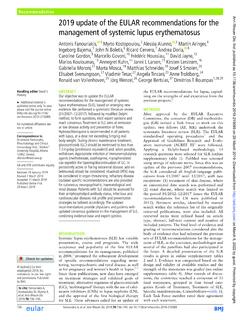
2019 update of the EULAR recommendations for the ...
ard.bmj.comfor cutaneous, neuropsychiatric, haematological and renal disease. Patients with SLE should be assessed for their antiphospholipid antibody status, infectious and cardiovascular diseases risk profile and preventative strategies be tailored accordingly. The updated recommendations provide physicians and patients with
Related documents
Clinical Practice Guideline Acute Kidney Injury (AKI)
ukkidney.orga diagnosis of a rapidly progressive glomerulonephritis should be considered when a patient with no obvious cause of progressive or non-resolving acute kidney injury has urine dipstick results showing haematuria and proteinuria, without urinary tract infection or trauma due to catheterisation – adult patients should be referred ...
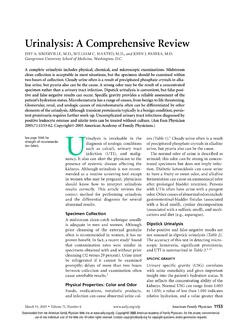
Urinalysis: A Comprehensive Review
www.aafp.orgMar 15, 2005 · Rapidly progressive glomerulonephritis Secondary glomerulonephritis Hemolytic-uremic syndrome Systemic lupus nephritis Thrombotic thrombocytopenic purpura Vasculitis Renal causes

Chapter 22: Varicella; Epidemiology and Prevention of ...
www.cdc.gova severe progressive form of varicella characterized by high fever, extensive vesicular eruption, and high complication rates. ... progresses rapidly ... glomerulonephritis, myocarditis, arthritis, orchitis, uveitis, iritis, and hepatitis. The risk of complications from varicella varies with age.

2021 American College of Rheumatology/Vasculitis ...
www.vasculitisfoundation.orgrapidly progressive pauci-immune glomerulonephritis and alveo - lar hemorrhage. MPA is most commonly associated with perinu-clear ANCA and antibodies to myeloperoxidase. The prevalence of MPA ranges from 0 to 66 cases per million among European countries and 86 cases per million in Japan (1,2).

An update on the diagnosis and management of proteinura in ...
www.idexx.comsyndrome, or rapidly progressive azotemia. For stable or slowly progressive glomerular diseases, mycophenolate or chlorambucil alone or in combination with azathioprine on alternating days should be considered.15 Anticoagulants Low-dose acetylsalicylic acid (aspirin) should be …

RENAL PHYSIOLOGY AND BODY FLUIDS
downloads.lww.comChronic kidney disease is usually progressive and may lead to renal failure. Common causes include diabetes mellitus, hypertension, inflam-mation of the glomeruli (glomerulonephritis), urinary reflux and infections (pyelonephritis), and polycystic kidney disease. Renal damage may occur over many years and may be unde-
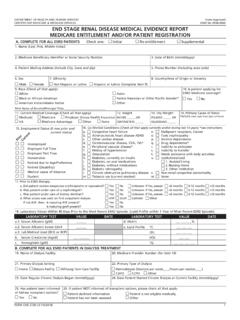
END STAGE RENAL DISEASE MEDICAL EVIDENCE REPORT
www.cms.govN01.9 Rapidly progressive nephritic syndrome with unspecified morphologic changes N02.8 Recurrent and persistent hematuria with other morphologic changes N03.0 Chronic nephritic syndrome with minor glomerular abnormality N03.1 Chronic nephritic syndrome with focal and segmental glomerular lesions N03.2 Chronic nephritic syndrome with diffuse