Example: bachelor of science
Red Blood Cell (RBC) Lysis Protocols
6. Centrifuge immediately at 500 x g for 5 minutes at room temperature. Decant the supernatant. 7. Resuspend cells in 2 mL of Flow Cytometry Staining Buffer or buffer of choice and centrifuge as in Step 6. Decant supernatant. 8. Resuspend cells in an appropriate volume of Flow Cytometry Staining Buffer or buffer of choice. 9.
Tags:
Information
Domain:
Source:
Link to this page:
Documents from same domain
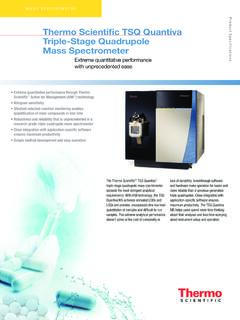
Thermo Scienti˜ c TSQ Quantiva Triple-Stage Quadrupole ...
tools.thermofisher.comThermo Scienti˜ c TSQ Quantiva Triple-Stage Quadrupole Mass Spectrometer ... • Thermo Scientifi c ... New Zealand +64 9 980 6700 Norway +46 8 556 468 00 Russia/CIS +43 1 333 50 34 0 Singapore +65 6289 1190 Spain +34 914 845 965 Sweden +46 8 556 468 00 Switzerland +41 61 716 77 00
Acetone precipitation of proteins - Thermo Fisher Scientific
tools.thermofisher.com• Precipitation has an advantage over dialysis or desalting methods in that it enables concentration of the protein sample as well as purification from undesirable substances. • One disadvantage of protein precipitation is that proteins might denature, making the pellet difficult to re-solubilize.
Ni-NTA Purification System - Thermo Fisher Scientific
tools.thermofisher.com7 Introduction Overview Introduction The Ni-NTA Purification System is designed for purification of 6xHis-tagged recombinant proteins expressed in bacteria, insect, and mammalian cells. The system is designed around the high affinity and selectivity of Ni-NTA Agarose
TRIzol Reagent User Guide - Pub. no. MAN0001271 - Rev. A
tools.thermofisher.comTRIzol™ Reagent Catalog Numbers 15596026 and 15596018 Doc. Part No. 15596026.PPS Pub. No. MAN0001271 Rev. A.0 WARNING! Read the Safety Data Sheets (SDSs) and follow the
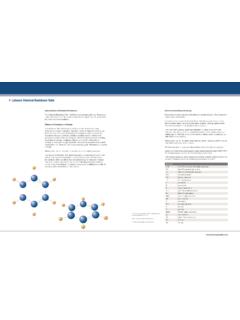
Interpaion IEnPp fR nmpmeft n CfhRn Labware Chemical ...
tools.thermofisher.com286 www.thermoscientifi c.com Labwre Olafira nOPao ymreblo LsFoOrao LuapeDisEHLFbDabwriweFb CMT TTLy TL TM TT T/C T/ / ewFb TT na as H MnCM TM TTM Chemhical,l contaroAcSnlno#E N,o u u b u b b M M M b u u .
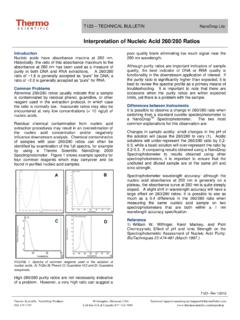
Interpretation of Nucleic Acid 260/280 Ratios
tools.thermofisher.comT123 – TECHNICAL BULLETIN NanoDrop Lite Interpretation of Nucleic Acid 260/280 Ratios T123– Rev 1/2012 Thermo Scientific NanoDrop Products Wilmington, Delaware USA Technical support:nanodrop.techsupport@thermofisher.com
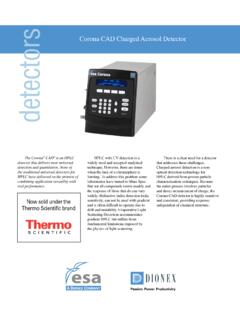
Corona CAD Charged Aerosol Detector - Thermo Fisher …
tools.thermofisher.com3 Corona CaD DeteCtor SpeCifiCationS* Operating Mode Charged Aerosol Detection Mobile Phase Flow Rate Up to 2 mL/min Full Scale Output Range 1 pA to 470 pA
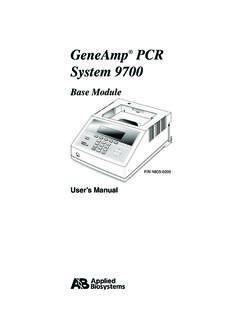
GeneAmp PCR System 9700 - Thermo Fisher Scientific
tools.thermofisher.comIntroduction and Safety 1-1 Introduction and Safety 1 Overview About This Chapter This chapter provides information to help you safely operate the GeneAmp PCR System 9700. In This Chapter The following topics are covered in this chapter: Topics See Page About This Manual 1-2
alamarBlue TI read only - Thermo Fisher Scientific
tools.thermofisher.comPage 1 of 27 alamarBlue® Assay U.S. Patent No. 5,501,959 Indications for Use The alamarBlue® Assay is designed to measure quantitatively the proliferation of various human and animal cell lines, bacteria and fungi. The bioassay may also be used to establish relative
Installation Guide -Chromeleon 7 - Thermo Fisher Scientific
tools.thermofisher.comNote: Indicates information of special interest. Tip: Indicates information that will help you to use the software more efficiently. 1.3 Other Documents
Related documents
Experiment 2-3 Qualitative Analysis of Metal Ions in Solution
web.williams.eduHold the centrifuge tube in the left hand in a slanting position and carefully lower the end of the dropper below the surface of the liquid so as not to disturb the precipitate. If the quantity of the liquid is large, it is usually best to remove it in several portions. Do not allow the liquid to get into the rubber bulb.

Diagnostic Specimen Collection Guide
www.spectra-labs.comSerum Separator Tube (SST™) 1. Gently invert tube 5-10 times 2. Stand upright in the test tube rack to clot for 30 minutes, no longer than 60 minutes 3. Centrifuge to obtain complete separation 4. Refrigerate (36 º - 46ºF) Order of Draw Tube Remarks Red Top Tube - No Gel (RT) 1. Gently invert tube 5-10 times 2. Refrigerate (36 º - 46ºF)

decanter centrifuge technology - Alfa Laval
www.alfalaval.comInlet tube How a decanter centrifuge works A decanter centrifuge separates solids from one or two liquid phases in one single continuous process. This is done using centrifugal forces that can be well beyond 3000 times greater than gravity. When subject to such forces, the

Isolation of mononuclear cells from human peripheral blood ...
www.miltenyibiotec.comconical tube. 6. Fill the conical tube with buffer, mix, and centrifuge at 300×g for 10 minutes at 20 °C. Carefully remove supernatant completely. 7. For removal of platelets, resuspend the cell pellet in 50 mL of buffer and centrifuge at 200×g for 10–15 minutes at 20 °C. Carefully remove the supernatant completely.

Specimen Collection Guidelines - Centers for Disease ...
www.cdc.govminimum of 30 minutes and centrifuge. Label the tube with the patient’s name, ID number, specimen type, and date collected. Store refrigerated at 4ºC or frozen, and ship on refrigerant gel packs or dry ice. d. Aliquoting sera. If aliquoting is performed, divide the sera into 0.5 ml aliquots in sterile containers.