Transcription of Reference ID: 3341544
1 HIGHLIGHTS OF PRESCRIBING INFORMATION These highlights do not include all the information needed to use Elspar safely and effectively. See full prescribing information for Elspar. ELSPAR (asparaginase) For injection, intravenous or intramuscular Initial Approval: 1978 -------------------RECENT MAJOR CHANGES------------------- Warnings and Precautions Diabetic Ketoacidosis ( ) 07 /2013 Posterior Reversible Encephalopathy Syndrome (PRES) ( ) 07 /2013 Risk of Medication Errors ( ) 07 /2013 -------------------INDICATIONS AND USAGE----------------------Elspar is an asparagine specific enzyme indicated as a component of a multi-agent chemotherapeutic regimen for the treatment of patients with acute lymphoblastic leukemia (ALL) (1) -----------------DOSAGE AND ADMINISTRATION-------------- 6,000 International Units/m2 intramuscularly (IM) or intravenously (IV) three times a week ( ) Reconstitute in volume appropriate for the intended route of administration.
2 For IM administration, reconstitute in 2 mL ( ) For IV administration, reconstitute in 5 mL ( ) For IM administration, limit the volume at a single injection site to 2 mL; if greater than 2 mL, use multiple injection sites. ( ) For IV administration, give over 30 min through side arm of an infusion of Sodium Chloride Injection or Dextrose Injection 5% (D5W). ( ) Use reconstituted Elspar within eight hours. ( ) ---DOSAGE FORMS AND STRENGTHS----------- 10,000 International Units as lyophilized powder in single-use vial (3) -------------------CONTRAINDICATIONS---- ------------------- Serious allergic reactions to Elspar or other Escherichia coli-derived L- asparaginases (4) Serious thrombosis with prior L-asparaginase therapy (4) Pancreatitis with prior L-asparaginase therapy (4) Serious hemorrhagic events with prior L-asparaginase therapy (4) ----------------WARNINGS AND PRECAUTIONS------------ Anaphylaxis and other serious allergic reactions can occur.
3 Observe patients for one hour after administration. Discontinue Elspar in patients with serious allergic reactions. ( ) Serious thrombotic events, including sagittal sinus thrombosis, can occur. Discontinue Elspar in patients with serious thrombotic events. ( ) Pancreatitis, in some cases fulminant or fatal, can occur. Evaluate patients with abdominal pain for pancreatitis. Discontinue Elspar in patients with pancreatitis. ( ) Glucose intolerance, in some cases irreversible, can occur. Monitor serum glucose. ( ) Coagulopathy can occur. Perform appropriate monitoring. ( ) Hepatotoxicity including hepatic failure can occur. Perform appropriate monitoring. ( ) Posterior Reversible Encephalopathy Syndrome (PRES). ( ) Do not interchange Elspar with Erwinia asparaginase or pegylated E. coli asparaginase [polyethylene glycol (PEG) asparaginase]. ( ) --------------------ADVERSE REACTIONS---------------------- Most common adverse reactions are allergic reactions (including anaphylaxis), hyperglycemia, pancreatitis, central nervous system (CNS) thrombosis, coagulopathy, hyperbilirubinemia, and elevated transaminases (6) To report SUSPECTED ADVERSE REACTIONS, contact Lundbeck at 1-800-455-1141 or FDA at 1-800-FDA-1088 or See 17 for PATIENT COUNSELING INFORMATION Revised: July 2013 FULL PRESCRIBING INFORMATION.
4 CONTENTS* 1 INDICATIONS AND USAGE 2 DOSAGE AND ADMINISTRATION Recommended Dose Instructions for Administration Preparation and Handling Precautions 3 DOSAGE FORMS AND STRENGTHS 4 CONTRAINDICATIONS 5 WARNINGS AND PRECAUTIONS Anaphylaxis and Serious Allergic Reactions Thrombosis Pancreatitis Glucose Intolerance Coagulopathy Hepatotoxicity and Abnormal Liver Function Neurotoxicity Risk of Medication Errors 6 ADVERSE REACTIONS Clinical Trials and Post-Marketing Experience Immunogenicity 7 DRUG INTERACTIONS 8 USE IN SPECIFIC POPULATIONS Pregnancy Nursing Mothers Pediatric Use Geriatric Use 11 DESCRIPTION 12 CLINICAL PHARMACOLOGY Mechanism of Action Pharmacodynamics Pharmacokinetics 13 NONCLINICAL TOXICOLOGY Carcinogenesis, Mutagenesis, Impairment of Fertility Animal Toxicology 14 CLINICAL STUDIES 16 HOW SUPPLIED/STORAGE AND HANDLING 17 PATIENT COUNSELING INFORMATION *Sections or subsections omitted from the full prescribing information are not listed Reference ID: 3341544 FULL PRESCRIBING INFORMATION 1 INDICATIONS AND USAGE Elspar is indicated as a component of a multi-agent chemotherapeutic regimen for the treatment of patients with acute lymphoblastic leukemia (ALL).
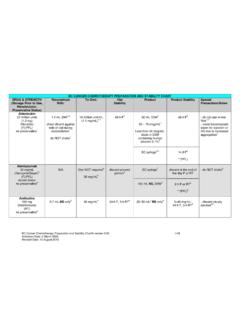
5 2 DOSAGE AND ADMINISTRATION Recommended Dose The recommended dose of Elspar is 6,000 International Units/m2 intramuscularly (IM) or intravenously (IV) three times a week. Instructions for Administration W hen Elspar is administered IM, the volume at a single injection site should be limited to 2 mL. If a volume greater than 2 mL is to be administered, two injection sites should be used. Discard unused portion. W hen administered IV, give Elspar over a period of not less than thirty minutes through the side arm of an infusion of Sodium Chloride Injection or Dextrose Injection 5% (D5W). Discard unused portion. Preparation and Handling Precautions For IM administration, reconstitute Elspar by adding 2 mL Sodium Chloride Injection to the 10,000 unit vial. W ithdraw volume of reconstituted Elspar containing calculated dose into sterile syringe.
6 The reconstituted solution contains 5,000 international units (IU)/mL. For IV administration, reconstitute Elspar by adding 5 mL Sterile W ater for Injection or Sodium Chloride Injection to the 10,000 unit vial. W ithdraw volume of reconstituted Elspar containing calculated dose into sterile syringe. The reconstituted solution contains 2,000 IU/mL. Use reconstituted Elspar within eight hours. Parenteral drug products should be inspected visually for particulate matter, cloudiness or discoloration prior to administration, whenever solution and container permit. If any of these are present, discard the solution. However, occasionally, a very small number of gelatinous fiber-like particles may develop on standing. Filtration through a micron filter during administration will remove the particles with no resultant loss in potency. 3 DOSAGE FORMS AND STRENGTHS 10,000 International Units as lyophilized powder in single-use vial.
7 4 CONTRAINDICATIONS Serious allergic reactions to Elspar or other Escherichia coli-derived L-asparaginases Serious thrombosis with prior L- asparaginase therapy Pancreatitis with prior L- asparaginase therapy Serious hemorrhagic events with prior L- asparaginase therapy 5 WARNINGS AND PRECAUTIONS Anaphylaxis and Serious Allergic Reactions Serious allergic reactions can occur in patients receiving Elspar. The risk of serious allergic reactions is higher in patients with prior exposure to Elspar or other Escherichia coli-derived L asparaginases. Observe patients for one hour after administration of Elspar in a setting with resuscitation equipment and other agents necessary to treat anaphylaxis (for example, Reference ID: 3341544 6 epinephrine, oxygen, intravenous steroids, antihistamines).
8 Discontinue Elspar in patients with serious allergic reactions. Thrombosis Serious thrombotic events, including sagittal sinus thrombosis can occur in patients receiving Elspar. Discontinue Elspar in patients with serious thrombotic events. Pancreatitis Pancreatitis, in some cases fulminant or fatal, can occur in patients receiving Elspar. Evaluate patients with abdominal pain for evidence of pancreatitis. Discontinue Elspar in patients with pancreatitis. Glucose Intolerence Glucose intolerance can occur in patients receiving Elspar. In some cases, glucose intolerance is irreversible. Cases of diabetic ketoacidosis have been reported. Monitor serum glucose. Coagulopathy Increased prothrombin time, increased partial thromboplastin time, and hypofibrinogenemia can occur in patients receiving Elspar. CNS hemorrhages have been observed.
9 Monitor coagulation parameters at baseline and periodically during and after treatment. Initiate treatment with fresh-frozen plasma to replace coagulation factors in patients with severe or symptomatic coagulopathy. Hepatotoxicity and Abnormal Liver Function Fulminant hepatic failure occurs. Hepatotoxicity and abnormal liver function, including elevations of AST (SGOT), ALT (SGPT), alkaline phosphatase, bilirubin (direct and indirect), and depression of serum albumin, and plasma fibrinogen can occur. Fatty changes in the liver have been documented on biopsy. Evaluate hepatic enzymes and bilirubin pretreatment and periodically during treatment. Neurotoxicity Patients treated with Elspar, in a combination with other chemotherapeutic agents, have been reported to develop posterior reversible encephalopathy syndrome (PRES).
10 PRES is a neurological disorder with clinical symptoms of headache, seizures, visual disturbances, altered mental status, and hypertension. Symptoms can be nonspecific, and diagnosis requires confirmation by radiological procedures. Interrupt use of Elspar if PRES is suspected or diagnosed. Control blood pressure promptly and monitor closely for seizure activity. Risk of Medication Errors Medication errors involving Elspar have occurred. In particular, different formulations and routes of administration (intramuscular and intravenous) of asparaginase have been interchanged inappropriately, which may result in subtherapeutic blood levels of asparaginase or additional toxicity related to an overdose. Confirm the formulation of asparaginase prior to administration. Do not interchange Elspar with Erwinia asparaginase or pegylated E.