Transcription of Refractive Index - Weber State University
1 Refractive Index A refractometer measures the extent to which light is bent ( refracted) when it moves from air into a sample and is typically used to determine the Index of refraction( Refractive Index or n ) of a liquid sample. The Refractive Index is a unitless number, between and for most compounds, and is normally determined to five digit precision. Since the Index of refraction depends on both the temperature of the sample and the wavelength of light used these are both indicated when reporting the Refractive Index : The italicized n denotes Refractive Index , the superscript indicates the temperature in degrees Celsius, and the subscript denotes the wavelength of light (in this case the D indicates the sodium D line at 589 nm).
2 In the organic chemistry laboratory, Refractive Index is commonly determined to help identify pure liquid samples by comparing the experimental value to published values for pure compounds. However, there are many more applications for Refractive Index : Foods and Beverages Soluble solids in fruit products Rancidity in edible oils Moisture in honey and strawberry jam Total solids, water and fat in milk Oil in avocado and olives Fat in chocolate Moisture in meat Petroleum Petroleum in oil sands Olefins, aromatics, paraffins Ethylene glycol in coolants Agriculture Oil content of seeds Sweet corn maturity Salinity Industrially, it is most often used to determine concentration of a dissolved solute in liquid samples.
3 The most common application is measuring the concentration of sugar dissolved in water, such as in fruit juices and juice concentrates. Examples of smaller, hand-held refractometers: Dissolved sugar changes the Refractive Index of water substantially. Since sugar is the primary ingredient in juices, the Brix scale of Refractive Index was developed. Degrees Brix (symbol Bx) is the sugar content of an aqueous solution. One degree Brix is 1 gram of sucrose in 100 grams (% w/w) of the solution. If the solution contains dissolved solids other than pure sucrose, then the Bx only approximates the dissolved solid content.
4 The Bx is traditionally used in the wine, sugar, fruit juice, and honey industries. Since temperature can affect Refractive Index , it is important to control this parameter during a measurement. (One degree Celsius changes by about unit.) When a sugar solution is measured by refractometer or densitometer, the or Bx value only represents the amount of dry solids dissolved in the sample if the dry solids are exclusively sucrose. This is seldom the case. Grape juice, for example, contains little sucrose but does contain glucose, fructose, acids and other substances. In such cases the Bx value clearly cannot be equated with the sucrose content but it may represent a good approximation to the total sugar content.
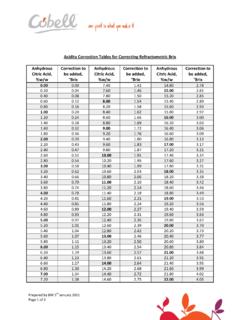
5 For example, an %w/w D-Glucose ("grape sugar") solution measures Bx. When other solids are dissolved in the solution, they can affect the Refractive Index . For example, many fruit juices contain citric acid that will increase the Brix value. Therefore, the citric acid is usually titrated and the brix value is corrected from values in published tables. Note the differences in sugar concentrations between orange, grape, and lemon juices. When imported juices arrive (usually as juice concentrates), they are tested by Customs and the Brix value must meet the respective specification in the following table. The values in the lower part of the table are the actual refractometer readings that represent the typical combined citric acid and sugars.
6 When juice bottlers manufacture a fruit juice beverage, they purchase frozen juice concentrates on the commodities market. The cost of these juices depends on their Brix value. The higher the Brix value, the more concentrated the juice. The concentrates save on shipping and refrigeration costs. The concentrates are diluted with water to the appropriate ratio as determined by the Brix numbers, and the resulting product is pasteurized, filled, and sealed for sale. *Note: Brix correction = ( x % anhydrous citric acid) + Some industries utilize the Brix scale to measure solute concentrations that contain no sugar at all. Of course, in this case the brix scale is similar to the Refractive just a number that can be calibrated to the specific analytical method.
7 A series of standards in prepared, measured, and then plotted. When an unknown containing the same solute is analyzed, the reading is compared to the chart to obtain the actual concentration. For example, the concentration of salt solutions or antifreeze can be easily measured by Refractive Index . However, alcohol water mixtures are not as easy. Note the Refractive Index values of the mixtures in the table below. Also note the density of ethanol and methanol in the same solutions. Relationship between Salt Solution and Sugar Concentration (Brix) and Refractive Index at 20 C Salt(NaCl) g/100g Refractive Index Brix % 0 0 1 2 3 4 5 6 7 8 9 10 11 12 13 14 15 16 17 18 19 20 21 22 23 24 25 26 US CUSTOMS TABLE OF CORRECTED BRIX VALUES FOR SELECTED JUICES* DEGREE OF CONCENTRATION ORANGE JUICE GRAPE [VITIS VINIFERA] JUICE LEMON JUICE Unconcentrated (No Citric acid correction) Reading ( Bx)
8 Unconcentrated - - - - - - - - - - - - - - - - - - - - - - - - - - - - - - - - - - - - %(w/w)EthanolMethanolEthylene Organic (w/w)Density of Alcohol-Water MixturesEthyleneGlycolEthanolMethanol Honey contains a lot of sugar that can be determined by Refractive Index . Notice that the plot below shows the Refractive Index as a function of water (not sugar) in the mixture. Hence, a negative slope is observed. The concentration of the sugars is calculated as the remainder (100% - % water = % sugar).
9 % (w/w)MethanolPropylene GlycolEthylene Organic (w/w) Refractive Index of Selected Coolant SolutionsGlycerolPropyleneGlycolEthylene GlycolEthanolMethanol Refractive Index Calibration of Glycerin/Water Mixtures (Brix Scale)%(w/w) Bx Bx Mixture of Glycerin in Water: Bx% GycerinTrial # # # = + = Bx Calibration of the refractometer is important. While published values are helpful, it is critical to insure the instrument is measuring values correctly. Liquid solutions are prepared or purchased that are measured under the same conditions as the samples. Here is an actual example of a test for glycerin (glycerol) in water.
10 Four standards were prepared by weighing out the appropriate masses of glycerin and water, preparing concentrations of 70%, 80%, 90%, and 100%(w/w). These were measured on the Abby refractometer on a cold day in the lab and the values differ slightly from the published values. End of Document