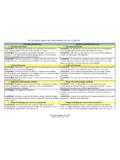
Transcription of RESEARCH-BASED PROGRAMS
1 RESEARCH-BASED PROGRAMS Below is a small list of RESEARCH-BASED PROGRAMS . The list includes literacy, mathematics, middle school, high school, English language learners (ELL), and special education RESEARCH-BASED PROGRAMS . This is not an exhaustive list of RESEARCH-BASED PROGRAMS , and the inclusion of PROGRAMS on it does not constitute an endorsement. RESEARCH-BASED PROGRAMS Program Findings Literacy 6+1 Trait Writing Model (Grades: K-12) Source: The benchmark estimates indicate that use of the 6+1 Trait Writing Model significantly increased student writing scores during the year in which it was introduced to schools. After controlling for baseline writing scores, the estimated average score of students in the treatment group was standard deviations higher (p =.)
2 023) than the estimated average score of students in the control group. An intervention with this effect size would be expected to increase the average level of achievement from the 50th to the 54th percentile. Accelerated Reader (Grades: K-12) Source: based on two studies, the What Works Clearinghouse (WWC) considers the extent of evidence for Accelerated Reader on adolescent learners to be small for reading fluency and medium to large for comprehension. The two studies included 2,877 students from grade 4 to grade 8 who attended elementary and middle schools in Oregon and Texas. Adventure Island (Grades: K-2) Source: Although the research on Adventure Island is limited, the Success for All (SFA) reading program has been evaluated extensively.
3 Recent research involving a national randomized evaluation of SFA in grades K 2 found significant positive effects of the program across 35 high-poverty schools (Borman et al., 2005, 2007). AVID (Advancement Via Individual Determination) (Grades: 6-12) Source: based on one study, the WWC considers the extent of evidence for AVID on adolescent learners to be small for comprehension. The study included 96 high school age youth attending four schools in one school district in Colorado. Cooperative Integrated Reading and Composition (Grades: 2-6) Source: based on two studies, the WWC considers the extent of evidence for Cooperative Integrated Reading and Composition on adolescent learners to be medium to large for the comprehension and general literacy achievement domains.
4 The two studies included approximately 1,460 students in grades 2 through 6 who attended nine schools located in two school districts in the United States. Corrective Reading (Grades: 4-12) Source: based on one study, the WWC considers the extent of evidence for Corrective Reading on adolescent learners to be small for alphabetics, reading fluency, and comprehension. This study included 86 fifth-grade struggling readers from a school district just outside Pittsburgh, PA. Doors to Discovery (Grade: Pre-K) Source: based on two studies, the WWC considers the extent of evidence for Doors to Discovery to be medium to large for oral language and print knowledge, and small for phonological processing and math.
5 The two studies included 33 preschool classrooms and 220 prekindergarten children from three to five years of age in two locations in the southwest United States. Fast ForWord (Grades: K-12) Source: based on eight studies, the WWC considers the extent of evidence for Fast ForWord on adolescent learners to be small for the alphabetics and reading fluency domains and medium to large for the comprehension and general literacy achievement domains. The eight studies included about 2,000 students, ranging in age from 5 to 17, who attended elementary, middle, and high schools in Indiana, Maryland, North RESEARCH-BASED PROGRAMS Program Findings Carolina, Ohio, Pennsylvania, Virginia, an urban district in the northeastern United States, and Australia.
6 Ladders to Literacy (Grade: Preschool) Source: based on two studies, the WWC considers the extent of evidence for Ladders to Literacy on preschool children to be medium to large for oral language and small for print knowledge, phonological processing, and math. The two studies included 139 preschool children from 26 preschool classrooms in southern New Hampshire. Literacy Express (Grade: Preschool) Source: based on three studies, the WWC considers the extent of evidence for Literacy Express on preschool children to be medium to large for oral language , print knowledge, and phonological processing and small for cognition and math. The three studies included 1,004 preschool children from three to five years of age from 70 preschools in Florida and California.
7 Peer-Assisted Learning Strategies (Grades: K-5) Source: based on one study, the WWC considers the extent of evidence for Peer-Assisted Learning Strategies on English language learners to be small for reading achievement. The study included 99 English language learners from 3rd to 6th grade in Texas. Project CRISS (Grades: 4-6) Source: based on two studies, the WWC considers the extent of evidence for Project CRISS on adolescent learners to be medium to large for the comprehension domain. The studies included 2,569 students, ranging from grade 4 through grade 6, who attended public schools in Arizona, California, Florida, Georgia, Louisiana, Montana, Oregon, Texas, Virginia, and Wisconsin.
8 READ 180 (Grades: 4-12) Source: READ 180 was adapted to the afterschool setting and tested in a randomized controlled trial study to examine the impact of READ 180 in afterschool classrooms in Brockton, Massachusetts. Findings from the study revealed that READ 180 had an impact on the reading skills of the 150 students in the treatment group in three elementary schools (Hartry, Fitzgerald, & Porter, 2008). Read Naturally (Grades: K-8) Source: based on two studies, the WWC considers the extent of evidence for Read Naturally to be small for both reading achievement and English language development for English language learners. The two studies included 99 English language learner students in second through fifth grades from eight elementary schools in two states.
9 Read Right (Grades: 6-12) Source: A rigorous experimental study by researchers at the Northwest Regional Lab found that low-achieving middle and high school students increased their reading comprehension after one semester of tutoring with Read Right, a nationally used intervention program that supplements regular English language arts instruction. Reading Apprenticeship (Grades: 6-12) Source: based on one study, the WWC considers the extent of evidence for Reading Apprenticeship on adolescent learners to be small for comprehension. The study included more than 2,000 ninth-grade students who attended 17 high schools located in 10 school districts across the United States.
10 Reading Mastery (Grades: K-6) Source: based on two studies, the WWC considers the extent of evidence for Reading Mastery on adolescent learners to be small for the reading fluency and comprehension domains. The studies included 361 students in grades 4 and 5, who attended schools in the midwestern and northwestern United States. Reading Plus (Grades: 3 and above) Source: based on one study, the WWC considers the extent of evidence for Reading Plus on adolescent learners to be small for the comprehension domain. The study included 13,128 students, ranging from grade 5 through grade 9, who attended schools in Miami-Dade County in Florida. RESEARCH-BASED PROGRAMS Program Findings Reading Recovery (Grade: 1st) Source: based on five studies, the WWC considers the extent of evidence for Reading Recovery to be medium to large for alphabetics, small for fluency and comprehension, and medium to large for general reading achievement.