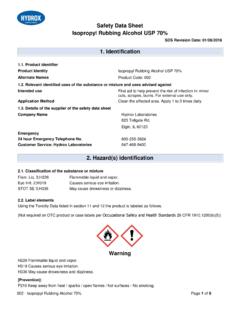
Transcription of SAFETY DATA SHEET CLAYBENT34US35 VERSION NO. 1
1 NATURAL SOURCING COSMETIC CLAYS BENTONITE CLAY Natural Sourcing, LLC. Page 1 of 7 SAFETY data SHEET CLAYBENT34US35 VERSION NO. 1 BENTONITE CLAY Prepared to US OSHA, CMA, ANSI, Canadian WHMIS Standards, Australian WorkSafe, Japanese Industrial Standard JIS Z 7250:2000, and European Directives 1 PRODUCT AND COMPANY IDENTIFICATION Trade Name (as labeled): Bentonite Clay Botanical Name: INCI Name: Synonyms: CAS No: EINECS No: FEMA No: Product Use: Company Name: Company Address: Business Phone: Website: Email: Emergency Telephone Number: Date of Current Revision: Date of Last Revision: N/A Bentonite Clay N/A Mixture Not listed Not available Personal Care Formulations Natural Sourcing, LLC. 341 Christian Street, Oxford, CT 06478, USA (800) 340-0080 Chemtrec: (800) 262-8200 August 16, 2015 August 4, 2015 2 HAZARD IDENTIFICATION EMERGENCY OVERVIEW: This product is a light tan to gray dry powder with no odor.
2 Minimize dust generation and breathing of dust. Health Hazards: May cause skin, eye and respiratory irritation. May cause cancer. Flammability Hazards: Non-flammable. Reactivity Hazards: None. Environmental Hazards: The environmental effects of this product have not been investigated, however release may cause adverse environmental effects. US DOT Symbols: Non-Regulated Material EU and GHS Symbols: Signal Word: Danger EU Labeling and Classification: This product does meet the definition of a hazardous su bstance or preparation as defined by the European Union Council Directives 67/548/EEC, 1999/45/EC, 1272/2008/EC and subsequent Directives. Components Contributing to Classification: Quartz Label Elements: GHS Hazard Classifications: Carcinogenicity Category 1A Hazard Statements: H350 May cause cancer NATURAL SOURCING COSMETIC CLAYS BENTONITE CLAY Natural Sourcing, LLC.
3 Page 2 of 7 Precautionary Statements: P201 Obtain special instructions before use. P202 Do not handle until all SAFETY precautions have been read and understood. P280 Wear protective gloves/protective clothing/eye protection/face protection. Response Statements: P308+P313 IF exposed or concerned: Get medical advice/attention. Storage Statements: P405 Store locked up. Disposal Statements: P501 Dispose of contents/container in accordance with local regulations. Health Hazards or Risks From Exposure: Symptoms of Overexposure by Route of Exposure: The most significant routes of overexposure for this product are by contact with skin, eyes, and respiratory system. The symptoms of overexposure are described in the following paragraphs. Acute: Inhalation: Excessive quantities may cause respiratory irritation. Skin Contact: Prolonged or repeated exposure may cause skin irritation.
4 Eye Contact: May cause eye irritation upon direct contact. Ingestion: No data available. Chronic: No data available. Target Organs: Acute: Skin, Eyes, and Respiratory System Chronic: No data available 3 COMPOSITION / INFORMATION ON INGREDIENTS Type of Product: Natural Sourcing Cosmetic Clays Ingredients: WT% CAS No. EINECS No. Hazard Classification Bentonite 98-100 1302-78-9 215-108-5 Not Classified Silicon Dioxide <2% 7631-869-9 231-545-4 Not Classified Quartz <2% 14808-60-7 238-878-4 Carcinogenicity Category 1 Note: All WHMIS required information is included in appropriate sections based on the ANSI format. This product has been classified in accordance with the hazard criteria of the CPR and the MSDS contains all the information required by the CPR, EU Directives and the Japanese Industrial Standard JIS Z 7250:2000 4 FIRST AID MEASURES Description of First Aid Measures: Eye Contact: If product enters the eyes, flush with plenty of water or eye wash solution for several minutes.
5 Seek medical attention if irritation persists. Skin Contact: Wash skin thoroughly with soap and water after handling. Seek medical attention if irritation develops and persists. Inhalation: If breathing becomes difficult, remove victim to fresh air. If necessary, use artificial respiration to support vital functions. Seek medical attention. Ingestion: If product is swallowed, call physician or poison center if you feel unwell. If professional advice is not available, do not induce vomiting. Never induce vomiting or give dilutents (milk or water) to someone who is unconscious, having convulsions, or who cannot swallow. Seek medical advice. Take a copy of the label and/or SDS with the victim to the health professional. Medical Conditions Generally Aggravated by Exposure: No data available Symptoms and Effects Both Acute and Delayed: Contact with skin, eyes, and respiratory system may cause irritation.
6 Recommendations to Physicians: Treat symptoms and eliminate overexposure. NATURAL SOURCING COSMETIC CLAYS BENTONITE CLAY Natural Sourcing, LLC. Page 3 of 75 FIRE FIGHTING MEASURES Fire Extinguishing Materials: Use the following fire extinguishing materials: Water Spray: Yes Foam: Yes Halon: Yes Carbon Dioxide: Yes Dry Chemical: Yes Other: Any C Class Unusual Fire and Exposion Hazards: Irritating and toxic fumes may be produced at high temperatures. Use of water may result if the formation of a toxic aqueous solution. Do not allow run-off from fire fighting to enter drains or water courses. Explosive Sensitivity to Mechanical Impact: No Explosive Sensitivity to Static Discharge: No Special Fire-Fighting Procedures: Incipient fire responders should wear eye protection. Structural firefighters must wear Self-Contained Breathing Apparatus(SCBA) and full protective equipment.
7 Isolate materials not yet involved in the fire and protect containers from fire area if this can be done without risk; otherwise, cool with carefully applied water spray. If possible, prevent run-off water from entering storm drains, bodies ofwater, or other environmentally sensitive areas. NFPA RATING SYSTEM Flammability Health Reactivity Other HMIS RATING SYSTEM HAZARDOUS MATERIAL IDENTIFICATION SYSTEM HEALTH HAZARD (BLUE) 2 FLAMMABILITY HAZARD (RED) 0 PHYSICAL HAZARD (YELLOW) 0 PROTECTIVE EQUIPMENT EYES RESPIRATORY HANDS BODY See Sect 8 See Sect 8 Hazard Scale: 0 = Minimum 1 = Slight 2 = Moderate 3 = Serious 4 = Severe * = Chronic Hazard 6 ACCIDENTAL RELEASE MEASURES (STEPS FOR SPILLS) Personal Precautions, Protective Equipment and Emergency Procedures: Use cautious judgment when cleaning up spill.
8 Wear suitable protective clothing, gloves, and eye/face protection. Environmental Precautions: If water is introduced, construct a dike to prevent spreading. Keep out of sewers, storm drains, surface waters, and soils. Spill and Leak Response: Small Spills: Collect material via broom or mop. Place in tightly sealed containersfor proper - 0 2 NATURAL SOURCING COSMETIC CLAYS BENTONITE CLAY Natural Sourcing, LLC. Page 4 of 7 Large Spills: Approach spill areas with caution. If liquid was introduced, create a dike or trench to contain up with absorbent material such as clay, sand or other suitablenon-reactive material. Place in leak-proof containers. Seal tightly for proper disposal. Dispose of in accordance with Federal, State, and localhazardous waste disposal regulations and those of Canada and itsProvinces, those of Australia, Japan and EU Member States (seeSection 13, Disposal Considerations).
9 7 HANDLING AND STORAGE Precautions for Safe Handling: To prevent skin contact under the foreseeable conditions of use, wear appropriate SAFETY gloves. Wash thoroughly after handling. Storage and Handling Practices: Minimize dust generation and accumulation. Specific Uses: Comply with the regulations and product data SHEET . No specific recommendations. Apply the above handling guidelines. 8 EXPOSURE CONTROL/PERSONAL PROTECTION Exposure Parameters: Ingredients CAS No. OSHA PEL NIOSH PEL Bentonite 1302-78-9 15 mg/m3(Total dust), 5 mg/m3(Respirable dust) No data available Silicon Dioxide 7631-869-9 80 mg/m3 6 mg/m3 Quartz 14808-60-7 30 mg/m3 mg/m3 Exposure Controls: Ventilation and Engineering Controls: Use with adequate ventilation to ensure exposure levels are maintained below the limits provided above.
10 The following information on appropriate Personal Protective Equipment is provided to assist employers in complying with OSHA regulations found in 29 CFR Subpart I (beginning at ) or equivalent standard of Canada, or standards of EU member states (including EN 149 for respiratory PPE, and EN 166 for face/eye protection), and those of Japan. Please reference applicable regulations and standards for relevant details. Respiratory Protection: Not required for properly ventilated areas. Maintain airborne contaminant concentrations below guidelines listed above, if applicable. If necessary, use only respiratory protection authorized in the Federal OSHA Respiratory Protection Standard (29 CFR ), equivalent State standards, Canadian CSA Standard , the European Standard EN149, or EU member states. Eye Protection: SAFETY glasses or goggles are recommended.