Transcription of Safety Data Sheet - Fisher Sci
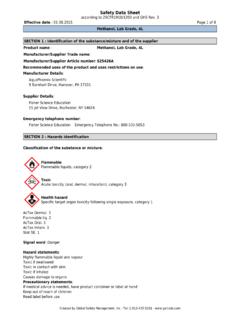
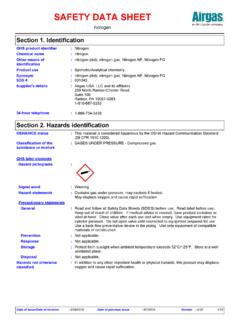
1 Safety data Sheetaccording to 29 CFR1910/1200 and GHS Rev. 3 Effective date : 1 of 7 AmmoniaCreated by Global Safety Management, Inc. -Tel: 1-813-435-5161 - 1 : Identification of the substance/mixture and of the supplierProduct name :AmmoniaManufacturer/Supplier Trade name:Manufacturer/Supplier Article number:S25164 Recommended uses of the product and uses restrictions on use:Manufacturer Details:AquaPhoenix Scientific9 Barnhart Drive, Hanover, PA 17331 Supplier Details: Fisher Science Education15 Jet View Drive, Rochester, NY 14624 Emergency telephone number: Fisher Science Education Emergency Telephone No.: 800-535-5053 SECTION 2 : Hazards identificationClassification of the substance or mixture:CorrosiveSkin corrosion, category 1 BEnvironmentally DamagingAcute hazards to the aquatic environment, category 1 IrritantSpecific target organ toxicity following single exposure, category 3 STOT SE 3 AcAq Tox 1 Skin Corr.
2 1 BSignal word :DangerHazard statements:Causes severe skin burns and eye damageMay cause respiratory irritationVery toxic to aquatic lifePrecautionary statements:If medical advice is needed, have product container or label at handKeep out of reach of childrenRead label before useDo not breathe dust/fume/gas/mist/vapours/sprayAvoid release to the environmentWear protective gloves/protective clothing/eye protection/face protectionUse personal protective equipment as requiredSafety data Sheetaccording to 29 CFR1910/1200 and GHS Rev. 3 Effective date : 2 of 7 AmmoniaCreated by Global Safety Management, Inc. -Tel: 1-813-435-5161 - not eat, drink or smoke when using this productWash skin thoroughly after handlingIF INHALED: Remove victim to fresh air and keep at rest in a position comfortable for breathingIF IN EYES: Rinse cautiously with water for several minutes.
3 Remove contact lenses if present and easy to rinsingImmediately call a POISON CENTER or doctor/physicianIF ON SKIN (or hair): Remove/Take off immediately all contaminated clothing. Rinse skin with water/showerIF SWALLOWED: Rinse mouth. Do NOT induce vomitingCollect spillageSpecific treatment (see supplemental first aid instructions on this label)Wash contaminated clothing before reuseStore locked upStore in a dry placeStore in a well ventilated place. Keep container tightly closedDispose of contents/container to ..Combustible Dust Hazard: :May form combustible dust concentrations in air (during processing).Other Non-GHS Classification:WHMISENFPA/HMISNFPA SCALE (0-4)HMIS RATINGS (0-4)SECTION 3 : Composition/information on ingredientsIngredients:CAS 1336-21-6 Ammonium Hydroxide, %CAS 7732-18-5 Deionized Water87 %Percentages are by weightSECTION 4 : First aid measuresDescription of first aid measuresAfter inhalation: Move exposed individual to fresh air.
4 Loosen clothing as necessary and position individual inSafety data Sheetaccording to 29 CFR1910/1200 and GHS Rev. 3 Effective date : 3 of 7 AmmoniaCreated by Global Safety Management, Inc. -Tel: 1-813-435-5161 - comfortable medical advice if discomfort or irritation breathing difficult, give skin contact: Wash affected area with soap and water. Rinse/flush exposed skin gently using water for15-20 minutes. Seek medical advice if discomfort or irritation eye contact: Protect unexposed eye. Rinse/flush exposed eye(s) gently using water for 15-20 contact lens(es) if able to do so during rinsing. Seek medical attention if irritation persists or swallowing: Rinse mouth thoroughly.
5 Do not induce vomiting. Have exposed individual drink sips ofwater. Seek medical attention if irritation, discomfort or vomiting important symptoms and effects, both acute and delayed:Irritation, Nausea,Headache, Shortness of breath.;Indication of any immediate medical attention and special treatment needed:If seeking medical attention, provide SDS document to 5 : Firefighting measuresExtinguishing mediaSuitable extinguishing agents: If in laboratory setting, follow laboratory fire suppression procedures. Useappropriate fire suppression agents for adjacent combustible materials or sources of ignitionFor Safety reasons unsuitable extinguishing agents:Special hazards arising from the substance or mixture:Combustion products may include carbon oxides or other toxic decomposition can lead torelease of irritating gases and generating dust.
6 Fine dust dispersed in air in sufficientconcentrations, and in the presence of an ignition source is a potential dust explosion for firefighters:Protective equipment: Use NIOSH-approved respiratory protection/breathing information (precautions): Move product containers away from fire or keep cool with waterspray as a protective measure, where spark-proof tools and explosion-proof 6 : Accidental release measuresPersonal precautions, protective equipment and emergency procedures:Wear protective equipment. Transfer to a disposal or recovery spark-proof tools and explosion-proof respiratory protective device against the effects of fumes/dust/aerosol. Keep unprotectedpersons away.
7 Ensure adequate away from ignition sources. Protect from the spill, ifpossible. Contain spilled material by diking or using inert precautions:Prevent from reaching drains, sewer or waterway. Collect contaminated soil for characterization per Section 13 Methods and material for containment and cleaning up:If in a laboratory setting, follow Chemical Hygiene Plan into properly labeled containers forrecovery or disposal. If necessary, use trained response deposits should not be allowed toaccumulate on surfaces, as these may form an explosive mixture if they are released into the atmosphere insufficient concentration. Avoid dispersal of dust in the air ( , clearing dust surfaces with compressed air).
8 Collect solids in powder form using vacuum with (HEPA filter)Reference to other sections:SECTION 7 : Handling and storagePrecautions for safe handling: Safety data Sheetaccording to 29 CFR1910/1200 and GHS Rev. 3 Effective date : 4 of 7 AmmoniaCreated by Global Safety Management, Inc. -Tel: 1-813-435-5161 - hands after handling. Follow good hygiene procedures when handling chemical materials. Do not eat,drink, smoke, or use personal products when handling chemical substances. If in a laboratory setting, followChemical Hygiene only in well ventilated contact with eyes, skin, and for safe storage, including any incompatibilities:Provide ventilation for containers.
9 Avoid storage near extreme heat, ignition sources or open flame. Store awayfrom foodstuffs. Store away from oxidizing in cool, dry conditions in well sealed containers. Storewith like hazardsSECTION 8 : Exposure controls/personal protectionControl Parameters:1336-21-6, Ammonium Hydroxide, ACGIH TLV: 17 mg/m31336-21-6 , Ammonium Hydroxide , OSHA PEL: 35 mg/m31336-21-6, Ammonium Hydroxide, OSHA TWA 25 ppm (18 mg/m3) ST 35ppm (27 mg/m3)1336-21-6, Ammonium Hydroxide, ACGIH TWA 25 ppm (18 mg/m3) ST 35ppm (27 mg/m3)Appropriate Engineering controls:Emergency eye wash fountains and Safety showers should be available inthe immediate vicinity of exhaust ventilation orother engineering controls to keep the airborne concentrations of vaporor dusts (total/respirable) below the applicable workplace exposure limits(Occupational Exposure Limits-OELs) indicated under a fumehood.
10 It is recommended that all dust control equipment such as localexhaust ventilation and material transport systems involved in handlingof this product contain explosion relief vents or an explosion suppressionsystem or an oxygen deficient that dust-handlingsystems (such as exhaust ducts, dust collectors, vessels, and processingequipment) are designed in a manner to prevent the escape of dust intothe work area ( , there is no leakage from the equipment).Respiratory protection:Use suitable respiratory protective device when high concentrations arepresent. Use suitable respiratory protective device when aerosol or mistis formed. For spills, respiratory protection may be of skin:The glove material has to be impermeable and resistant to the product/the substance/ the preparation being of the glovematerial on consideration of the penetration times, rates of diffusion andthe protection: Safety glasses with side shields or hygienic measures:The usual precautionary measures are to be adhered to when handlingchemicals.