Transcription of Safety Data Sheet - Hydrodec
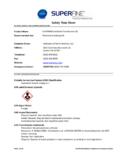
1 Safety data Sheet PAGE 1 OF 10 SUPERFINE Inhibited Transformer Oil, Revised 5/14/2015 SECTION 1: PRODUCT AND COMPANY IDENTIFICATION Product Name: SUPERFINE Inhibited Transformer Oil Recommended Use: Electrical Insulating Oil Company Name: Hydrodec of North America, LLC Address: 2021 Steinway Boulevard, SE Canton OH 44707 Telephone: (330) 454-8202 Fax: (330) 454-8870 Website: Emergency Contact: CHEMTREC (800) 424-9300 SECTION 2: HAZARDS IDENTIFICATION Globally Harmonized System (GHS) Classification Aspiration hazard, Category 1 GHS Label Elements Symbols GHS Signal Words Danger GHS Hazard Statements Physical Hazards: Not classified under GHS Health Hazards: May be fatal if swallowed and enters airways Environmental Hazards: Not classified under GHS GHS Precautionary Statements Prevention: No precautionary phrases Response: IF SWALLOWED: Immediately call a POISON CENTER or doctor/physician.
2 Do NOT induce vomiting. Storage: Not Applicable Disposal: Dispose of waste product or used containers according to local regulations Safety data Sheet PAGE 2 OF 10 SUPERFINE Inhibited Transformer Oil, Revised 5/14/2015 SECTION 2: HAZARDS IDENTIFICATION - CONTINUED Other Potential Health Effects Eyes: May be an eye irritant. Skin: Repeated or prolonged skin contact may lead to irritation and dermatitis. Ingestion: Swallowing can result in nausea, vomiting and irritation of gastrointestinal tract. Inhalation: At elevated temperatures, vapor may be an irritant to mucous membranes and respiratory tract. Hazardous Material Identification System (HMIS) Ratings: Health: 1 fire : 1 Reactivity 0 Hazard Scale: 0 = Minimal 1 = Slight 2 = Moderate 3 = Serious 4 = Severe * = Chronic Hazard SECTION 3: COMPOSITION/INFORMATION ON INGREDIENTS CAS# Component Percent 64742-53-6 Hydrotreated naphthenic mineral oil >99 128-37-0 2,6-Di-tert-butyl-p-cresol < SECTION 4: FIRST AID MEASURES First Aid: Eyes If this product comes in contact with the eyes: Wash out immediately with fresh running water.
3 Ensure complete irrigation of the eye by keeping eyelids apart and away from eye and moving the eyelids by occasionally lifting the upper and lower lids. Seek medical attention without delay; if pain persists or recurs seek medical attention. Removal of contact lenses after an eye injury should only be undertaken by skilled personnel. First Aid: Skin If skin contact occurs: Immediately remove all contaminated clothing, including footwear. Flush skin and hair with running water (and soap if available). Seek medical attention in event of irritation. First Aid: Ingestion If swallowed do NOT induce vomiting. If vomiting occurs, lean patient forward or place on left side (head-down position, if possible) to maintain open airway and prevent aspiration.
4 Observe the patient carefully. Never give liquid to a person showing signs of being sleepy or with reduced awareness; becoming unconscious. Give water to rinse out mouth, then provide liquid slowly and as much as the injured person can comfortably drink. Safety data Sheet PAGE 3 OF 10 SUPERFINE Inhibited Transformer Oil, Revised 5/14/2015 SECTION 4: FIRST AID MEASURES - CONTINUED First Aid: Inhalation If fumes or combustion products are inhaled, remove patient from contaminated area. Lay patient down. Keep warm and rested. Prostheses such as false teeth, which may block airway, should be removed, where possible, prior to initiating first aid procedures. Apply artificial respiration if not breathing, preferably with a demand valve resuscitator, bag-valve mask device, or pocket mask as trained.
5 Perform CPR if necessary. Transport to hospital or doctor. Indication of any immediate medical attention and special treatment needed For acute or short term repeated exposures to petroleum distillates or related hydrocarbons: Primary threat to life, from pure petroleum distillate ingestion and/or inhalation, is respiratory failure. Patients should be quickly evaluated for signs of respiratory distress ( cyanosis, tachypnoea, intercostal retraction, obtundation) and given oxygen. Patients with inadequate tidal volumes or poor arterial blood gases (pO2 50 mm Hg) should be intubated. Arrhythmias complicate some hydrocarbon ingestion and/or inhalation and electrocardiographic evidence of myocardial injury has been reported; intravenous lines and cardiac monitors should be established in obviously symptomatic patients.
6 The lungs excrete inhaled solvents, so that hyperventilation improves clearance. A chest x-ray should be taken immediately after stabilization of breathing and circulation to document aspiration and detect the presence of pneumothorax. Epinephrine (adrenalin) is not recommended for treatment of bronchospasm because of potential myocardial sensitization to catecholamines. Inhaled cardioselective bronchodilators ( Alupent, Salbutamol) are the preferred agents, with aminophylline a second choice. Lavage is indicated in patients who require decontamination; ensure use of cuffed endotracheal tube in adult patients. [Ellenhorn and Barceloux: Medical Toxicology] Treat symptomatically. Heavy and persistent skin contamination over many years may lead to dysplastic changes.
7 Pre-existing skin disorders may be aggravated by exposure to this product. In general, emesis induction is unnecessary with high viscosity, low volatility products, most oils and greases. High pressure accidental injection through the skin should be assessed for possible incision, irrigation and/or debridement. NOTE: Injuries may not seem serious at first, but within a few hours tissue may become swollen, discolored and extremely painful with extensive subcutaneous necrosis. Product may be forced through considerable distances along tissue planes. Safety data Sheet PAGE 4 OF 10 SUPERFINE Inhibited Transformer Oil, Revised 5/14/2015 SECTION 5: fire -FIGHTING MEASURES Suitable Extinguishing Media Carbon dioxide, foam or dry chemical powder.
8 Water mist or fog may be used. Do not use direct water jet or stream, material will float on water and may re-ignite on the surface of water. Hazardous Combustion Products On burning may emit oxides of carbon and nitrogen, smoke and other toxic fumes. fire Incompatibility Avoid contamination with oxidizing agents nitrates, oxidizing acids, chlorine bleaches, pool chlorine etc., as ignition may result. fire Fighting Alert fire Brigade and tell them location and nature of hazard. Wear breathing apparatus plus protective gloves. Prevent, by any means available, spillage from entering drains or water course. Use water delivered as a fine spray to control fire and cool adjacent area. fire /Explosion Hazard Combustible.
9 Slight fire hazard when exposed to heat or flame. Heating may cause expansion or decomposition leading to violent rupture of containers. On combustion, may emit toxic fumes of carbon monoxide (CO). National fire Prevention Authority (NFPA) Ratings: Health: 1 fire : 1 Reactivity: 0 Hazard Scale: 0 = Minimal 1 = Slight 2 = Moderate 3 = Serious 4 = Severe * = Chronic hazard SECTION 6: ACCIDENTAL RELEASE MEASURES Personal precautions, protective equipment, and emergency procedures Slippery when spilled. Remove all ignition sources and clean up all spills immediately. Avoid contact with skin and eyes. Wear protective gloves, Safety glasses, and other body protection that may be appropriate based on the size and conditions of the spill.
10 If oil mist is present, use a cartridge respirator. Methods and materials for containment and cleaning Small Spills: Wipe up with absorbents, rags, or paper towels. Collect and seal in properly labeled containers or drums for disposal in accordance with local, state and federal requirements. Large Spills: Work up wind or increase ventilation. Prevent the spill from entering drains and waterways using absorbents, soil, or other inert material. Collect the material and seal in properly labeled containers or drums for disposal. If contamination of sewers or waterways has occurred advise local emergency services. Safety data Sheet PAGE 5 OF 10 SUPERFINE Inhibited Transformer Oil, Revised 5/14/2015 SECTION 7: HANDLING AND STORAGE Precautions for Safe Handling Avoid eye contact and repeated or prolonged skin contact.