Transcription of SAFETY DATA SHEET - LPS Labs
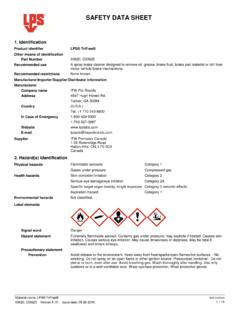
1 SAFETY data SHEET1. IdentificationLPS 3 (Aerosol)Product identifierOther means of identification00316 Part NumberA specialized soft-film spray coating designed to prevent rust and corrosion on steel, aluminumand other useNone restrictionsManufacturer/Importer/Suppli er/Distributor informationManufacturerManufacturerITW Pro BrandsCompany name4647 Hugh Howell , GA 30084( )CountryTel: +1 770-243-88001-800-424-9300 (inside )In Case of Emergency+001 703-527-3887 (outside Hazard(s) identificationCategory 1 Flammable aerosolsPhysical hazardsCompressed gasGases under pressureCategory 2 Skin corrosion/irritationHealth hazardsCategory 2 ASerious eye damage/eye irritationCategory 3 narcotic effectsSpecific target organ toxicity, single exposureNot hazardsNot defined hazardsLabel elementsSignal wordDangerHazard statementExtremely flammable aerosol.)
2 Contains gas under pressure; may explode if heated. Causes skinirritation. Causes serious eye irritation. May cause drowsiness or statementPreventionKeep away from heat/sparks/open flames/hot surfaces. - No smoking. Do not spray on an openflame or other ignition source. Do not pierce or burn, even after use. Use only outdoors or in awell-ventilated area. Wash thoroughly after handling. Wear protective gloves and swallowed: Call a poison center/doctor if you feel unwell. Rinse mouth. If inhaled: Removeperson to fresh air and keep comfortable for breathing. Call a POISON CENTER ordoctor/physician if you feel unwell. If in eyes: Rinse cautiously with water for several contact lenses, if present and easy to do. Continue rinsing. If eye irritation persists: Getmedical advice/attention. If on skin: Wash with plenty of water. Take off contaminated clothingand wash it before reuse.
3 Specific treatment (see this label). If skin irritation occurs: Get container tightly closed. Store in a well-ventilated place. Store locked up. Protect fromsunlight. Do not expose to temperatures exceeding 50 C/122 / 10 Material name: LPS 3 (Aerosol)00316 Version #: 05 Revision date: 02-19-2018 Issue date: 10-14-2015 SDS USDisposalDispose of contents/container in accordance with local/regional/national/international (s) not otherwiseclassified (HNOC)None informationNone Composition/information on ingredientsMixturesCAS number%Chemical nameCommon name and synonyms64742-47-8 Distillates Petroleum HydrotreatedLight50 - 605131-66-81-butoxy-2-propanol1 - 1067-64-1 Acetone1 - 1064742-54-7 Distillates Petroleum HydrotreatedHeavy1 - 10124-38-9 Carbon Dioxide1 - 5471-34-1 Calcium - 164742-82-1 Hydrodesulferized Heavy - - 14.
4 First-aid measuresRemove victim to fresh air and keep at rest in a position comfortable for breathing. Oxygen orartificial respiration if needed. Do not use mouth-to-mouth method if victim inhaled the artificial respiration with the aid of a pocket mask equipped with a one-way valve or otherproper respiratory medical device. Call a POISON CENTER or doctor/physician if you feel case of contact, immediately flush skin with plenty of water for at least 15 minutes whileremoving contaminated clothing and shoes. Get medical attention if irritation develops contactImmediately flush with plenty of water for at least 15 minutes. If easy to do, remove contact medical attention if irritation develops and contactCall a physician or poison control center immediately. Only induce vomiting at the instruction ofmedical personnel. Never give anything by mouth to an unconscious person.
5 If vomiting occurs,keep head low so that stomach content doesn't get into the effects. Symptoms may include stinging, tearing, redness, swelling, and blurred of the skin. Rash. Symptoms of overexposure can include shortness of breath,drowsiness, headaches, confusion, decreased coordination, visual disturbances and vomiting, andare reversible if exposure is importantsymptoms/effects, acute anddelayedProvide general supportive measures and treat symptomatically. In case of shortness of breath,give oxygen. Keep victim under observation. Symptoms may be of immediatemedical attention and specialtreatment neededIn the case of accident or if you feel unwell, seek medical advice immediately (show the labelwhere possible). Ensure that medical personnel are aware of the material(s) involved, and takeprecautions to protect information5. Fire-fighting measuresPowder.
6 Alcohol resistant foam. Carbon dioxide (CO2).Suitable extinguishing mediaDo not use a solid water stream as it may scatter and spread extinguishingmediaContents under pressure. Pressurized container may explode when exposed to heat or hazards arising fromthe chemicalFirefighters must use standard protective equipment including flame retardant coat, helmet withface shield, gloves, rubber boots, and in enclosed spaces, protective equipmentand precautions for firefightersMove containers from fire area if you can do so without risk. Containers should be cooled withwater to prevent vapor pressure build up. For massive fire in cargo area, use unmanned hoseholder or monitor nozzles, if possible. If not, withdraw and let fire burn out. Water runoff can causeenvironmental fightingequipment/instructionsUse standard firefighting procedures and consider the hazards of other involved materials.
7 Movecontainer from fire area if it can be done without risk. In the event of fire and/or explosion do notbreathe methodsExtremely flammable fire hazards2 / 10 Material name: LPS 3 (Aerosol)00316 Version #: 05 Revision date: 02-19-2018 Issue date: 10-14-2015 SDS US6. Accidental release measuresKeep unnecessary personnel away. Keep people away from and upwind of spill/leak. Keep out oflow areas. Wear appropriate personal protective equipment. Do not touch damaged containers orspilled material unless wearing appropriate protective clothing. Ventilate closed spaces beforeentering them. Local authorities should be advised if significant spillages cannot be precautions,protective equipment andemergency proceduresRefer to attached SAFETY data sheets and/or instructions for use. Eliminate all ignition sources (nosmoking, flares, sparks, or flames in immediate area).
8 Keep combustibles (wood, paper, oil, etc.)away from spilled material. The product is immiscible with water and will spread on the watersurface. Stop leak if you can do so without risk. Move the cylinder to a safe and open area if theleak is irreparable. Isolate area until gas has dispersed. Collect spillage. Use water spray toreduce vapors or divert vapor cloud drift. Prevent entry into waterways, sewer, basements orconfined areas. Following product recovery, flush area with and materials forcontainment and cleaning upAvoid release to the environment. Contact local authorities in case of spillage to drain/aquaticenvironment. Prevent further leakage or spillage if safe to do so. Do not contaminate water. Avoiddischarge into drains, water courses or onto the precautions7. Handling and storagePressurized container: Do not pierce or burn, even after use.
9 Do not use if spray button is missingor defective. Do not spray on a naked flame or any other incandescent material. Do not smokewhile using or until sprayed surface is thoroughly dry. Do not cut, weld, solder, drill, grind, orexpose containers to heat, flame, sparks, or other sources of ignition. All equipment used whenhandling the product must be grounded. Avoid breathing gas. Avoid contact with skin. Avoidcontact with eyes. Avoid prolonged exposure. Use only in well-ventilated areas. Wear appropriatepersonal protective equipment. Observe good industrial hygiene practices. Wash hands thoroughlyafter handling. Avoid release to the for safe handlingLevel 3 container. Protect from sunlight and do not expose to temperatures exceeding50 C/122 F. Do not puncture, incinerate or crush. Do not handle or store near an open flame,heat or other sources of ignition.
10 Store locked for safe storage,including any incompatibilities8. Exposure controls/personal protectionOccupational exposure - OSHAV alueComponentsFormTypePEL5 mg/m3 Oil mistDistillates PetroleumHydrotreated Light (CAS64742-47-8)US. OSHA Table Z-1 Limits for Air Contaminants (29 CFR )ValueComponentsTypePEL2400 mg/m3 Acetone (CAS 67-64-1)1000 ppmPEL9000 mg/m3 Carbon Dioxide (CAS124-38-9)5000 ppmACGIHV alueComponentsFormTypeTWA5 mg/m3 Oil mistDistillates PetroleumHydrotreated Light (CAS64742-47-8)US. ACGIH Threshold Limit ValuesValueComponentsTypeSTEL500 ppmAcetone (CAS 67-64-1)TWA250 ppmSTEL30000 ppmCarbon Dioxide (CAS124-38-9)TWA5000 ppmUS. NIOSH: Pocket Guide to Chemical HazardsValueComponentsFormTypeTWA590 mg/m3 Acetone (CAS 67-64-1)250 ppm3 / 10 Material name: LPS 3 (Aerosol)00316 Version #: 05 Revision date: 02-19-2018 Issue date: 10-14-2015 SDS USUS.