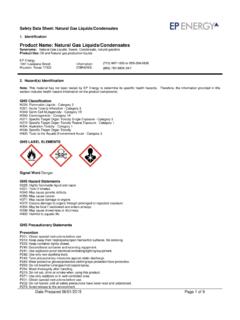
Transcription of SAFETY DATA SHEET - Stepan Company
1 SAFETY data SHEET1. IdentificationSTEPANOL ME-DRYP roduct identifierOther means of identification0615 Product codeSurfactantRecommended useFor industrial use restrictionsManufacturer/Importer/Suppli er/Distributor informationManufacturerStepan CompanyAddress22 West Frontage RoadCompany nameTelephoneGeneral1-847-446-7500 Emergency phone numberMedical1-800-228-5635 Chemtrec1-800-424-9300 Chemtrec Int'l +1 703-527-3887E-mailUSANot , IL 600932. Hazard(s) identificationNot hazardsCategory 4 Acute toxicity, oralHealth hazardsCategory 2 Skin corrosion/irritationCategory 1 Serious eye damage/eye irritationCategory 2 Hazardous to the aquatic environment, acutehazardEnvironmental hazardsCategory 3 Hazardous to the aquatic environment,long-term hazardCombustible dustOSHA defined hazardsLabel elementsSignal wordDangerHazard statementHarmful if swallowed.
2 Causes skin irritation. Causes serious eye damage. Toxic to aquatic to aquatic life with long lasting effects. May form combustible dust concentrations in statementPreventionWear eye/face protection. Wash thoroughly after handling. Do not eat, drink or smoke when usingthis product. Avoid release to the environment. Wear protective swallowed: Call a poison center/doctor if you feel unwell. If on skin: Wash with plenty of water. Ifin eyes: Rinse cautiously with water for several minutes. Remove contact lenses, if present andeasy to do. Continue rinsing. Immediately call a poison center/doctor. Specific treatment (see thislabel). Rinse mouth. If skin irritation occurs: Get medical advice/attention. Take off contaminatedclothing and wash before away from incompatible of contents/container in accordance with local/regional/national/international (s) not otherwiseclassified (HNOC)Product may form explosive dust/air mixture if high concentration of product dust is suspended / 7 Material name: STEPANOL ME-DRYM aterial ID: 465 Product code: 0615 Version #: 02 Revision date: 05-15-2017 Print date: 05-15-2017 SDS US3.
3 Composition/information on ingredientsMixturesCAS number%Common name and synonymsChemical name68585-47-790 - 100 Sulfuric acid, mono-C10-16-alkylesters, sodium salts (Alternate CAS151-21-3, 73296-89-6)67762-41-81 - < 3 Alcohols, C10-167757-82-6< sulfate7647-14-5< 2 Sodium chloride7732-18-5< 2 Water4. First-aid measuresIf dust from the material is inhaled, remove the affected person immediately to fresh air. Call aphysician if symptoms develop or with plenty of soap and water. Call a POISON CENTER or doctor/physician if you feelunwell. If skin irritation occurs: Get medical advice/attention. Take off contaminated clothing andwash before contactImmediately flush eyes with plenty of water for at least 15 minutes. Remove contact lenses, ifpresent and easy to do.
4 Continue rinsing. Get medical attention contactRinse mouth. IF SWALLOWED: Call a POISON CENTER or doctor/physician if you feel may include stinging, tearing, redness, swelling, and blurred vision. Permanent eyedamage including blindness could result. Skin irritation. May cause redness and importantsymptoms/effects, acute anddelayedProvide general supportive measures and treat symptomatically. In case of shortness of breath,give oxygen. Keep victim warm. Keep victim under observation. Symptoms may be of immediatemedical attention and specialtreatment neededIn the case of accident or if you feel unwell, seek medical advice immediately (show the labelwhere possible). Ensure that medical personnel are aware of the material(s) involved, and takeprecautions to protect information5.
5 Fire-fighting measuresWater spray. Water fog. Foam. Dry chemical powder. Carbon dioxide (CO2). Apply extinguishingmedia carefully to avoid creating airborne extinguishing mediaNone extinguishingmediaClass II Dust for National Electric Code (NFPA 70) Explosion hazard: Avoid generating dust; finedust dispersed in air in sufficient concentrations and in the presence of an ignition source is apotential dust explosion hazard. During fire, gases hazardous to health may be hazards arising fromthe chemicalSelf-contained breathing apparatus and full protective clothing must be worn in case of protective equipmentand precautions for firefightersIn case of fire and/or explosion do not breathe fumes. In the event of fire, cool tanks with waterspray.
6 Move containers from fire area if you can do so without fightingequipment/instructionsCool containers exposed to flames with water until well after the fire is methodsMay form combustible dust concentrations in fire hazards6. Accidental release measuresKeep unnecessary personnel away. Keep people away from and upwind of spill/leak. Keep out oflow areas. Use a NIOSH/MSHA approved respirator if there is a risk of exposure to dust/fume atlevels exceeding the exposure limits. Wear appropriate protective equipment and clothing duringclean-up. Do not touch damaged containers or spilled material unless wearing appropriateprotective clothing. Avoid inhalation of dust from the spilled material. Ensure adequate authorities should be advised if significant spillages cannot be contained.
7 For personalprotection, see section 8 of the precautions,protective equipment andemergency proceduresCollect spillage. If sweeping of a contaminated area is necessary use a dust suppressant agentwhich does not react with the product. Sweep up or vacuum up spillage and collect in suitablecontainer for disposal. Collect dust using a vacuum cleaner equipped with HEPA filter. Minimizedust generation and accumulation. Prevent entry into waterways, sewer, basements or confinedareas. Following product recovery, flush area with water. For waste disposal, see section 13 of and materials forcontainment and cleaning up2 / 7 Material name: STEPANOL ME-DRYM aterial ID: 465 Product code: 0615 Version #: 02 Revision date: 05-15-2017 Print date: 05-15-2017 SDS USAvoid release to the environment.
8 Contact local authorities in case of spillage to drain/aquaticenvironment. Prevent further leakage or spillage if safe to do so. Do not contaminate water. Avoiddischarge into drains, water courses or onto the precautions7. Handling and storageMinimize dust generation and accumulation. Provide appropriate exhaust ventilation at placeswhere dust is formed. Do not get this material in contact with eyes. Do not taste or swallow. Avoidbreathing dust. Avoid contact with skin and eyes. Avoid contact with clothing. In case of insufficientventilation, wear suitable respiratory equipment. Wear appropriate personal protective good industrial hygiene practices. When using, do not eat, drink or smoke. Wash handsthoroughly after handling. Practice good housekeeping.
9 Wash contaminated clothing before release to the environment. Do not empty into for safe handlingStore in original tightly closed container. Store in a well-ventilated place. Store away fromincompatible materials (see Section 10 of the SDS). Guard against dust accumulation of for safe storage,including any incompatibilities8. Exposure controls/personal protectionNo exposure limits noted for ingredient(s).Occupational exposure limitsNo biological exposure limits noted for the ingredient(s).Biological limit valuesGood general ventilation (typically 10 air changes per hour) should be used. Ventilation ratesshould be matched to conditions. If applicable, use process enclosures, local exhaust ventilation,or other engineering controls to maintain airborne levels below recommended exposure limits.
10 Ifexposure limits have not been established, maintain airborne levels to an acceptable should be sufficient to effectively remove and prevent buildup of any dusts or fumesthat may be generated during handling or thermal processing. Eye wash facilities and emergencyshower must be available when handling this engineeringcontrolsIndividual protection measures, such as personal protective equipmentWear eye/face protection. Use tight fitting goggles if dust is protectionSkin protectionWear appropriate chemical resistant protectionWear appropriate chemical resistant a NIOSH/MSHA approved respirator if there is a risk of exposure to dust/fume at levelsexceeding the exposure protectionWear appropriate thermal protective clothing, when hazardsWhen using, do not eat, drink or smoke.