Transcription of Safety Data Sheet - Wainbee
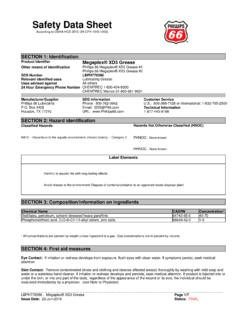
1 Safety data SheetAccording to OSHA HCS 2012 (29 CFR )SECTION 1: IdentificationProduct IdentifierTurbine OilOther means of identificationPhillips 66 Turbine Oil 32 Phillips 66 Turbine Oil 46 Phillips 66 Turbine Oil 68 Phillips 66 Turbine Oil 100 SDS NumberLBPH778982 Relevant identified usesTurbine OilUses advised againstAll others24 Hour Emergency Phone NumberCHEMTREC 1-800-424-9300 CHEMTREC Mexico 01-800-681-9531 SECTION 2: Hazard identificationSECTION 4: First aid measuresEye Contact:If irritation or redness develops from exposure, flush eyes with clean water. If symptoms persist, seek Contact:Remove contaminated shoes and clothing and cleanse affected area(s) thoroughly by washing with mild soap andwater or a waterless hand cleaner.
2 If irritation or redness develops and persists, seek medical :First aid is not normally required. If breathing difficulties develop, move victim away from source of exposure and intofresh air in a position comfortable for breathing. Seek immediate medical 66 Box 4428 Houston, TX 77210 SDS InformationPhone: 800-762-0942 Email: : 800-368-7128 or International: 1-832-765-2500 Technical Information1-877-445-9198 Classified HazardsHazards Not Otherwise Classified (HNOC)This material is not hazardous under the criteria of the Federal OSHA HazardCommunication Standard 29 CFR :None knownHHNOC:None knownLabel ElementsSECTION 3: Composition/information on ingredientsChemical NameCASRNC oncentration Distillates, petroleum, hydrotreated heavy paraffinic64742-54-7>95 All concentrations are percent by weight unless ingredient is a gas.
3 Gas concentrations are in percent by classified hazards_____LBPH778982 - Turbine OilPage 1/6 Issue Date:22-Jun-2016 Status:FINAL_____LBPH778982 - Turbine OilPage 2/6 Issue Date:22-Jun-2016 Status:FINALI ngestion:First aid is not normally required; however, if swallowed and symptoms develop, seek medical important symptoms and effects, both acute and delayed:Inhalation of oil mists or vapors generated at elevatedtemperatures may cause respiratory irritation. Accidental ingestion can result in minor irritation of the digestive tract, nausea anddiarrhea. Prolonged or repeated contact may dry skin and cause to Physician:Acute aspirations of large amounts of oil-laden material may produce a serious aspiration who aspirate these oils should be followed for the development of long-term sequelae.
4 Inhalation exposure to oil mistsbelow current workplace exposure limits is unlikely to cause pulmonary 5: Firefighting measuresNFPA 704 Hazard ClassExtinguishing Media:Dry chemical, carbon dioxide, foam, or water spray is recommended. Water or foam may cause frothing ofmaterials heated above 212 F / 100 C. Carbon dioxide can displace oxygen. Use caution when applying carbon dioxide inconfined spaces. Simultaneous use of foam and water on the same surface is to be avoided as water destroys the hazards arising from the chemicalUnusual Fire & Explosion Hazards:This material may burn, but will not ignite readily. If container is not properly cooled, itcan rupture in the heat of a Combustion Products:Combustion may yield smoke, carbon monoxide, and other products of incompletecombustion.
5 Oxides of sulfur, nitrogen or phosphorus may also be protective actions for firefighters:For fires beyond the initial stage, emergency responders in the immediate hazardarea should wear protective clothing. When the potential chemical hazard is unknown, in enclosed or confined spaces, a selfcontained breathing apparatus should be worn. In addition, wear other appropriate protective equipment as conditions warrant(see Section 8).Isolate the hazard area and deny entry to unnecessary and unprotected personnel Stop spill/release if it can be done safely. Moveundamaged containers from immediate hazard area if it can be done safely Water spray may be useful in minimizing or dispersingvapors and to protect personnel.
6 Cool equipment exposed to fire with water, if it can be done safely. Avoid spreading burning liquidwith water used for cooling Section 9 for Flammable Properties including Flash Point and Flammable (Explosive) LimitsSECTION 6: Accidental release measuresPersonal precautions, protective equipment and emergency procedures:This material may burn, but will not ignite all sources of ignition away from spill/release. Stay upwind and away from spill/release. Avoid direct contact with material. Forlarge spillages, notify persons down wind of the spill/release, isolate immediate hazard area and keep unauthorized personnel appropriate protective equipment, including respiratory protection, as conditions warrant (see Section 8).
7 See Sections 2 and7 for additional information on hazards and precautionary Precautions:Stop and contain spill/release if it can be done safely. Prevent spilled material from entering sewers,storm drains, other unauthorized drainage systems, and natural waterways. Use water sparingly to minimize environmentalcontamination and reduce disposal requirements. If spill occurs on water notify appropriate authorities and advise shipping of anyhazard. Spills into or upon navigable waters, the contiguous zone, or adjoining shorelines that cause a sheen or discoloration onthe surface of the water, may require notification of the National Response Center (phone number 800-424-8802).
8 Methods and material for containment and cleaning up:Notify relevant authorities in accordance with all applicableregulations. Immediate cleanup of any spill is recommended. Dike far ahead of spill for later recovery or disposal. Absorb spill withinert material such as sand or vermiculite, and place in suitable container for disposal. If spilled on water remove with appropriatemethods ( skimming, booms or absorbents). In case of soil contamination, remove contaminated soil for remediation orHealth:0 Flammability:1 Instability:00 (Minimal)1(Slight)2 (Moderate)3 (Serious)4 (Severe)_____LBPH778982 - Turbine OilPage 3/6 Issue Date:22-Jun-2016 Status:FINAL disposal, in accordance with local measures are based on the most likely spillage scenarios for this material; however local conditions andregulations may influence or limit the choice of appropriate actions to be taken.
9 See Section 13 for information on 7: Handling and storagePrecautions for safe handling:Keep away from flames and hot surfaces. Wash thoroughly after handling. Use good personalhygiene practices and wear appropriate personal protective equipment (see section 8). Spills will produce very slippery not enter confined spaces such as tanks or pits without following proper entry procedures such as ASTM D-4276 and Do not wear contaminated clothing or for safe storage:Keep container(s) tightly closed and properly labeled. Use and store this material in cool, dry,well-ventilated area away from heat and all sources of ignition. Store only in approved containers.
10 Keep away from anyincompatible material (see Section 10). Protect container(s) against physical damage."Empty" containers retain residue and may be dangerous. Do not pressurize, cut, weld, braze, solder, drill, grind, or expose suchcontainers to heat, flame, sparks, or other sources of ignition. They may explode and cause injury or death. "Empty" drums shouldbe completely drained, properly bunged, and promptly shipped to the supplier or a drum reconditioner. All containers should bedisposed of in an environmentally safe manner and in accordance with governmental regulations. Before working on or in tankswhich contain or have contained this material, refer to OSHA regulations, ANSI , and other references pertaining to cleaning,repairing, welding, or other contemplated 8: Exposure controls/personal protectionChemical NameACGIHOSHAP hillips 66 Distillates, petroleum, hydrotreated heavyparaffinic------TWA: 5 mg/m3 STEL: 10 mg/m3as Oil Mist, if GeneratedNote: State, local or other agencies or advisory groups may have established more stringent limits.