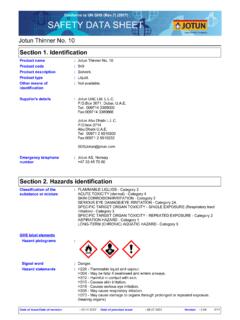
Transcription of SAFETY DATA SHEET: XYLENE
1 SAFETY data SHEET: XYLENE1. IDENTIFICATIONXYLENECAS - NO: 1330-20-7 SYNONYMS: Xylol; Mixed xylenes ; XYLENE Isomers and Ethylbenzene; Dimethylbenzenes and Ethylbenzene; Industrial-gradeXylene (meets ASTM D-364 Specifications); Nitration- grade XYLENE (meets ASTM D-843 Specifications);2. HAZARDS IDENTIFICATIONP otential Acute Health Effects: Hazardous in case of skin contact (irritant, permeator), of eye contact (irritant), of ingestion, Chronic Health Effects:CARCINOGENIC EFFECTS: 3 (Not classifiable for human.) by IARC. MUTAGENIC EFFECTS: Not available. TERATOGENICEFFECTS: Not available. DEVELOPMENTAL TOXICITY: Not available.
2 The substance may be toxic to blood, kidneys, liver,mucous membranes, bone marrow, central nervous system (CNS). Repeated or prolonged exposure to the substance can producetarget organs statusThis material is considered hazardous by the OSHA Hazard Communication Standard (29 CFR ).Classification of the substance or mixtureFLAMMABLE LIQUIDS - Category 3 ACUTE TOXICITY: SKIN - Category 4 ACUTE TOXICITY: INHALATION - Category 4 SKIN CORROSION/IRRITATION - Category 2 SERIOUS EYE DAMAGE/ EYE IRRITATION - Category 2 ACARCINOGENICITY: INHALATION - Category 2 SPECIFIC TARGET ORGAN TOXICITY (SINGLE EXPOSURE) [Respiratory tract irritation] - Category 3 SPECIFIC TARGET ORGAN TOXICITY (REPEATED EXPOSURE): INHALATION [ears] - Category 2 ASPIRATION HAZARD - Category 1 SIGNAL WORD.
3 DANGERH azard statementsFlammable liquid and in contact with skin or if serious eye skin of causing cancer if be fatal if swallowed and enters cause respiratory CASE OF TRANSPORTATION EMERGENCY CONTACT:CHEMTREC:(800) 424-9300-----------------------ALL OTHER INQUIRIES:(770) 904-7042 // Rue Cezzan Lavonia, GA 30553 Page: 1 SDS: XYLENEMay cause damage to organs through prolonged or repeated exposure if inhaled. (ears)Precautionary statementsPreventionObtain special instructions before use. Do not handle until all SAFETY precautions have been read and understood. Use personalprotective equipment as required.
4 Wear protective gloves. Wear eye or face protection. Wear protective clothing. Keep away fromheat, sparks, open flames and hot surfaces. - No smoking. Use explosion-proof electrical, ventilating, lighting and all material-handling equipment. Use only non- sparking tools. Take precautionary measures against static discharge. Keep container tightlyclosed. Use only outdoors or in a well-ventilated area. Do not breathe vapor. Wash hands thoroughly after medical attention if you feel unwell. IF exposed or concerned: Get medical attention. IF INHALED: Remove victim to fresh airand keep at rest in a position comfortable for breathing.
5 Call a POISON CENTER or physician if you feel unwell. IFSWALLOWED: Immediately call a POISON CENTER or physician. Do NOT induce vomiting. IF ON SKIN (or hair): Take offimmediately all contaminated clothing. Rinse skin with water or shower. IF ON SKIN: Wash with plenty of soap and water. Call aPOISON CENTER or physician if you feel unwell. Take off contaminated clothing. If skin irritation occurs: Get medical IN EYES: Rinse cautiously with water for several minutes. Remove contact lenses, if present and easy to do. Continue rinsing. Ifeye irritation persists: Get medical locked up. Store in a well-ventilated place.
6 Keep of contents and container in accordance with all local, regional, national andinternational not otherwise classifiedNone COMPOSITIONC omposition:Name CAS # % by WeightXylenes1330-20-7100 Toxicological data on Ingredients: xylenes : ORAL (LD50): Acute: 4300 mg/kg [Rat]. 2119 mg/kg [Mouse]. DERMAL (LD50):Acute: >1700 mg/kg [Rabbit].4. FIRST AID MEASURESD escription of necessary first aid measuresEYE CONTACTI mmediately flush eyes with plenty of water,occasionally lifting the upper and lower eyelids. Check for and remove any contactlenses. Continue to rinse for at least 10 minutes.
7 Get medical victim to fresh air and keep at rest in a position comfortable for breathing. If it is suspected that gas or vapor is still present,the rescuer should wear an appropriate mask or self-contained breathing apparatus. If not breathing, if breathing is irregular or ifrespiratory arrest occurs, provide artificial respiration or oxygen by trained personnel. It may be dangerous to the person providingaid to give mouth-to-mouth resuscitation. Get medical attention. If necessary, call a poison center or physician. If unconscious, placein recovery position and get medical attention immediately. Maintain an open airway.
8 Loosen tight clothing such as a collar, tie, beltor CONTACTWash with plenty of soap and water. Remove contaminated clothing and shoes. Wash contaminated clothing thoroughly with waterbefore removing it, or wear gloves. Continue to rinse for at least 10 minutes. Get medical attention. If necessary, call a poison centeror physician. Wash clothing before reuse. Clean shoes thoroughly before : 2 SDS: XYLENEGet medical attention immediately. Call a poison center or physician. Wash out mouth with water. Remove dentures if any. Removevictim to fresh air and keep at rest in a position comfortable for breathing. Aspiration hazard if swallowed.
9 Can enter lungs and causedamage. Do not induce vomiting. If vomiting occurs, the head should be kept low so that vomit does not enter the lungs. Never giveanything by mouth to an unconscious person. If unconscious, place in recovery position and get medical attention an open airway. Loosen tight clothing such as a collar, tie, belt or IMPORTANT SYMPTOMS/EFFECTS, ACUTEPOTENTIAL ACUTE HEALTH EFFECTSEYE CONTACTC auses serious eye irritationINHALATION:Harmful if inhaled. May cause respiratory irritationSKIN CONTACT:Harmful in contact with skin. Causes skin irritationINGESTION:May be fatal if swallowed and enters Irritating to mouth, throat of immediate medical attention and special treatment needed, if necessaryNotes to physicianIf ingested,thismaterialpresentsasignifican taspirationandchemicalpneumonitis hazard.
10 Induction of emesis is not activated charcoal and/or gastric lavage. If patient is obtunded, protect the airway by cuffed endotracheal intubation or byplacement of the body in a Trendelenburg and left lateral decubitus treatmentsTreat symptomatically and supportivelyProtection of first-aidersNo action shall be taken involving any personal risk or without suitable training. If it is suspected that gas or vapor is still present,the rescuer should wear an appropriate mask or self-contained breathing apparatus. It may be dangerous to the person providing aidto give mouth-to-mouth resuscitation. Wash contaminated clothing thoroughly with water before removing it, or wear FIRE FIGHTING MEASURESF lammability of the Product: Temperature: 464 C ( F)Flash Points: CLOSED CUP: 24 C ( F).