Transcription of September - Greenheck Fan
1 September20052 SECTION PAGE NUMBER Introduction.. 3 1: Types of Commercial Kitchen Ventilation Hoods .. 4 2: Determining Exhaust Rate .. 8 3: Supply and Make-Up Air .. 15 4: Room Balance and Airflow Testing .. 19 5: Grease Extraction .. 23 6: Fire Suppression Systems .. 26 7: Energy Management Systems (Variable Volume Driven) .. 29 8: Unit Selection Exhaust Fan Selection .. 31 Make-Up Air Selection .. 33 9: Ductwork and Pressure Losses.. 35 10: Utility Distribution Systems .. 40 11: Design Considerations .. 42 12: Troubleshooting .. 46 Glossary .. 48 13: Quick Reference Guide .. 49-52 Greenheck Method.. 49 Free Foot Area Consideration and Hood Factors.
2 50 References, Codes, and Informational Sources .. 53 Commercial Kitchen Ventilation Web sites .. 54 Our Warranty.. 56 Table of Contents3 INTRODUCTIONA kitchen hood is not just a box. Every commercial kitchen requires ventilation, and in the past, the importance of a proper ventilating system has been overlooked. Today, designers, installers, and operators are recognizing the value in well-designed commercial kitchen ventilation (CKV) systems. Emphasizing system because it is not just a box, it is an engineered system of exhaust hoods, ventilators, make-up air ventilators, grease removal apparatuses and more. Taking time to properly design a CKV system will increase the health and safety of the kitchen operators and increase the efficiency and energy savings for the guide discusses many of the factors that must be analyzed when designing an efficient kitchen ventilation system.
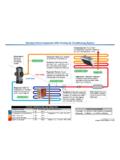
3 It offers a background in the basic theories of CKV design, product types with their application, necessary calculations with examples, troubleshooting, and more. This guide will assist in the development of a well-balanced and functional this guide will aid in a successful design, it is important to keep in mind the variation in standards and codes which have been adopted. Each county may have slightly different requirements for the designer to meet. The local authority having jurisdiction (AHJ) should be consulted to ensure the final design meets the requirements set forth. See the design and code reference section on pages 52 and 53 of the guide for a listing of common codes. If you would like to discuss any of the topics to further detail please contact Air UnitUpblast Exhaust FanVented Curb ExtensionFilter BankVariable Volume ControlsFire Suppression ControlsCommercial Kitchen Hood 14 TYPES OF COMMERCIAL KITCHEN VENTILATION HOODSTwo Types of HoodsTwo different types of kitchen hoods are used in the commercial kitchen.
4 These hoods are classified as a TYPE I or TYPE II ventilation hood. TYPE I hoods are used over cooking equipment producing heat and grease laden effluent. These hoods require a fully-welded ducting system. TYPE II hoods are used over non-grease producing cooking equipment exhausting heat and condensation. Various categories of TYPE I and TYPE II ventilation hoods exist for different applications and personal I Canopy HoodThe canopy hood uses the updraft concept to capture and contain the contaminated air generated by the cooking process. Heated air is less dense than the surrounding air causing it to become buoyant. If no cross drafts are present, the contaminated air will rise up into the hood where it is captured and contained until it can be exhausted through the grease filters to the outside.
5 Wall, single island, and double island represent the three configurations of canopy hoods. Although each configuration is mounted from the ceiling directly above the cooking equipment, each is used for a different Canopy HoodsThe wall canopy hood is used when the cooking equipment is placed against a wall. Hoods that are used against a wall have a tendency to capture and contain the effluent using less airflow than in an island type application. Make-up air from the kitchen enters the area below the hood replacing the air being exhausted. The wall located on the backside of the hood will cause the make-up air to enter at the front and sides of the hood creating a front-to-rear airflow pattern.
6 The plume will rise from the appliance and will be attracted to any surface parallel and near the cooking equipment, in this case, the wall. This phenomena is known as the Coanda Effect. The plume is then directed into the hood, enhancing capture and containment. Cross drafts still threaten spillage, but to a lesser degree than island style hoods. National Fire Protection Association (NFPA 96) and International Mechanical Code (IMC) should always be consulted when using a wall canopy hood. Wall canopy hoods may or may not be mounted directly against the wall depending on the type of wall. NFPA 96 defines three types of walls; non-combustible, limited combustible, and combustible. Most commercial kitchen applications have limited combustible walls which require a 3-inch air space between the back of the hood and the wall.
7 Most hood manufacturers provide a 3-inch space with the hood enabling it to be placed against the wall. IMC requires a minimum hood overhang of 6 inches from the cooking equipment on each end of the hood, and it is recommended that there is a minimum overhang of 6-12 inches beyond the widest cooking appliance for the front. Greater overhangs will increase capture and containment. Wall Canopy15 Single Island Hoods A single island hood is used over one row of cooking equipment placed where no walls exist. Single island hoods can be seen from all directions, therefore, have four finished sides. With four exposed sides, this type of hood is more susceptible to cross drafts, spillage, and is dependent only on the thermal updraft of heat from the cooking equipment and how quickly the exhaust fan can rid the hood of contaminated air.
8 These hoods should be sized larger and use more airflow than a wall canopy hood with the same cooking battery. The single island hood must overhang the cooking equipment by a minimum of 6 inches on all four sides of the hood. However, it is recommended that the overhang be extended to 12 inches on all sides of the hood. Extending hood overhangs increases capture volume which aids capture and containment. To eliminate the front to back airflow on a single island, a V-bank of filters improves capture and containment by directing the contaminated air to the center of the hood. A wall canopy can be installed as an island hood with a finished back enhancing its aesthetic appearance. However, it is not recommended because the front to back airflow pattern of a wall canopy will cause capture problems when being utilized as a single island Island HoodsA double island hood is placed over two rows of cooking equipment placed back to back.
9 This configuration is made up of two wall canopy hoods placed back to back, thus creating four finished sides. This category of hood performs similar to the wall canopy hood due to two thermal plumes rising against each other, but is still susceptible to cross drafts. A double island hood must overhang the equipment by a minimum of 6 inches on all four sides of the hood but would benefit from additional overhang. Water Wash HoodsAvailable in a wall canopy or double island configuration, water wash hoods are a cartridge type canopy hood, meaning the grease filtration device is built into the exhaust plenum. Water wash hoods utilize water spray nozzles in the exhaust plenum to clean the grease collected by the filtration system (see Figure 35 on page 24) after a certain period of operation.
10 These wash cycles can be programmed to run for a specified length of time and can be set to run automatically at the end of the day. Continuous water mist can be used to extinguish embers on a solid fuel cooking operation. The hood is controlled through a remote mounted control box including an adjustable flow detergent pump, a wash cycle timer in a solid state programmable controller, and a detergent reservoir. These hoods have a high up-front cost and have a higher operating cost than other types of Island CanopyWater Wash Hood - End View 1 Single Island Canopy6 Short Circuit Hoods *Warning: NOT RECOMMENDED*Short circuit canopy hoods were once thought of as an energy saving device.