Transcription of Severe bleeding - St John Ambulance Australia
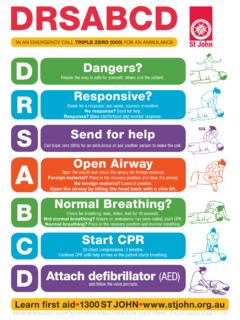
1 Severe bleeding IN A MEDICAL EMERGENCY CALL TRIPLE ZERO (000) FOR AN Ambulance . DRSABCD Danger Response Send for help Airway Breathing CPR Defibrillation The DRSABCD Action Plan is the first step when providing first aid. Use this to assess the immediate situation. WARNING. WHAT TO DO. Any Severe bleeding should be 1 Follow DRSABCD. stopped as soon as possible 2 Help the patient to lie down, particularly if the bleeding is DO NOT give the patient Severe . anything to eat or drink 3 Remove or cut the patient's clothing to expose the Wear gloves, if possible, to wound. prevent infection. 4 Ask the patient to apply direct pressure over the wound, If an object is embedded in or or as close to the point of the bleeding as possible. If the protruding from a wound, apply patient is unable to apply pressure, use a pad or your pressure on either side of the hands. wound and place pads around the object before bandaging. 5 Squeeze the wound edges together if possible.
2 6 Apply a pad over the wound if not already in place. SIGNS AND SYMPTOMS. 7 Secure the pad by bandaging over it. Ensure the pad As well as the obvious sign of remains over the wound. blood coming from a wound, signs 8 If bleeding is still not controlled, leave the initial pad and symptoms of Severe bleeding in place and apply a second pad and secure it with a include: bandage. weak, rapid pulse 9 If bleeding continues through the second pad, replace the pale, cool, moist skin second pad leaving the first pad in place, and rebandage. pallor, sweating 10 Do not give the severely bleeding patient any food or rapid, gasping breathing drink, and call triple zero (000) for an Ambulance . restlessness 11 Check every 15 minutes that the bandages are not too nausea tight and that there is circulation below the wound. thirst 12 Continue to check the patient's breathing. faintness, dizziness or confusion If the bleeding can not be controlled, consider applying a loss of consciousness.
3 Tourniquet. Only apply a tourniquet if bleeding can not be controlled by direct pressure, the equipment is available, and the first aider is trained in the use of this equipment. YOU COULD SAVE A LIFE WITH FIRST AID TRAINING 1300 360 455. St John Ambulance Australia Inc. 2018. St John first aid protocols are for the Australian market only. All care has been taken in preparing the information but St John takes no responsibility for its use by other parties or individuals. This information is not a substitute for first aid training. St John recommends attending first aid training courses. Not for commercial distribution.