Example: air traffic controller
Sleep and rest for children
Basing your service’s sleep and rest for children policy on recognised and evidence-based principles is an important way of demonstrating that you are taking reasonable steps. Red Nose (formerly SIDS and Kids) is the recognised national authority on safe sleeping practices for infants and children. Approved providers,
Tags:
Information
Domain:
Source:
Link to this page:
Documents from same domain

Work Health and Safety
www.acecqa.gov.au2 Work Health and Safety n cation an are Serices About the How To series The How To series has been created to offer professionals, working in the education and care sector in Australia, practical support to implement the National Quality Framework. The How To series consists of seven booklets promoting key areas of quality provision. Throughout each booklet, there are …

Guide to the National Quality Framework - ACECQA
www.acecqa.gov.auapproved provider 344 11. First tier review 346 12. Second tier review 351 SECTION 4 OPERATIONAL REQUIREMENTS 1. Operational requirements 358 Quality Area 1: Educational program and practice 359 1.1 Approved learning frameworks 359 1.2 Information to be kept and available 360 1.3 Documentation 361 Quality Area 2: Children’s health and safety 364

National Quality Standard Information sheet - …
www.acecqa.gov.auLINKS TO THE NATIONAL QUALITY STANDARD The importance of providing inclusive and sustainable learning environments that maximise and promote children’s

Reviewing your Quality Improvement Plan - …
www.acecqa.gov.au2 Information Sheet – Reviewing your Quality Improvement Plan • If your service is doing particularly well in one quality area you may choose to include statements about

National Quality Standard |Information sheet National ...
www.acecqa.gov.auLINKS TO THE NATIONAL QUALITY STANDARD The National Quality Standard (NQS) promotes and supports educators to engage in reflective practice through
Guide to the National Quality Framework - acecqa.gov.au
www.acecqa.gov.au8 Guide to the NQF Introduction Guide to the NQF Introduction INTRODUCTION Purpose of guide This guide aims to support education and care service providers, authorised officers and other regulatory authority staff understand the requirements under the

National Quality Framework - ACECQA
www.acecqa.gov.auApproved learning frameworks The NQS is linked to approved learning frameworks that recognise children learn from birth. Services are required to base their educational program on an approved learning framework. The approved learning frameworks are: • Belonging, Being and Becoming: The Early Years Learning Framework for

THE EARLY YEARS LEARNING FRAMEWORK FOR AUSTRALIA
www.acecqa.gov.auChildren belong first to a family, a cultural group, a neighbourhood and a wider community. Belonging acknowledges children’s interdependence with others and the basis of relationships in defining identities. In early childhood, and throughout …
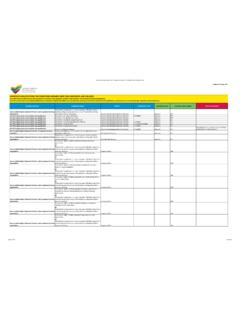
APPROVED QUALIFICATIONS FOR EDUCATORS WORKING …
www.acecqa.gov.auCertificate III in Early Childhood Education and Care 1 year qualified CHC30113 Australia QLD Any RTO registered (or was) to deliver this qualification Certificate III in Education (Aboriginal and Torres Strait Islander) 1 year qualified 39084QLD Australia QLD

Emergency and evacuation
www.acecqa.gov.auDifferent emergency situations may present different levels of risk and require different responses, dependent on where a service is located. For example, a service might be located in a flood prone region, or be surrounded by bushland making it more susceptible to bush fires. Policy and procedure guidelines These guidelines are part
Related documents

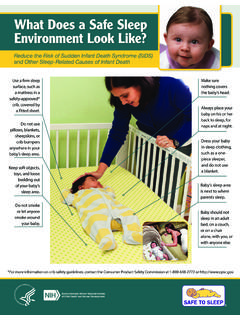
What Does A Safe Sleep Environment Look Like?
www.nichd.nih.govSafe Sleep For Your Baby Reduce the Risk of Sudden Infant Death Syndrome (SIDS) and Other Sleep-Related Causes of Infant Death. Always place baby on his or her back to sleep, for naps and at night, to reduce the risk of SIDS. Use a firm and flat sleep surface, such as a mattress in a safety-approved crib *, covered by a fitted sheet with no other
The Lullaby Trust Product Guide - Safer sleep for babies ...
www.lullabytrust.org.ukrisk of SIDS. However, any product that conforms to safer sleep advice (such as the recommended items on pages 6-8) will be less risky than one that does not. 4 5 ‘Safe/safer’(for baby) ‘Reduces the risk of flat-head syndrome’ (plagiocephaly) ‘Reduces risk of SIDS’/‘Reduces environmental factors associated with SIDS’
What does a safe sleep environment look like?
www.nichd.nih.govRoom sharing—keeping baby’s sleep area in the same room where you sleep—reduces the risk of SIDS and other sleep-related causes of infant death. Keep soft objects, toys, crib bumpers, and loose bedding out of your baby’s sleep area to reduce the risk of SIDS and other sleep-related causes of infant death.
Meeting children’s sleep, rest, and relaxation needs
earlychildhood.qld.gov.auincluding sudden infant death syndrome (SIDS), a key concern is to ensure that sleep environments are safe. This requires attention to the baby’s sleep positioning, the sleep environment, and supervision. Maintaining regular sleep patterns supports healthy development and learning for all babies and toddlers. Consideration of ways to

Shaken Baby Syndrome
www.tymthetrainer.comSudden Infant Death Syndrome (SIDS) is the diagnosis given for the sudden death of an infant, 1-month to 1- ... How can we reduce the risk of SIDS? Place infants on their backs for sleep, including naptime; do not place infants on their stomach to sleep ... Suggestions on positive and safe interactions for infants: Be warm, loving, and ...

Safer Sleep for Babies - The Lullaby Trust - Safer sleep ...
www.lullabytrust.org.ukThe information in this booklet about safer sleep has saved many babies' lives. It is all backed by research that has shown how to reduce the chance of babies dying suddenly with no explanation (known as sudden infant death syndrome, SIDS, or cot death). To reduce the chance of SIDS, families should follow this key advice for baby sleep.

Safe Sleeping Long Brochure - Red Nose Australia
rednose.org.auSleep baby in their own safe sleeping place in the same room . as an adult care-giver for the first six to twelve months 2 Keep baby smoke free before ... SIDS and fatal sleeping accidents. SIDS remains the most common category of deaths between one month and one year of age. Research has found some important ways to reduce the . risk of sudden ...

Sleep health and development for babies and toddlers in ...
earlychildhood.qld.gov.auincludes providing safe sleep environments. For babies below 12 months there is a risk of sudden or unexpected death during sleep, known as SIDS (Sudden Infant Death Syndrome) or SUDI (Sudden unexpected death in infancy). For this reason, sleep environments must comply with Safe Sleeping Guidelines. These include placing babies on their back to ...

SIDS by Baby's Age
www.dhhs.nh.govfollow safe-sleep practices to reduce the risk of SIDS and other sleep-related causes of infant death until baby’s first birthday. More than. 90 % of all SIDS deaths occur . before 6 months of age . 72 % of SIDS deaths occur in . Months 1–4. Source: Technical Report of the American Academy of Pediatrics Task Force on Sudden Infant Death ...

CO-SLEEPING AND SIDS - UNICEF UK
www.unicef.org.ukpotentially reduce co-sleeping sids deaths by nearly 90%8 *Co-sleeping: an adult and a baby sleeping together on any surface (such as a bed, chair or sofa). Bed-sharing: sharing a bed with one or both parents while baby and parent(s) are asleep.